Bitter Barbera

Always in Motion

First it started out forward and surprisingly pleasant.
Then it seemed complex and perfect with the meal.
Then it closed down and got tannic.
At first it tasted modern, by the next day it was traditional.
What makes the best wines interesting is they are always in motion - each sip is a different etude.
Few wines can range more in personality from sip to sip than Barolo and the excellent 2001 Paolo Manzoni Barolo Serralunga fully lives up to that reputation. While this is a producer that gives more than a tip of the hat to the modern school, here is a wine that proves you can’t always pigeon hole a wine based only on barrels. In fact, Mazoni uses 500 L. barrels instead of 225 L. barriques and the results from these larger barrels are very promising both in the Langhe and in Montalcino as many producers in both areas have abandoned small barrels for larger sizes.
Winemaking is an evolutionary process and it is good to see that in the tough world of survival of the fittest that there seems to be a return to terroir movement in winemaking regions throughout the globe. The barrique craze of the 90’s seems to have lost to the process of natural selection and less intrusive winemaking techniques are once again becoming the dominate species.
The Eddie Haskell of Wines

“That’s a lovely dress you’re wearing, Mrs. Cleaver.”
Leave It To Beaver’s Eddie Haskell was always ready with a empty compliment designed to cover his real character - or lack thereof. Drinking the 2003 Opus One would be a familiar experience for June Cleaver as this wine well reflects the superficial personality of Haskell.
The 03 Opus is always at the ready with a charming compliment for your palate. Round, sweet tannins here, sweet plush oak there - everywhere your palate looks it’s greeted with oozing charm. However, politeness is the only defining character of this wine. Behind its charming veneer is emptiness. Just when you think you’ve found something interesting it fades away into the sweet, round velvet of bland consumer correctness.
This is probably not a problem for most Opus drinkers who seek nothing beyond that initial charming compliment as it passes their lips without causing an undo interruption of their conversation, causing not another thought until the check arrives.
At $125+ a bottle, polite is not enough.
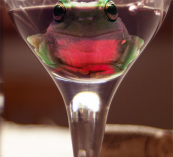
Kissing the Frogs
• 2003 Château Margaux: $460.00 a bottle
• 2002 Domaine de la Romanee Conti, La Tache: $1300 a bottle
• 2003 Pegau Châteaunuef du Pape, Cuvée de Capo: $500 a bottle.
Let’s face it, when we think of French wine, we think expensive, elegant, sophisticated and chic. They are the wines you drink at Daniel in Manhattan while wearing the latest from Paris. Unfortunately for the French, only a small percentage of the wines they make fall into this elite category, and the vast majority of the wines they make are unknown and ignored by American consumers.
The world’s most famous and expensive wines are French. French wines are the only wines truly sought after by collectors. While pretenders like Screaming Eagle cause feeding frenzies with American collectors, it’s only the elite French producers that really whip both American and international collectors into a lather.
Certainly no one would argue anymore that the French have a monopoly on great wine. While bruised a bit by the worldwide explosion of interesting, well-made wines, the elite French wine juggernaut rolls on. Evidence of this is the massive coverage of the futures offering of the acclaimed 2005 Bordeaux vintage, which has been a focus of the wine media for months. In fact, a good vintage in Bordeaux still has such an impact that those vintages become great vintages for all regions in the mind of the consumer; even those wine regions with weather, vines and geography that have nothing to do with Bordeaux bask in the reflected glory of great Bordeaux vintages.
As great and historically important as the most famous French wines are, the most exciting thing about French wine is not the bottles for those with trust funds and Ferraris, but the fact that the French are making the best wine values in the world. They simply cannot be beat in the under-$20 a bottle range for making wines that still offer character, personality, and, most of all terroir — that unique sense of place that makes a wine distinct and exciting to drink.
I’ll repeat that: the best wine values in the market today are almost all French. It’s not the new world that offers wine bargains: Australian wines should actually be singular not plural, as they’re all the same jammy syrup with different labels. California wine is personality-free industrial wine produced from the same UC Davis oak-chip recipe; South American wines are thin, flavorless and produced from hopelessly over-cropped vineyards. Only their European neighbors Italy and Spain offer the French any real competition in this under-$20 category.
Ironically, as good as the French (with a lot of help from the British) were at marketing their wines over the past centuries, today they don’t seem able to sell their way out of a brown paper bag. They’ve been blasted out of the value end of the wine market by a bunch of New World wines with cute animals on their labels and snappy names that are easy to remember. This is not to say the French are blameless for this situation — all that junky wine with varietal labels from the Languedoc that flooded the market in the ‘90s convinced a lot of consumers to look elsewhere for everyday wines.
The French Appellation Contrôlée (controlled place-name) system of wine regulations established the structure that allowed French wines to dominate the market for so many years. These regulations established minimum standards for how a wine was grown and made before it could be sold with a particular name. These names were based on place above all else. The variety was important and precisely controlled. For example, a red Burgundy must be 100% pinot noir, and a Sancerre must be 100% sauvignon blanc. You won’t see those names on the label, but their regulation is far more stringent than varietal labeling as used in the New World. For example, a winemaker in California has to use only 75% pinot noir to use the name. While the best California producers would never do that to their pampered pinot noir, you can bet few under $20 are not blended with other, less noble, varietals.
While I love this commitment to place and individual personality in winemaking, the plethora of wine names this has created made a marketing nightmare for the French. Should they give up and change over to naming a wine for the grapes instead of the land? I hope they don’t, and considering the French attitude about all things French I think the names will stay the same. This means that consumers who want to drink good wine at good prices will have to do some homework.
There are so many wonderful French wines out there — the Loire Valley alone is so packed with wine best-buys that to try to keep track of only them can seem daunting. Muscadet shines as the best white wine value in the world right now. Sancerre/Pouilly Fume neighbors Quincy and Menetou-Salon produce stunning, racy sauvignon blancs. The cabernet franc wines from Chinon and Bourgueil are incredibly fragrant and seductive. The list of values from throughout France is endless, with stunning wines coming from Beaujolais, the Rhône, Provence, Lanquedoc-Roussillon and the southwest. Many of these wines come from grapes you have never heard of, but should have — like tannat, manseng, cot, picpoul and poulsard.
Such an extensive list of new words and places can be more intimidating than inspirational, and can make that giant stacking of Yellow Tail at the grocery store look tempting. However, as a few importers are willing do to the work required to not only find such wines and then to hand-sell them bottle-by-bottle, instead of memorizing The Oxford Companion to Wine, just learning the names of these brave few is enough to begin rescuing your palate from the industrial wine that has lulled it into a nap. A quick poll of the patients at WineTherapy.com came up with a list of key importers to search out for French wine bargains:
• Louis/DressnerYou’ll find their names on the back label, which means all you have to do is pick up that bottle with the strange name and turn it around to see if it’s something worth trying. That’s not too much work, is it?
• Kermit Lynch
• Weygandt/Metzler
• Neal Rosenthal
• Robert Chadderdon
• Charles Neal
Langhe Rosso, Vajra, 2004
Another excellent wine from this strong estate. A blend of dolcetto, barbera and nebbiolo that speaks more of nebbiolo than the other varieties. Rich and earthy with bright, fresh clean bittersweet black cherry fruit over a firm angular structure. An excellent bargain that’s easy to find for under $15. Every wine from this producer is worth buying.
Muscadet Sèvre et Maine, sur lie, Château de L’Aiguillette, 2005
Racy with a mineral pungency that cries for fresh seafood. Lovely bright citrus fruit flows from start to finish. Yet another bargain from Muscadet. Put on your buy-by-the-case list.
Pouilly Fuissé, Cuvée Hors Classe, Auvigue, 2003
A great value as this wine offers more complexity and character than many a Meursault or Puligny Montrachet. Very firm, while being rich and powerful this excellent chardonnay is laced with minerals and a firm stony backbone. From the warm 2003 vintage, I’d drink this wine up sooner rather than later as it’s already delicious.
Barolo, Rocche, Monchiero, 2001
Good solid Barolo here, not great, but very nice. Still restrained and closed at this point, with a few more years of aging it should reveal a very nice wine. The very fair price, under $40, makes this a great starting place for those who what to see what Barolo is all about. On the classic side when it comes to style.
Côtes du Roussillon, Georges, Domaine Puig Parahy, 2003
Big, bright, fruity and easy without being simplistic. This is a great everyday wine bargain produced from 60 to 80 year old vines. Think Australian Shiraz with acidity and a touch of complexity and you’ll get the idea. An amazing bargain at around ten bucks.
Vacqueyras, Domaine Le Clos de Caveau, 2003
Brilliant bright ruby with an enticing nose of currents and raspberry with a touch of bitter tar. This has to be one of the more balanced 2003 Rhone wines I’ve run across. Brilliantly clean and fresh on the palate, it has more than enough power to stand up to roasts and chops, while still being lively and balanced. A great bargain at $16.
Dolcetto d'Alba, Roagna, 2004
Shy at first, this dolcetto soon expands into a gracefully bittersweet razor carried by bright, fresh dark cherry and black raspberry fruit. After an hour or so, layered aromas of wildflowers join the fresh, yet firm fruit flavors. The zesty and fresh finish wakes up your saliva glands.
Dolcetto d'Alba, Bric del Salto, Sottimano, 2004
I must have had this wine a dozen or more times by now and I never tire of it. Perfectly ready to drink, its lean balance of fresh fruit and tart bitterness makes it among the most food friendly wines you’ll run into. Probably about ready to disappear from the market, but no problem as the 2005 is lovely too.
Cabernet Sauvignon, Walla Walla Valley, Seven Hills Vineyard, Seven Hills Winery, 2002
Brilliant ruby, with a fresh nose full of mint, chocolate and smooth dark cherry. Not a lot of complexity, but a lot of pleasure throughout this nicely balanced effort. It’s so smooth and easy to drink now, I don’t see a lot of reason for waiting. All in all very nice, but a bit pricy for such easy pleasure.
Grüner Veltliner, Sandgrube, Kremstal, Weingut Stadt Krems, 2005
Razor sharp. Lean, electric and racy, with brilliant stony, mineral notes. Very nice and a great bargain at $16. You could age this, of course, but why not enjoy its explosive lean-ness now?
Umbria, IGT, Ca' Andrea, Carlo Massimiliano Gritti, 2004
Racy and refined, this is a lovely bargain. Bittersweet with just a touch of tannic bite, this is what Chianti used to be as it sports a nice earthy character along side its streamlined fruit. A very nice wine for everyday drinking.