Wine Notes
Recent wines I have enjoyed, most under $20.
Veneto Bianco IGT, Anselmi, San Vincenzo, Italy, 2006 - The lovely light gold color is a proper prelude to the balance of this excellent wine. So few producers get the concept of balanced richness in white wines. Substantial without the least bit of heaviness or cloying fruit or oak, the smooth creamy texture has just enough bite to keep it refreshing. As usual this wine is a tremendous value offering far more complexity than almost anything at this price point. Best of all, the second glass is better than the first. ( find this wine )
Riesling, Bergterrassen Fedespiel, Johann Donabaum, Austria, 2006 - A delicate flower of wine. A lacy mixture of floral and mineral. This is a style of wine that just does not exist outside of Austria, Germany and Northeastern Italy. If it does, I have not tasted it. Lean and delicate, this is one of those wines if you don’t pay attention you’ll miss all it has to offer. The finish is dry, but mellowed by the lovely fruit. (find this wine )
Riesling, Private Lumpkin, Lazy River Vineyard, Yamhill-Carlton District, Oregon, 2006 - While inspired by Old World Wines, you’ll know right away this wine is from the New World. Richly aromatic with ripe apricots and pungent petrol notes, this wine is quite lush with a bit of sweetness accentuated by its fruit-forward style. Not for aging, but perfect for the best Asian cuisine you can find.
Riesling, Mosel-Saar-Ruwer, Essence, S.A. Prüm, Germany, 2006 - All charm and pleasure in this nice riesling for everyday drinking. Just off-dry, but with plenty of acidity to keep it alive, this is a wonderful wine for summer parties or for just keeping in your refrigerator for a glass when you get home from work. A very good starting place for those that don’t know the pleasures of riesling as it’s inexpensive and easy to find. One of those nice wines to enjoy without thinking too much about it. ( find this wine )
Nebiolo (yup, one b) d’Alba, Cappellano, Italy, 2003 - This is just a wonderful bottle of nebbiolo that is an amazing value. Unfortunately they don’t make enough to make it easy to find. Try Chambers St. in Manhattan and cross your fingers. A classic nebbiolo with lifting aromatics laced with tar, spice and that taught floral character only nebbiolo achieves. Still tannic and closed, it will improve for many years. Better than many expensive Baroli for a fraction of the price. Great wine from a great producer. Imported by Louis/Dressner
Pinot Noir, Rogue Valley, Skipper’s Cuvee, Dobbes Family Estate, Oregon, 2006 - This wine makes you wonder why more pinot noir producers are not looking more seriously at Southern Oregon. While the majority of top Oregon pinots are from the Northern Willamette, this wine is so good it should pique the interest of quite a few producers. Richly colored and very aromatic, it exhibits the classic cool climate personality that brought growers to Oregon in the first place. Compared to the price of most Oregon pinots these days this is a great bargain. ( find this wine )
Washington Red Table Wine, Three Wives, Remy Wines, 2006 - Young winemaker Remy Drabkin is someone to watch. Her tiny production under the Three Wives and Remy labels may be hard to find, but I suggest you try to get on her mailing list now. This release, a kitchen sink blend of Bordeaux an Rhone varieties from Washington is a very nice wine at a very nice price. Rich and brightly fruity, this is a great wine for sausages fresh off your grill. Remy has done a great job of crafting a distinctive wine with a clearly Northwestern style.
Rosso Orvietano, Rosso di Spicca, Tenuta Le Velette, Italy, 2005 - I love little Italian wines like this charming wine. Light, with an earthy fruit and lean, zesty character, it’s a perfect wine for simple pastas or pizza. Best drunk with a light chill in stubby bistro glasses on a warm Wednesday night, on your patio, with a dinner you quickly whipped together. Better yet it only costs about ten bucks.(find this wine )
Châteauneuf du Pape, Les Bartavelles, Jean-Luc Columbo, France, 2006 - Since Châteauneuf became a wine region on steroids, much loved by the Barry Bonds steak house crowd, it’s been hard to find a Châteauneuf you can drink with out blowing your palate and the next day. Here is a very nice wine, not a great wine mind you, but a very nice wine that is a pleasure to drink. Make no mistake this is not a light wine, but by New World standards it is quite restrained. With an alcohol level around 13.5% (many hotshot CdP’s push 16%), this is wine that can be drunk with ease and you can still go to work the next day. Most importantly, this is not a simple raspberry fruit bomb, but a wine that offers real varietal character and a rich earthiness and balance that is clearly and thankfully French.
Veneto Rosso IGT, Catullo, Bertani, Italy, 2002 (60% cabernet sauvignon, 40% corvina) - Normally I can stand these new wave Italian wines, but this is a very nice effort. Of course, the cabernet sauvignon overwhelms any touch of corvina character, but what I like is that that the wine is not overdone. You can taste the oak, but it is not over-oaked and is not at all over-extracted and still actually tastes like it not only came from Italy, but the Veneto. A nicely balanced wine that will pair well with lamb or veal. It is mature and ready to drink.
Moulis, Château Maucaillou, France, 2003 - It was with a tinge of sadness that I opened my last bottle of this excellent Bordeaux, but it was only a tinge. This wine, like most 2003 Bordeaux, is ready to drink. Frankly, I think letting wines from this super-hot vintage age is a very bad idea. The wines are lush and easy without the definition that is the hallmark of classic Bordeaux. Wonderfully fragrant, rich without ponderous fruit and with a long, soft cedar spiced finish I just adored this wine. As befitting the a last bottle of good Bordeaux, I served it with the best lamb chops I could buy. ( find this wine )
Pinot Noir, Corral Creek Vineyard, Willamette Valley, Chehalem, Oregon, 2001 - I know that the 2001 vintage forced Oregon producers to a more lean style, but I admit that I love these wines as they age and wish more producers would make wines like this in more forgiving vintages. The nose is wonderfully layered with orange peel, spiced wild cherries and touches of wildflowers, vanilla and tart blackberries. Firm and almost taut on the palate with a graceful, almost delicate character with hints of tar, candied bitter orange and wild strawberries. I think this wine is perfectly ready to drink now and , in fact, may be at its high point. The tannins on the finish have evolved into that dusty, silky texture than only pinot noir achieves. A very good wine at its peak. ( find this wine )
Burgundy: Scott Paul Selections New Releases
 Those of you that read my post last last March know that I am a fan of Scott Wright's (pictured left with his wife Martha and daughter Pirrie) wines. He makes wines under the Scott Paul label in Oregon's Willamette Valley and selects and imports some very fine Burgundy as Scott Paul Selections. What I love about the wines that Scott both makes and imports is their purity. They are wines made with a delicate hand that respects the vineyards from which they come. Balance, grace and refinement are the best descriptors of his wines. The easiest place to obtain these wines is probably directly from Scott Paul, which you can contact by email or by phone at 503-852-7305. If you're lucky enough to stop by their tasting room in Carlton, you'll find some of his French selections available on the tasting bar right next to his own wines from Oregon.
-
Crémant de Bourgogne, Domaine Huber-Vedereau - 100% pinot noir and you can taste it. At $22 this is an amazing value, unfortunately only 100 cases were produced so grab a case while you can. The flavors and aromas are more fruit driven than yeasty lees driven, but there's more than enough toasty character to keep it interesting. Very long and bright with a creamy texture. Lovely bubbly.
-
Champagne Brut Réserve, Domaine Marc Chauvet - Here' a Champagne very high on the "wow" meter. Grower Champagnes like this are so much better than the big commercial brands that it's embarrassing. This is a wonderful wine with a lifting brightness powered by bubbles and brilliant citrus flavors laced over a complex base of fruit and toasty lees. A finish designed to exercise your saliva glands. 65% pinot noir, 35% chardonnay 100% delicious ($45)
-
St. Veran, Champ Rond, Domaine Thibert Père & Fils, 2006 - Firm, crisp and mineraly with a bright green apple and honeysuckle fruitiness, this charming chardonnay is a great bargain at $24 as it clearly displays some of the best characteristics of the more expensive Burgundian chardonnays to the north. Match with some fresh dungeness crab and you will find inner peace.
-
Gevrey Chambertin, Clos Prieur, Domane René Leclerc, 2006 - There is a wonderful grace and purity in this very fine pinot. Starting shyly at first, as befits its youth, the flavors grow and expand until you are totally seduced. The refinement in each aspect of this wine is very impressive with silky, but firm tannins tying everything together in a perfect package. It needs three or four more years to really open. For a Burgundy under $50 there is a lot going on in this wine. ($44)
-
Pommard 1er Cru, Clos de Derriére St. Jean, Domaine Violot Guillemard. 2006 - The expected tannic punch never arrives in this surprisingly silky, velvety young Pommard, which is an AOC that usually packs structure to spare. However, this wine is still very closed and demands aging so it is not a wine to buy for dinner this weekend. I believe this will age into an outstanding wine. As it comes from Burgundy's smallest Premier Cru vineyard at a ¼ acre and produced only 23 cases, I think it's worthy or getting the aging it deserves. As you are unlikely to find this in a floor stacking at SafeWay, I suggest you contact Scott Paul ASAP. ($75)
-
Echezeaux, Domaine Jean-Marc-Millot, 2006 - Here's pinot in all its glory. Richly textured, velvety, silky and endlessly aromatic with flavors that never seem to end and this wine is just getting started. Perfect color, beautiful fruit and richly complex tannins show everything that makes pinot great. (Price: if you have to ask...)
-
Romanée St. Vivant, Grand Cru, J.J. Confuron, 2004 - I tasted this wine last March, and it's just as beautiful and just as nowhere ready to drink as it was then. Given five or so years, this will be an outstanding wine. ($225)
-
Pinot Noir, La Paulèe, Willamette Valley, Scott Paul Wines, 2006 - Not every American winemaker would like to show his pinot after such a line-up, but Scott Wright obviously knows his own wine. While he is not trying to make Burgundy in Oregon, you can tell what his palate has been honed on. While more fruit-forward and flowery than the preceding Burgundy selections this very fine pinot noir displays the balance and grace that brought winemakers from California to Oregon in the first place. While certainly drinkable now, I would wait a few years, which will bring out even greater complexity.
| Share this post : |  |  |  |  |  |  |  |  |  |
Mac Farmer's Market
 The farmer's market is back in McMinnville. Over the winter you slowly forget how wonderful such small things can be. Just a block long with maybe two dozen producers, markets like this hold treasures supermarket buyers, including Whole Foods et al, can't give us. Every Thursday now through late fall you'll find me at the market.
Today's treasure was lion's mane mushrooms. As usual, each visit to a farmer's market I approach without a recipe in mind, letting the local provenance guide me. With the beautiful mushrooms I added to my bag some fresh organic eggs, chives and the excellent aged Gouda from the Willamette Valley Cheese Company. Warm crusty baguettes from the Red Fox Bakery, just picked greens and a pint of fresh strawberries from a small organic farm guaranteed a perfect dinner.
The meal could not have been simpler:
For two:
4 or more large lion's main mushrooms (or other meaty, flavorful fresh mushroom) chopped into large chunks
2 cloves garlic peeled and smashed
Extra Virgin Olive Oil
A small wedge of aged cow's milk cheese like Willamette Valley Cheese Company's aged Gouda cubed
Minced fresh chives
Salt and pepper
5 large eggs with salt and pepper beaten lightly with a fork - using good eggs is very important so look for eggs with yolks that tend more towards orange than yellow
- Smash the cloves of garlic, add 2+ tablespoons (depends on how big the mushrooms are) good extra virgin olive oil to a non-stick sauté pan over medium high heat (don't let it smoke), add the garlic and cook until golden brown, but not burnt, then remove and discard
- Continuing over medium high heat add the very coarsely chopped lion's main mushrooms to the hot oil and stir fry for one minute.
- Add beaten eggs, chopped chives, cubed cheese salt and pepper and scramble until just cooked
- Serve immediately with fresh salad and bread
To match with this very local food I strangely enough grabbed a bottle from far, far away. The 2006 Domaine de La Gramière Côtes du Rhône, which is produced by two Americans, Amy Lillard and Matt Kling, who are living a dream that many of us have as they are living and making wine in France. I had resisted opening this wine for almost a year now as I felt it really needed a little time to come together and my patience was well rewarded. The wine has broadened and gained more complexity and aromatics. This is one of those wines that is big to the French, but medium bodied to Americans. I love the meaty, smoky butcher shop aromas this wine has developed along with the bright, ripe black fruit flavors. I think it's going to get better for another year or so, but now that it's this good I don't know how I'll keep my hands off of it that long! La Gramière is imported by Kermit Lynch.
| Share this post : | | | | | | | | | |
California Burgundy
 Here's a riddle for you: When can you make Echezeaux in California? The answer: You can't, you have to wait until California comes to Burgundy. That's exactly what happened in 2003. I was living in Italy that year, our house tucked into the foothills of the Alps, and we baked for months. The television was full of the horrible news from France as thousands died from the heat. Burgundy was not one of the fatalities of that hot summer, but the vines and the wines did suffer as they did throughout Europe.
My gracious host for dinner last Saturday, winemaker Tony Rynders, brought me back to that sultry summer when he pulled a bottle of 2003 Echezeaux Domaine Dujac (find online) from his cellar. I admit I can't help but be thrilled by the appearance of a Dujac at any time.
Let's make no mistake about it, this is a very fine pinot noir. However, there is little to remind you of Burgundy, much less Echezeaux in this wine. Perhaps I'm nitpicking, but at $200+ a bottle I think picking a few nits is allowed. This is big pinot in the California style and I don't mean that as a criticism of the California style, although I prefer it in my California wines and not my Burgundy wines. While touches of stemmy whole cluster fermentation lighten the wine in a blind tasting you'd be hard pressed to spot this as a Burgundy. This comparison is interesting because it does not so much put down the Echezeaux as remind you how good the best California pinot noir can be.
While the best vintages are always from warm years, which produce ripe grapes that become rich, complex wines, it is also true that more is not better especially when it comes to pinot noir. Extremes of all types overwhelm terroir, in this case erasing Echezeaux and replacing it with an excellent pinot noir of indeterminate origin. As I remember the brutal and deadly heat of that summer it is amazing that Dujac produced a wine as good as this very hearty Burgundy.
| Share this post : | | | | | | | | | |
Very Jealous
I pass this along because these notes need to be shared. This was a wonderful tasting and I'm very jealous I was not there. Fortunately Brooklynguy was and his notes are a must read. Fine Beaujolais is still the greatest value in profound red wine anywhere in the world.
Eating Budapest
 It was a smooth flight with an abrupt ending. I had the feeling that the pilot had daydreamed a bit, woke up, looked down and seeing the airport immediately below pointed the nose down. The angle was steep, but no one seemed to notice so I went along with the flow. So it was, with the rush of landing on an aircraft carrier, that I arrived in Budapest. I was there for wine, of course, and after a quick lunch at a traditional Hungarian restaurant we were off in a car for the long drive out to the Tokaj-Hegyalja wine region in Northeastern Hungary, home to the legendary sweet wines of Tokaji, in this case the sublime wines of Oremus.
This was my first visit to Hungary and, while anticipating the culinary adventure I was thrown into a new and unfamiliar food culture. I could handle a menu in Western Europe, but as I gazed at the menus here nothing rang a bell, nor did it to my compatriots, one of whom ordered two courses at a dinner one night. His first course arrived, which was a beautiful and delicious smoked trout. After a short wait his main course arrived, which was two beautiful and delicious smoked trout. Thankfully he loved smoked trout.
After several days of fabulous sensory overload in the cellars of Tokaj, my wife and I headed back to beautiful Budapest for a small vacation. Armed with the few travel guides we could find we ate badly at tourist restaurants for the rest of the weekend. As usual, the guidebooks and concierges fail the devoted gastro-tourist.
The big travel guide books, Zagat included, badly let down the traveler that seriously wants to seek out the best local food and wine, but I was recently introduced to a wonderful set of guides for travelers that are as serious about wine and food as seeing the next cathedral. Publishers The Little Book Room offer a collection of guides that will lead you to the best tables in town. Their two current releases, Best Wine Bars and Shops of Paris
Best Wine Bars and Shops of Paris can be tossed in a backpack or purse and the extensive list of wine bars is conveniently listed by arrondissement so you can easily find a great glass or bottle of wine as you wander about the city. It’s light, fun and packed with pictures. Food Wine Budapest, while bigger and heavier, is still backpack size, but contains far more information. In addition to being a guide book, it also is a thorough primer on all things culinary in Hungary, which means that you can depend on not ordering the same dish for first and second course like my friend did. This is a must-have for anyone on their way to Hungary.
Guides like these make travel a delicious adventure.
Find these books on Amazon: Food Wine Budapest
Best Wine Bars of ParisBet You 10 Bucks
 I’ll bet you ten bucks you’ll love these two wines. They both cost ten bucks each on top of it.
Now that I think it about I should reconsider. I could be out the $10 and I’d prefer to have a another bottle of either of these two simply beautiful wines.
- Sauvignon, Marigny-Neuf, Vin de Pays du Val de Loire, 2007 - A bone jarring, slap in the face refreshing style of sauvignon blanc. Lovers of New Zealand sauvignon will love the ample “cat pee” punch, but there is more here with a bracing slate and mineral component. This is better than brushing your teeth as your mouth will never feel cleaner than it does after a gulp of this tart beauty. A baby Sancerre that longs for goat cheese or oysters.
- Bardolino, Le Fontane, Corte Gardoni, 2006 - Light, almost delicate with a pure, simple clean fresh cherry nose and a lifting freshness on the palate driven by acidity and perhaps a bit of CO2. Lithe and quick from beginning to end, the mouthwatering finish makes you grab for your fork. Don’t think: eat, drink, talk and enjoy - preferably a bit chilled with your best homemade pizza. (Buy Online)
So I’m taking back my $10 bet as these wines are both too light and too acid driven for most consumers. Yet these are the types of wines I like for everyday drinking. They are not only moderate in alcohol, but so refreshing and uplifting with a meal that Wednesday night leftovers become a cause for celebration.
Bargains
 Sometimes it’s embarrassing as an American to taste the incredible range of bargains available for under $15 from Europe and compare them to American wines at the same prices. The boring standardization of the American wine industry in this range is numbing. There are literally hundreds, if not thousands, of different labels, but in the bottle you find only dozens of styles. As you stare at shelf-after-shelf of American cabernet, merlot or chardonnay in your local grocery store you can reliably just pick the one that’s on sale as they are all more-or-less the same wine. However, with just a little more work you can find an entire world of wine bargains that offer far more character than these homogenized industrial wines. It’s important to remember that these bargain reds should be served cool, 65°F or so, to bring out their freshness.
The red wines listed below are all under $15 and many of them are under $10. All of them were purchased in grocery stores, not fine wine shops, so it is possible to find them. Each has character, if not complexity, and best of all, they are great with food. Inexpensive American wines have become the elevator music of the wine world, wines like these are the original tunes.
- Château Bouissel, Fronton, Classic, 2003 - Southern French estates offer some of best bargains out of France. This wine is substantial without being heavy and with the structure coming from the negrette will improve for a year or two. Rich and warm with a dark color from the malbec the tannins in the finish make this perfect for rich stews. Cassoulet anyone? 50% negrette, 20% syrah, 20% cabernet franc, 10% cot (malbec) Imported by Normandie Imports
- Covey Run, Syrah, Columbia Valley, 2004 - What we have here is an American Côtes du Rhône and that’s a great idea. Ripe and juicy with a soft fruitiness that should please any merlot drinker. Don’t think, just drink and you’ll love it. At $6.99 a great bargain. Drink up fast and cool. (Buy online)
- Fattoria Laila, Rosso Piceno, 2005 - Marche wines continue to be ignored Italian treasures in America, but that keeps prices down. This blend of montepulciano and sangiovese is a classic Italian red with a firm acid backbone and warm earthy flavors over the bright black cherry fruit. This matched with my penne with lamb sausage ragù perfectly. Imported by North Berkeley Imports and Zancanella Importing. (Buy online)
- La Ferme de Gicon, Côtes du Rhône, Vignerons de Chusclan, 2006 - This is just an amazingly easy wine to gulp. Rich, zesty, fruity and alive this is a wine all about honest simple pleasure that is happy to leave complexity to the big boys. This is a buy by the case wine at under $10 that will match with any summer meal. A half-hour in the refrigerator is mandatory and during the dog days of summer I’d serve it out-and-out chilled. Imported by Cellar Door Selections (Buy online)
- Villa Pigna Briccaio, Marche IGT, 2003 - Briccaio - Here is a step up on the complexity meter as it not only offers easy drink-ability, but some real character. Showing the breed of montepulciano, from which it is entirely made, this wine combines classic Italian backbone with a generous personality. A great match for your best grilled steaks. Imported by Zancanella Imports (Buy online)
- Quinta da Espiga, Casa Santos Lima, Estremadura, 2006 - Portugal continues to pump out great wine bargains. This is a big, robust, deeply fruity wine and is a real mouthful. Those that like bigger wines will love this $8 steal. These dry Portuguese reds almost remind me a bit of what Port would taste like without the sugar.
- Bodegas Luzon, Jumilla, 2006 - 65% monastrell (mourvèdre) 35% syrah - A big lush, ripe modern-style Spanish wine that will seduce many a merlot lover with its soft richness. Another wine for steaks or chops at your next cookout. A Jorge Ordoñez Selection Imported by The Henry Wine Group
- Regaleali, Tasca d”Almerita, IGT Sicilia, Nero d’Avola, 2006 - I have always found the big players in the Sicilian wine scene, Regaleali and Corvo great values. They offered personality and typicity at a fair price. While these wines have modernized a bit over the years they have not gone down the road of becoming more like Australian wines than Italian wines taken by so many Sicilian producers. This wine has great backbone, good varietal character and, most wonderful of all, tastes like it comes from Sicily. Imported by Winebow (Buy online)
- Clos Roche Blanche, Cuvée Pif, Touraine, 2004 - I first tasted the 2004 back in September of 2006 and it keeps getting better and better. It’s hard to imagine a wine more lifting and filled with personality at this price. This wine is for those looking for grace and elegance in a wine. Originally I recommended drinking this cot (malbec) cabernet franc blend early, but obviously there was no hurry. Imported by Louis/Dressner (Buy Online)
- Protocolo, Vino de la Tierra de Castilla, 2005 - Usually Ordoñez selections tend towards the modern school of Spanish winemaking, but here is one with a more traditional style. Very fragrant and flashing a touch of spicy/sweet American oak its ripe red fruit flavors are held taught with just a touch of tannin. With a more classic European style and balance this is a great match for gilled lamb chops or sausages. A Jorge Ordoñez Selection Imported by The Henry Wine Group (Buy online)
| Share this post : | | | | | | | | |
Pair of Fives
-
2005 Clos de la Roilette, Fleurie, Imported by Louis/Dressner Every time I’ve served this wine each person at their first sip is taken back for a second as they ponder what has crossed their palate. Each knows that they have experienced something special. This is an extraordinary wine is that is is just so alive that it makes you take more pleasure in living. Concentrated elegance and finesse. (Buy online)
-
2005 Bourgogne, Pinot Noir Vieilles Vignes, Domaine Joseph Voillot. Imported by Vintage ‘59 Imports – Anybody who thinks there are no great values coming out of Burgundy be prepared to be proven wrong. This racy, bright pinot noir also comes packed with loads of flavor and complexity on its rather electric acid frame. Here’s a pinot that can both sing and dance. A short stint in your cellar of two or three years will give you quite a bottle of pinot. (Buy online)
 Brilliance is a word that can mean many things: luminosity, intelligence, perfectly executed and, when it comes to flavor, lively and electric. All of those things come together in these two seductive, brilliant wines that are great values to boot coming in at under $25.
A pair of 5’s may seem a long shot to those that think a lot of chips are required to get great wine, but sometimes a pair is all you need. These days it’s hard to imagine such a winning hand at this price range from anywhere other than France.
| Share this post : | | | | | | | | |
Wine Notes
Recent tastes I’ve enjoyed, all under $20 except for the Barolo, which is about $40:
Elegant Infanticide
 The confident, tuxedoed waiter bends over and intimately intones, “Wouldn’t you like something a little sweet with your foie gras.” All to often, in America’s finest restaurants, the glass that arrives contains Château d’Yquem, the most famous of all dessert wines. I can’t count the times this has happened to me over the decades and, yes, I consider myself lucky to say that. As petty as it may seem, I have a problem with it.
The problem is that there are two Château d’Yquem wines. One is the wine that promises to become d’Yquem and the other is the d”Yquem, which is something that only arrives with time. The first is an excellent dessert wine, the second is a legend. Anyone who has tasted this wine at its zenith understands that d’Yquem does not become d’Yquem until, at a minimum, it passes its twentieth birthday. Before that this great wine offers only potential greatness, not greatness itself. Yet bottle after bottle of this outrageously expensive miracle are poured out in restaurants in the name of elegant infanticide. These restaurants and their sommeliers should know better than this, but do it anyway seemingly struck by the d’Yquem label, more like groupies following the lastest star in People Magazine than serious wine aficionados. To drink young d’Yquem is an intellectual exercise at best and a terrible waste of potentially sublime wine at the worst.
Besides being a horrible waste of one of the world’s greatest sweet wines, it is also a disservice to their customers as there are many wonderful. perfectly ready to drink sweet wines that are more exciting to drink than immature Chateau d’Yquem. It seems to me that a competent sommelier should never be star-struck and serve a wine based only on its name with no regard to whether the wine is ready to drink or not: especially at this price level.
The poor d’Yquem that died a early death a few nights ago was a 1995 Château d’Yquem, an incredible wine that is nowhere near ready to drink. While still tight and a bit pungent, you cannot miss the greatness simmering underneath that will require at least another decade to release itself and perhaps ten years after that to achieve its pinnacle. With current retail prices for this wine at around $200. it should not be hard to encourage you to sit on your investment so you really get what you paid for. Everyone should rise up to protect this great wine and defend it against the next sommelier that wants to serve it before it actually becomes d’Yquem.
Scott Paul Selections: Pure Pinot
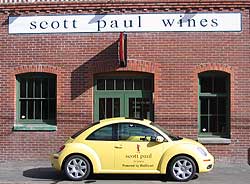
Now it appears there is another name to add to the list. Scott Paul Wright of Scott Paul Selections has been quietly assembling an outstanding portfolio of Burgundy estates that produce classic, purely styled pinot noir and chardonnay wines. A tasting of Wright’s selections will explain the concept of terroir to any doubter. Those familiar with Oregon wines will also recognize the Scott Paul name from his excellent winery based in Carlton Oregon where he strives to make elegant pinot noir inspired by his love of Burgundy. If you wonder why Scott didn’t call his winery Scott Wright instead of Scott Paul, you might remember there’s another outstanding winery and a winemaker named Ken in Carlton already using the Wright name.
I have been tasting with pleasure his selections over the last two years and just attended a compelling tasting of some of his current releases.
- Chablis Grande Vignes, Frédéric Gueguen, 2006 - Classic Chablis with a firm, tight minerality and a long, clean stony finish. While 06’s are considered more forward than normal for Chablis due to the warm vintage this wine will benefit from a few more years of bottle age. A real bargain. ($23)
- Puligny Montrachet, Philippe Chavy, 2005 - Blended from four lieu dits vineyards of medium, but mature age. Thankfully the Domaine uses only 20 to 30% new oak so the complexity of the chardonnay grown in these fine vineyards can show through. Still lean and immature, this excellent Puligny displays all the best attributes of this commune. Clean, firm and mineral laden throughout, this will be an very good wine in about five years. ($48)
- Meursault Charmes, 1er Cru, Hospices de Beaune, Cuvée Bahèzre de Lanlay, 2005 - Purchased at the Hospices de Beaune auction by Wright, this is a big, oaky (100% new) viscous chardonnay that will be well-liked by those more experienced with California Chardonnay rather than Burgundy. Despite all the oak, it is still a very good wine, but I don’t see it as something to cellar. ($55)
- Chambolle Musigny, Les Sentiers, 1er Cru, A. & H. Sigaut, 2005 - All the luxurious, delicious, supple pinot character that you expect from the Chambolle Musigny commune, which Wright unabashedly declares as his first love in Burgundy. The color is perfect pinot, rich and dark, but still completely translucent. The bouquet is perfumed and silky reaching your nose long before the glass is even close to it. While ripe and substantial on the palate, it is still lively and zesty with a wonderful undercurrent of acidity elevating and enlivening the sweet fruit and textures. The finish is long and satisfyingly laced with smoothly textured tannins that promise many years of development. Certainly a wine that should be allowed to see at least its tenth birthday. An outstanding pinot noir. ($72)
- Pommard, Réyane & Pascal Bouley, 2004 (tasted with dinner after the tasting and then with lunch the following day) Yet another 04 Burgundy requiring more time. At first a bit off from what I thought was a bit of reduction so I put the bottle away for the next day. At Easter lunch the following day the wine was lovely, but delicate. This, like most 04’s are Burgundy for Burgundy lovers. Those used to the more obvious charms of New World pinot will find them perhaps too delicate, but those seeking complexity instead of power will be pleased. Let another five years pass to give this wine a chance to open. If you are going to drink now an hour or two in a decanter will improve your experience. ($48)
- Pommard, Platièries, Thierry Violot-Guillemard, 2005 - Perfectly lovely light ruby color that is quite translucent. Richly smoky with a dark, brooding black fruit character that is not prepared to show itself yet. Very structured and tannic at this point, as you would expect from a Pommard, this is a wine that not only requires, but demands significant aging to show its considerable potential. Somewhere around 2015 this should be an excellent wine. ($54)
- Mazoyères Chambertin, Grand Cru, Taupenot-Merme, 2005 - As good as the other wines were, here you reach a new level. This is a wine that will show any Burgundy critic the error of their ways. Simply a stunning interplay of power and elegance, this is an extraordinary pinot noir. The complexity and terroir exhibited by this wine will keep New World pinot noir winemakers up at night wondering if they can ever achieve such wine. All baby fat and young tannin at this point, you can feel the rumbling greatness that will rise in this wine with time. The aromas and flavors are velvety and exotic with touches of smoky oak and bittersweet chocolate. This is another wine that should not be opened before 2015. ($110)
- Romanée St. Vivant, Grand Cru, J.J. Confuron, 2004 - Following a flashy 05 Grand Cru is not an easy position for a 2004, even one as good as this wine. The 04’s seem closed and lean now as they have yet to awaken from the “dumb” stage all natural Burgundy passes through on its journey to maturity. This and the natural lean character of the 04 vintage make this a wine easy to underestimate and I think that would be a mistake. While lacking the power of the Mazoyères Chambertin I think it does not lack in complexity or character. Despite its tightness, the flowery fruit is spiced with a touch of bittersweet orange zest. This is another wine that demands rather than suggests aging. The price should be enough to get most consumers to treat it with such needed respect. This is not a wine for Burgundy novices, but experienced collectors will love it. ($225)
Super Bowl, Super Wine, Super Food
 Having been on the run quite a bit lately, Super Bowl Sunday seemed to be a good day to stay home, get organized and pamper myself with a bit of food and wine. I decided to spend the day with one wine. That way I could really taste the difference time (both for the wine and me) and different foods would make on my perception of the wine.
Sunday morning in McMinnville Oregon is a quiet time. As I am a early riser, it is very quiet. The lone bookstore is the only outlet for The New York Times, which is a pleasure I indulge myself in for several hours every Sunday morning I can, but they don’t open until ten, which is a long time after I awake. However, that’s not a problem as they deliver the stack of papers on the sidewalk in front of the store early and all I do is slide my $5 bill though the crack in the door and slip my Times out of the stack. Then I make a quick stop at the wonderful Red Fox Bakery for an espresso (Illy), a decadently buttery pastry and a warm baguette to go. Then fortified by caffeine, sugar and butter I head for the grocery store to see what’s fresh.
Today’s plunder included a Oregon black truffle the size of a big cherry tomato, some organic eggs from a local farm and some naturally raised local lamb leg steaks from Anderson Ranches. Some wonderful things to pair with the bottle of the day: 2006 Morgon, Terres Dorées, Jean Paul Brun. Anyone who knows anything about wine knows that when you pull the cork on a bottle of Brun you are in for something special.
After three hours with my nose in newspapers and my ears on the Sunday morning political talk shows, a hunger pang sent me to the kitchen. I decided to braise the lamb, making a pasta sauce for a weekday dinner in the process. This is the recipe for the lamb:
- 2 lamb leg steaks
- 6 cloves garlic minced
- 1 onion diced
- 2 carrots diced
- 2 stalks celery diced
- 2 tablespoons chopped fresh rosemary
- 1 cup dry red wine
- 1 - 28 oz. can whole peeled tomatoes ( I recommend Muir Glen)
- Flour
- Salt and Pepper
- 4 tablespoons olive oil
Prepare the garlic, onion, carrots, celery and rosemary. Liberally salt and pepper the lamb steaks and thoroughly coat with the flour. Heat the olive oil in a deep sauté pan (use a pan with a cover) at medium high and when the oil is hot, brown the lamb steaks on both sides and remove to a plate. Reduce heat add all the chopped vegetables and herbs and cook, stirring often, for a few minutes. Add back the lamb and pour in the wine. Return the wine to a boil for one minute then add the canned tomatoes. Salt and pepper to taste. Mix well, cover, reduce heat to low and simmer for three hours, or until the meat is falling away from the bone. Reduce the sauce if too thin. Serve with a big scoop of polenta or mashed potatoes and a generous helping of sauce over each steak. Reserve remaining sauce for pasta on another night. Serves two.
That done for dinner and the Super Bowl, I addressed the hunger at hand and made lunch. The eggs, truffle and a bit of brie was all I needed to make a special omelet:
- 3 eggs (please try to find fresh eggs with yokes that are more red/orange than yellow)
- Several ounces ripe brie with the skin removed
- 1 black truffle
- Salt and pepper
- 3 tablespoons unsalted butter
Whip the eggs with a fork, salt and pepper to taste. Shave the truffle into the thinnest possible pieces. In a non-stick saucepan melt two tablespoons of the butter over medium heat, when melted add the truffle slices and cook for one minute and then remove to a plate. Add the remaining butter to the pan and add the eggs, pushing back from the edges and letting the uncooked eggs run under the set eggs. While still runny, add the truffles and brie to one half of the eggs then fold the other half over the top. Let cook briefly, not letting the omelet brown too much and slide onto a plate as soon as the brie starts to melt. You want the eggs to be barely cooked, not dry. Serve immediately with a tossed salad. Serves one.
Now for the wine of the day, 2006 Morgon, Terres Dorées, Jean-Paul Brun. This is a brilliant wine, bright and fresh, but not at all simple as it is compellingly complex from start to finish. At lunch it was stunning with the truffle omelette with an elegant character that did not overwhelm the eggs, but with touches of earthy complexity under the bright fruit that brought our the best in the truffle. The truffle also brought out the best in the wine. This was a great Sunday lunch. Some six hours later, with my weekend domestic duties behind me and the rich smell of the braised lamb filling the house, at the start of the third quarter I returned to the table and the bottle of Brun Morgon. Needless to say, this was a very different food and wine combination, but the Morgon did not miss a beat. While the omelet brought out the delicacy of the wine, the lamb seemed to bring out the power. Such is the beauty of fine Beaujolais. With the lamb the backbone of refined acidity combined with the richness of the fruit flavors to elevate the whole meal. What was most interesting about the Morgon is that it did not change a bit in the course of being open the whole day. While the food changed the experience of the wine, as I could tell when I tasted it on its own before both meals, the air had not changed the wine at all. This stability means that this wine will grow and expand for years to come.
The wines of Jean-Paul Brun remain undefeated, unlike the Patriots.
Wine Notes
Recent wines I’ve enjoyed:
- Anderson Valley Brut Sparkling Wine, Roederer Estate, 25th Anniversary, NV - I’ve had this very nice sparkling wine many times lately; several bottles at home and then one interesting experience at a wine bar. First for the wine bar experience; my local wine bar was offering both the NV Roederer Champagne Brut and the Anderson Valley Sparkling, but having had the Anderson Valley recently I, against my better judgement, ordered the Roederer Champagne. I say against my better judgment because few wines are more disappointing these days than big name Champagne. However, I took one sip and was blown away by the quality of the Roederer Brut. Not so fast, I soon found out the bartender had poured me a glass of the California Roederer by mistake. She quickly followed up with a glass of the real Champagne, which, as usual, was lackluster. The Anderson Valley Roederer continues to be an outstanding American sparkler and is clearly superior (and less expensive) then their Champagne.
- Champagne, Grand Cru 100%, Blanc de Blancs, Reserve Brut, Guy Charlemagne, Le Mesnil-sur-Oger, NV - High strung and very toasty, this is a delicious and complex Champagne that shows the best of chardonnay in Champagne. The aromatics are delicate, but not a bit shy with a steely froth that races across the palate, stopping just long enough for a compelling finish. Although I prefer the big Bouzy Champagnes, this is an excellent wine and a bargain at $46. This is a one of those Champagnes that can handle caviar.
- Riesling Kabinett, Selback-Oster, Mosel-Saar-Ruwer, 2006 - I enjoyed a bottle of this lovely wine over four days as an aperitif when I arrived home from work. I swear after four days in the refrigerator this wine hardly changed a bit. Such stability is a tribute both to their winemaking and winegrowing. Only perfect grapes can produce such harmony. Beautifully fragrant with honeysuckle and spices, it took effort to pull your nose out of the glass to take a sip. That sip delivered pure charm and seductive white peach and ripe pear flavors laced with tart citrus and a lovely touch of sweetness. No thought required here, just up-front delicious pleasure. Nice screw-cap, I’d drink this up young and fresh.
- Riesling, Alsace, Albert Boxler, 2004 - This is it, riesling right on the money. No-over-the-top, off-dry, high alcohol, quasi-dessert wine from Alsace here, but a big, rich wine that maintains respect for the variety and vineyard from which it came. On the fuller gold side of color with a rich nose touched with hints of figs laced with bright apricot with touches of crisp apple that continue into the complex layered flavors. It is rich and expansive on the pallet without becoming dull as it maintains a racy, crisp essence under its substantial girth. I enjoyed this thoroughly with some of my own crispy fried chicken.
- Monferatto Rosso, Braida IL Banciale’ di Giacomo Bologna, 2004 (60% barbera, 20% pinot nero, 10% cabernet sauvignon, 10% merlot) - Not so long ago I had a bottle of the most expensive wine Bologna produces, which I did not enjoy. Yet here is one of their least expensive wines and it was a delight. Earthy and fragrant with great complexity and balance, it was delicious with a very buttery mushroom risotto at Bice. Oddly enough, the cabernet and merlot hardly show in this wine as the backbone is all barbera and the aromatics and elegance all pinot nero. I really enjoyed this wine, which only really seemed to open with the last glass.
- Dolcetto d’Alba, Pra di Po, Germano Ettore, 2006 - This is simply a wonderful dolcetto that I intend to buy a few cases of as soon as possible. I recommend you do too before it’s gone. This wine is all about hedonistic pleasure over the next two years, although I doubt any bottle I have will make it that far. I salivate thinking about the beautiful bright wild dark cherry and blackberry fruit flavors and aromas intermingled with hints of black truffles, new leather, sage and lavender. All of this is held together by racy acidity and some silky tannins that bring all the fruit intensity into perfect harmony.
- Barbera d’Asti, Roberto Ferraris, 2006 - This is one of those stealth wines. It seems pleasant enough at first, but by the time you finish your second glass it has you hypnotized. What is amazing is no matter how long you leave it open it just seems to get better and better. I finished the last of a bottle that had been open for three days tonight and it was flat out wonderful. This is not a big wine, it is exceptionally balanced and the underlying complexity requires you to pay attention and introduce yourself before revealing everything. I’ve opened three bottles now and I would suggest decanting this wine for an hour before serving if, like me, you can’t resist drinking it. What this wine is not is a jammy, oaky ultra-purple barbera like so many make these days. If you can, give it a few years in the bottle and you’ll have something special.
- Gigondas, Bertrand Stehelin, 2004 - Big and beautiful is not easy to do, but this wine achieves it. The aromas and flavors are richly pungent, bringing to mind an old fashioned butcher shop where the aromas of raw meat mix with sawdust and smoke. Intermingled with all these carnivorous sensations are ripe wild blackberries, an engaging warmth and round tannins that give it a nice backbone. I served this wine with some braised, bone-in pork loin and all three of us enjoyed the experience. While obviously too young to be at its best, this is a wine that just draws you into its sumptuous experience and you find yourself savoring each drop as you finish your glass after the meal is done.
Carbonnieux

This warm recollection has led me to order many a bottle of Carbonnieux over the years. More often than not I drank the Blanc as it was widely available and a staple on wine lists. However, those days are long gone and I haven’t seen a Carbonnieux Blanc on a wine list for a long time, but suddenly there it was on the list yesterday at lunch and I could not resist the warm tug of nostalgia and ordered a bottle of the 2004. The Carbonnieux white wine vineyards are planted to 65% sauvignon blanc, 34% semillon and 1% muscadelle and, although the semillon is the junior partner, its smooth creamy oily textures dominate the blend, while the sauvignon blanc provides lift, highlights and zest to the finish. Considering the improvements in winemaking at this estate over the last decades, it’s safe to assume that these are far better wines than I drank in the past. While there are more profound whites from Graves, this is a lovely wine with a character that easily flows across the palate. In addition, the 12.5% alcohol maintains the liveliness of this wine instead of letting the dense oily character of overripe semillon make the wine heavy and dull. This Grand Cru was just labeled Graves when I first drank it, but the wine is now part of the prestigious Pessac-Léognan Appellation, which was first created in 1987.
This trip down memory lane made for a very pleasant lunch. Like, music, wine can also transport us to a different time and place.