Too Big for the Pig

bastille7.sized.jpgIt was a glorious Bastille Day. The weather was so appealing you could not resist being outside. So, off we went to Portland’s Bastille Day Festival. As the lines at the food stands were just too long, we opted for lunch at the lovely Fenouil restaurant, which is on the same plaza as the festival, to more comfortably enjoy some fine French cuisine and wine to celebrate the day.

The spectacular day combined with my anticipation for the excellent lunch soon to arrive and the charming live French music coming from the adjacent celebration inspired me to splurge a bit on the wine. Although, I confess this does not take much inspiration. I could not resist trying the 2003 La Font ď’Estévenas, Domaine Daniel and Denis Alary, Cairanne Côtes du Rhône. Although expensive for a Cairanne, I love the firm earthy intensity of a good Côtes du Rhône and as it was imported by Weygandt/Metzler it seemed  especially promising.

I goofed. I should have followed a newly developing rule: When in doubt, stick with the medium priced wines on the list. Unfortunately these days, high prices usually mean you’ll get what I got: an over-extracted, over-oaked fruit bomb with high alcohol (14.5% in this case), that tasted awful with food and sedated my taste buds into hibernation. What a disappointment this heavy-handed effort was. It was so massive that even the delicious, rich roasted pork from a wood fire roasted whole pig prepared specially for the Bastille Day menu was overwhelmed.

For half the price I could have enjoyed a number of zesty southern French reds from lesser known regions that would have been a delight. I hope I have finally learned my lesson and remember that for less you often get more. Not more power, but more pleasure. When it comes to dining I prefer pleasure over power.

Tepid Enthusiasm

The restaurant was stunningly elegant - they must have spent millions. Everything in its place and everyoneicebucket.jpg perfectly trained - working like a fine watch as they glided through the dinning room. As much attention was paid to the wine list as the food and the list was full of tempting bottles, beautifully displayed on arching racks behind the bar. The tables gleamed with exactly the right Riedel stemware for the wine selected.

It was a beautiful warm West Coast day, 85 degrees with no humidity, so the broad glass doors that formed the perimeter  of the dining room were thrown open to let the evening’s cool breezes slip gently through the room. It was that sublime type of warm that oozes comfort. After stretching the limits of my wife’s patience, I finally made a choice from the comprehensive wine list. With distinguished fanfare the bottle arrived at the table, the cork was removed and sniffed.  A small splash was poured into my gigantic Riedel and I took a sniff and a sip. Although it was not corked, it was not right. There is just something not enjoyable about a 14% alcohol wine served at the temperature of bath water.

Tepid red wine is not pleasurable to drink. 

Why is it that restaurants that spend hundreds of thousands of dollars on custom display wine racks and hyper-expensive glassware can’t bother to serve their wines at the proper temperature? There are the bottles on dramatic wall racks or lined behind the bar, only to spend the night with the A/C turned off or warming up to the open-air temperature of a warm summer day. Red wines should be served at 68 degrees not 78 degrees.  

America is the country where we serve our white wines too cold and our red wines too warm. That old saw about serving red wines at room temperature was conceived by some old British Lord sitting in a damp old castle, not some gleaming restaurant in LA or Manhattan. 

Restaurants have made great strides in wine service. Wine lists have improved dramatically and great glassware is the norm, not the exception, in almost any good restaurant. Now they need to take those few last steps. I am tired of having to ask for an ice bucket for my red wine, which I have to do in almost every restaurant I visit from June to September. With the price most restaurants painfully extract from the consumer, the very least they could do is serve the wine at an enjoyable temperature.

Bad Vintage = Great Wine

Bad Vintage = Great Wine. Not the equation you usually think of, but it is often a reality. Well, it’s a reality in the hands of a great winemaker. What the best winemakers do when that bad year hits is do everything thing they can do in the vineyard, then brutally select out the best wines in the cellar and then declassify them to a humbler place name or label. The result is wines from great vineyards that usually sell at stratospheric prices are released at a fraction of the price. While they may indeed be a fraction of the wine these vineyards can produce in a good vintage, they still can offer exceptional value and let the consumer come in contact with some of the elements that can make such wines unforgettable at their best.

One such wine is the 2002 Giuseppe Quintarelli Primofiore.  Quintarelli’s Primofiore is always a delight,quintarelli-doppo--vinitaly.jpg but when vintages like 2002 curse the Veneto, wines that would normally be destined for his rightfully exalted Amarone end up in Primofiore and the results are stunning. Primofiore is a first pressing and includes all of the varietals Quintarelli grows including: Corvina Veronese, Corvinone, Cabernet Sauvignon, and Cabernet Franc, which are partially dried before fermentation, then a touch of lees from the fresh Amarone (or in the case of 2002, probably Rosso del Bepi) adds depth, structure and body. While Primofiore is only a faint shadow of  the incomparable Quintarelli Amarone, it is a very lovely shadow indeed. The finish of this wine is a haunting reminder of the layered greatness of the Amarone - just at a much lower volume. However, with Quintarelli’s Amarone approaching $300 a bottle, if you are lucky enough to find some, Primofiore will only set you back $40.


Ultimate Food Porn Downloads

If you have any doubts how the Internet is changing the cookbook publishing industry you only have to visit www.tastingmenu.com

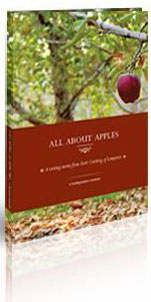
allaboutapples2.jpgAt TastingMenu.com you will find two gorgeous ebooks featuring spectacular food photography and an in-depth look at two creative menus from two dynamic chefs.  While beautiful cookbooks are hardly a rarity, what makes these books stand out is the price. They are free downloads. All About Apples, a tasting menu from Scott Carsberg of Lampreia offers a creative menu including apples in each recipe. Such intriguing dishes as “Dungenss Crap wrapped in Red Delicious Apples” and “Cooked and Raw Zumi Apple with Red Prawn and Virgin Olive Oil Dressing” make  a trip to Seattle’s Lampreia Restaurant to sample some of Chef Carsberg’s food seem an absolute necessity.

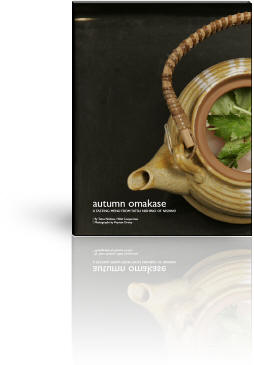
The second ebook,  Autumn Omakase, a tasting menu from Tatsu Nishino of Nishino, presents an equallyautumnokase.jpg stunning menu based on Chef Nishino’s modern and very creative Japanese cuisine that he presents at his Seattle restaurant. Recipes are accompanied by equally delicious photographs featuring recipes such as “Seared Foie Gras, Maguro and Shitake Mushroom with Red Wine Soy Reduction” and “Hamachi with Balsamic Teriyaki.”

These wonderful free downloads offer a detailed look at the concepts of two chefs that you may have never discovered on the bookshelves of Barnes and Noble.  Beautiful and concise, this new type of publication offers cooks information that allows the home cook to take their technique to a new level and lets you save your money for food and wine.

WBW #23 Round-up - Barbecue Wines!

viviswinejournal.jpg


This month’s host for Wine Blogging Wednesday, Joel Vincent of Vivi’s Wine Journal has posted the round-up of this month’s topic, Barbecue wines. The range of dishes and wines is truly exciting and creative so be sure to check out Wine Blogging Wednesday #23 at:

http://www.vivisjournal.com/vivis_wine_notes/2006/07/wbw23_round_up_.html#more 

 Thanks to Joel for hosting this month!

Grilled Fresh Anchovies and Sardines - WBW #23

wbwlogo_6.jpgThe years I spent living in Italy changed my concept of Barbecue forever and so my take on this Wine Blogging Wednesday topic takes a decidedly un-American twist. My version of Barbecue now brings up the vision of my friend Massimo sweating over a very smoky fire of real wood instead of charcoal, sipping on a big bottle of Becks and rapidly turning the fresh fish on the grill. While every smoky bit of seafood he tossed on the big platters was delicious, for me nothing could beat the rich, oily taste of the fresh anchovies and sardines.

Massimo marinates them briefly in extra virgin olive oil, onions, lemon and rosemary before tossing them over the hot, smoky fire for just a few moments per side. The results quickly made me forget ribs and burgers. Fortunately for me, in the USA Oriental fish shops are a good source of fresh anchovies and sardines - at least if you ask for them.

While crisp Oregon pinot gris is certainly a great choice for these little beauties, I usually find myself going back to the zesty Italian whites I would have shared with Massimo on such an occasion. While you want plenty of acidity to balance their richness, you also need a bit of body to match their full flavor. This year  a bottle of 2004 Cesani Vernaccia di San Gimignano (imported by the ever reliable Montecastelli) was the perfect foil. With a firm backbone of acidity expanding into  round, mineral, almond and fresh pear aromas and flavors,  this is no simple tourist San Gimignano white, but a wine that will grab your attention - at least until you pop the next anchovy into your mouth.

A Light in the Forest

Trashing the trashy Wine Spectator has become the easy sport of  wine writers, electronic or not. Yet, as theyforest-light.jpg say, every cloud has a silver lining. The “silver lining” of The Wine Spectator is easy to find. All you have to do is look for the monthly column of Matt Kramer. How such a reasonable, thoughtful and open-minded voice continues to exist on the pages of the Spectator is something not easily explained. While I keep up my subscription to the “Speculator” out of obligation, I confess the first thing I do when I get my new edition is to flip the pages until I get to Matt Kramer’s column, which is an island of intelligence in the Spectator sea of hype and misinformation.

Matt offers that rare combination of intelligent wine commentary mixed with good writing - something hard to come by and a recipe missing from most of the pages of The Wine Spectator. To experience the creativity and wine savvy of Mr. Kramer, you can read almost any column he has written, but there is a tremendous example of his sensitivity and clarity in the  June 15th issue of the Spectator.  

In his column titled “Terroir Matters”, Kramer  distills the complicated concept of terroir down to an idea that any wine lover can wrap their arms around. Never have I seen anyone more eloquently and simply communicate this essential concept to those seeking to understand the beauty of wines driven by vineyards rather than technique.

As there is a good possibility that you missed Matt’s “Terroir Matters” piece on your headlong rush to get to the top pointy wines at the back of this issue, I can only encourage you to dig out your copy of the June 15th “Speculator” again and take a second to understand the flavors and feeling of terroir, so thoughtfully presented by Mr. Kramer. 


VA

VaThere was this wonderful smell. Exotic, floating enticing, but what was it? It had been a while sense I’d experienced it and I couldn’t put my finger on it. Then it came to me it, that clean tang of Balsamic vinegar. This wine had VA and I loved it.
The wine was 1998 Alion, Ribera del Duero, from Spain’s revered Vega Sicilia. I found it to be wonderful, complex, layered with both power and balance. The kind of wine that grabs your attention and holds it every single sip and sniff, always growing, changing and expanding. This is a wine that plants itself in your memory. Yet, it clearly displayed volatile acidity. Something considered to be a fault in modern winemaking, that often was an integral part of the great wines of the past.

Volatile acidity refers to acetic acid, which we more commonly know as vinegar. There is no doubt that acetic acid is a threat to wine, but there is also no doubt that tiny traces of it can add a new dimension, a highlight, to a wine’s character. While some VA is always present in wine, a very little bit goes a long way, but certain wines seem to dial-in just the right extra touch of VA, like the 1998 Alion does. Today’s drive for squeaky clean wines often takes some of the most interesting edges of the wine away leaving only simple fruitiness for a wine to hang its hat on – charming, but not the most interesting of characteristics.

While no one can deny the vast improvements in winemaking, our goal in winemaking should not be to make wines so sterile they’re no longer alive.

Wine Blogging Wednesday #22 Wrap-up

winecast.jpg
Wine Blogging Wednesday #22 host Tim Elliot of Wine Cast, the excellent wine podcast site, has posted his wrap-up of this month’s event. The topic of WBW #22 was red wines under 12.5% alcohol. While to some that may appear to be a challenging quest, by the results it was easy to find nice wines if you drink French wine.

You can find Tim’s synopisis of WBW #22 at his website from the link below:

http://winecast.net/?p=400 

 You can read my contribution to WBW #22 from the link below:

http://craigcamp.com/journal/2006/6/13/tiny-dancer-wbw-22.html 


The Red Wine District?

RedlightWhat an outstanding publication The Wine Spectator is! The recent June 15th, 2006 issue features an exciting, in-depth special edition on creating your own wine cellar. It’s a beautiful pull-out piece called A Connoisseur’s Guide to Wine Collecting and what a slick publication it is.

With beautiful photography and insightful articles, they lead the trusting Wine Spectator readers down bumpy road to wine collecting. The feature articles outline: “Five Winning Cellar Strategies” and “36 Wines to Buy Now.” Certainly that last one has Wine Spectator readers running to the store with their pull-out list in hand. In order to give you a sneak peak and a head start to the store to snap up these 36 wines to buy now, I thought I’d list a few of them here. Their “Balanced Cellar Selections” include such absolute must buy estates for any collector like: Beringer, Greg Norman, Stag’s Leap Winery, Chateau St. Jean, Penfolds, St. Clement, Gabbiano and, getting even more exciting for any serious wine collector, hard to get wines like: Beringer Merlot, Rosemount Shiraz, Campanile Pinot Grigio. Wolf-Blass Chardonnay and Taz Pinot Noir. What would a great collection be without such wines? Well these recommendations are a bit confusing as they don’t mention any vintages, but what would vintage matter to anyone collecting such extraordinary wines as these?

As you dig into this great piece of Wine Spectator journalism we finally reach the pinnacle of wine collecting as they recommend seven vintages of Beringer Reserve Cabernet. For their investment cellar, more wines from Penfold’s, Stag’s Leap Winery, Wolf Blass, Chateau St. Jean, Rosemount and Beringer are recommended. Certainly The Wine Spectator has done us all a great service with this well researched information and many johns will use this fine piece of wine journalism as their guide to building a wine cellar.

…but wait a second. Isn’t every one of these wines part of the World Wine Estates Portfolio? You know, World Wine Estates, that mega-beverage wine corporation. This must just be an accident as I can’t believe The Wine Spectator, that bastion of wine journalism ethics, would ever publish an advertising piece produced by some giant corporate advertiser in a way that it would look like it was produced by the editorial staff of the magazine. Without a doubt, they would mark such a piece as advertising so as not to confuse it with their editorial content.

So it must just be an coincidence that 100% of the wines in this special pull-out section are World Wine Estates brands that are heavily advertised in The Wine Spectator, and we can all rest assured that they would never publish an article that would confuse their readers between real content and advertising. 

Should someone, somewhere feel a little dirty? 

Tiny Dancer - WBW #22

It was haunting. Mysteriously darting here and there while all my senses reached hungrily out for each nuance,wbwlogo_6.jpg chasing them like glints of light radiating from a gem. A cloud of delicate sensations ran through my brain then lofted away. Nothing overwhelmed me, but its teasing, tempting and almost impish personality became addicting. I found myself coming back to it night after night as there was something so compelling about its vulnerable, yet soaring complexity. Like a seemingly weightless ballet dancer, every move floated through my senses.

There’s a pretty good chance you’ll hate it, or won’t get it, but I find myself pulling the cork from a bottle of this wine several times a week because I have found few wines so satisfying at the dinner table.

terresdorees_small1.jpgThe wine: 2004 Beaujolais, L’Ancien, Vielles Vignes, Terres Dorees from Jean-Paul Brun. Just writing about this wine makes me salivate.

It’s not big. It’s not powerful. It’s not pointy. It is simply delicious. No juicy-fruity Duboeuf here, but a wine with a strangely powerful delicacy. The bouquet entices not attacks and on the palate it dances, challenging your palate to follow its lead - if you have the time and inclination. Considering the under $15 price tag, a wine that can lead your senses in so many directions is a staggering bargain.

Never passing 12% alcohol and produced without manipulation, the delicacy of such a wine is sure to disappoint palates trained on the hyper-extracted and manipulated wines of today, but if you are getting a little bored with indistinguishable wines from unidentifiable places, maybe, just maybe, you can open your palate and mind to something new. Actually, it’s not new; it’s very, very old. We all just forgot.

Beaujolais , L’Ancien, Vielles Vignes, Terres Dorees is imported by Louis/Dressner

Death Wish

Wineandspiritsmagazine

Wine and Spirits Magazine must have a death wish. They are writing about interesting wines in interesting ways, and to make matters worse, they are writing about interesting wines that are good values. Considering how popular the commerce driven style of coverage is in other wine publications, Wine and Spirits is certainly trying to commit suicide by taking such a radical approach.

Look at the current issue (June 2006) featuring value wines of the year. For example:

  • Joshua Green is recommending Clos Puy-Armand Côtes de Castillon and Navarro’s Methode à L’Ancienne Pinot Noir
  • Tara Thomas suggests Castel Montplaisir Malbec from Cahors, Château Les Tours des Verdots Bergerac Mouelleux and Domaine Berthoumieu Madiran

  • Patrick Comiskey likes Château de Beauregard (a Pouilly Fuisse of all things!) and Amavi Cabernet Sauvignon from Walla Walla

  • Peter Liem recommends Domaine des Terres Dorées Beaujolais ( a wine sure to confuse California or Australian wine drinkers) and a German Pinot Gris from J.L. Wolf in the Phalz.

Throughout the article the Wine and Spirits writers recommend French wines from little-known regions, wines from producers around the globe making elegant and balanced wines and ignore the power brokers of the wine business. There can be no other reason for such reckless behavior than a desire to put the magazine out-of-business. Perhaps this article was edited by Marvin Shanken in disguise. I mean, who could possibly want to read an article full of recommendations of wines that are wonderful to drink and don’t cost much.

Unfortunately, for Wine and Spirits, way too few people.

Barbera d'Asti Superiore, Litina, Casina Castle't, Maria Borio, 2003

The lovely cascading “C”s of the front label well convey the delicous wine in the bottle. This is an outstanding Barbera with both depth and zest. Both deep fruit and mouthwatering acidity. Both, both, both as this is a wine of perfectly intertwining counterpoints. The combination of rich fruit with electric acidity makes this a perfect wine for steaks and chops. It is sure to impress anyone who takes a sip and pays attention.

Barbera del Monferrato, Goj, Maria Borio 2004

Maria Borio is rapidly becoming my favorite Barbera producer for the clean authentic beauty of her wines and this zesty Barbera is no exception. It is vivace, or lightly effervescent and this lightly sparkling quality is well-loved in Italy, but has no counterpart here in the USA, so consumers are often confused by such wines. However, there is nothing to be confused about as these wines are all about simplicity and straightforward pleasure. The combination of acidity and effervescence makes such wines extremely refreshing with the rich everyday dishes so common in Northern Italy. I find this wine an absolute delight with pizza and recommend drinking this simple pleasure slightly chilled.

Bandol, Chateau Jean-Pierre Gaussen, 1999

A year in Provence is not enough when you taste wines like this. Deeply aromatic and earthy with a wonderful layered character unlikely to generate many points, but certain to generate pleasure at the dinner table. Yes, this is a big wine, but not by today’s standards as it sports the weight of a big Bordeaux on the palate and will seem almost delicate to Shiraz drinkers. A top-notch wine that really adds pleasure to a meal.

Pleonasm

PleonasmDefinition: pleonasm: the use of more words than are necessary to express an idea

I have a new word for Webster’s – eno-pleonasm: the use of more winemaking techniques than necessary to make a wine.

Winemakers today seem to lack confidence, or perhaps it’s a personal vision. Most of all, it’s a lack of a solid tradition. Not so many years ago, winemakers didn’t have to give much thought to the style of their wine. That was determined by tradition: you knew what your wine was supposed to taste like and you made it like your father and grandfather and great-grandfather did. That was good and that was bad. A lot of bad wine was made because little thought was put into it, but a lot of good wine was made because the winemaker had a clear sense of history and time and what that meant to their wine. This confidence meant change came slowly. Of course, this meant that many beneficial changes were too slowly accepted, but it also meant that regional character was safe from the whims of the wine fashion market. No longer is this true.

Today winemaking has taken on the same emptiness as the fashion runways of Milan and Paris, where it is more important to shock than create real clothing. Today’s wines are all-to-often like the bizarrely dressed models prancing down the runway in an outfit that no one could really wear in real life – or to put it in wine terms – have with dinner.

Too many of today’s winemakers create eno-pleonasms using every intervention at their disposal instead of making real wine, because they don’t really know what they want and, as a result, are slaves to the fashion world instead of wine with food world.

Champagne, Brut, Nicolas Feuillatte. NV

Don’t waste you money on this generic effort. You can buy Oregon or California sparkling wines for the same price that offer much more to get excited about. Proof that a name in itself no longer has any importance in an era where top quality wines are produced around the world. As much as I revere Champagne, there is nothing to revere here. Try Oregon’s Argyle for $10 or more less a bottle and you’ll get a far more interesting wine.