A Fool and His Money...

"Nobody ever went broke underestimating the intelligence of the American public," perhaps H.L. Mencken.
"There's a sucker born every minute," perhaps P.T. Barnum.
These quotes are part of American folklore even though there is every reason to believe they were never uttered by the the two men who are given credit for them by popular culture. However, the basic truth they convey is not in dispute. There always is the fool and his money, a story which goes back to the Bible and before.
These phrases where brought to mind by the recent article in Wine-Searcher titled "The Most Expensive Wines in California." While it is no surprise to find the name Screaming Eagle at the top of the heap the real revelation is that it's not their Cabernet Sauvignon at the pinnacle, but their Sauvignon Blanc.
The Screaming Eagle Sauvignon Blanc is selling on the open market at - wait for it - $3706 a bottle, which importantly at that price, does not include tax. Most people will be shocked that someone would spend that much money on a bottle of Sauvignon Blanc. I am not shocked. I am offended.
I am not offended by the obvious stupidity of such a purchase, I just find such waste an insult to the human race. It is impossible to comprehend how an individual can be so hollow, so vacuous as to spend that much money on a bottle with no history. Perhaps I could understand such a price on a bottle that belonged to Thomas Jefferson, but, come to think of it, those also turned out to be frauds.
In our problem-filled world this kind of wasteful public comsupution is repugnant. You'd think someone could have enough self-discipline to suffer through a measly $700 bottle of Sauvignon Blanc and then still have $3,000 left to do something meaningful for our planet and the beings that live upon it without experiencing undo hardship.
If you're going to to throw money in the trash at least be sure it ends up in a dumpster where someone who really needs it can dig it out of your garbage.
This report follows last weeks article by the always erudite Andrew Jefford in Decanter called "Beyond Best" Notes Jefford, "If a particularly commodity is high-status, sought-after and limited in supply, then ‘the best’ will always be disproportionately more expensive than other quality categories of that commodity, by virtue of nothing more than its rarity."
Indeed these "unicorn" bottles as they have become known are no longer wines, but commodity status symbols to be rolled out in situations that gain the owner the greatest visibility and status. It's no longer about the wine, but about who has the means required to possess the unicorn. Again Jefford gets to the heart of the matter, "In other words, tasting great wine can often be a pre-programmed, ritualised experience. It may be exquisite, but it isn’t necessarily interesting."
I will go along with Jefford in his quest to find the interesting, something which rarely applies to rituals. In its soul wine is a living agricultural product and the production of it is done by people close to the land. Wine is made by winemakers, vineyard workers and nature and the process is dirty, sweaty, exhausting and sometimes dangerous. All to often, especially in places like the Napa Valley the people that own the land are not the ones that work it and make the fruit into wine. The quest for ego gratification has twisted the wine business and the way we make wines. Wine is agriculture not religion.
Someone who spends $3000 on a bottle of Sauvignon Blanc should be the subject of ridicule not adulation. They are the proverbial "sucker born every minute" and their waste should be objects of our scorn.
In the early eighties corporate behemoth Heublein was gulping up wineries and had ingested Napa Valley icons Inglenook and Beaulieu. Each year they would have a national road tour to show off their international portfolio of famous wine names. An upscale hotel ballroom would be lined with tables laden with great bottles from around the world. At the head of the room was a stage where ancient Grand Cru Bordeaux would be offered to the crowds. The line for just a sip of old Lafite or Latour would wind out of the ballroom and down the hall and tasters would wait hours for a thimbleful. This would leave them no time to sample the other treasures in the room and wines from the greatest names in the Rhône, Alsace and the rest of France would go almost unnoticed. In the center of the room were two long tables featuring their new acquisitions Inglenook and Beaulieu. On each of those tables were twenty-year plus verticals of Inglenook Cask and BV Private Reserve going back to the 1950s. Much to my pleasure these tables were ignored by the throngs waiting to get a half ounce of old Bordeaux while I tasted and re-tasted these legends. I never got a sip of the old Claret, but I did get to spend an entire afternoon immersed in those sublime classic Napa Valley Cabernet Sauvignons. That was more than interesting.
It always appears that the great wines are the ones at that head table, in the spotlight, but like most sleight-of-hand that's an illusion. The most interesting wines are rarely the most expensive.
For some reason it almost always seems to be men who drop these outrageous sums on these extreme unicorn wines. I wonder what they are trying to buy? One thing for sure, it's certainly not wine.
Note: The price on the Screaming Eagle Sauvignon Blanc is not what the winery charged, but the resale price set by people reselling the wine.
Double-click to edit...
Apple Wine Geek

I'm a geek when it comes to technology. On top of that I'm an Apple geek. As my desire is to use my Apple products to the max I listen to many podcasts on Apple products. I've learned a lot from the many hours I've spent listening to these podcasts.
I've learned to be more efficient and to use the software and hardware available to me the way it was meant to be used. Investing this time has made me a power user. I've learned another thing too, the hard way. While I'm a technology geek, the hosts of these podcasts are technology addicts. When they use hardware and software they are looking more intensely for what is wrong with it than what’s right about it. They inevitably get bored with any piece of software and constantly need to fiddle with new products just because they are new. If you follow their impassioned comments podcast to podcast you'd be changing your software weekly.
I’m just as much a geek when it comes to wine and the wine addicts as compared to the wine geeks work the same way. Too often newness alone is considered exciting and, all too often, a blind eye is turned to winemaking faults. They get bored with Bordeaux, Napa Cabernet and Oregon Pinot because they simply need to fiddle constantly to entertain themselves. When you have to write a new article every week shiny new toys are always more interesting than the old ones.
More and more I find myself settling down with my technology and my wines and focusing on understanding more deeply what they have to offer. I’m finding it more rewarding to dig deep into what each has to offer me and truly come to know all they have to teach me. With software the more I work with it the more I learn about the real power written in the code. With a wine, the more often I revisit it the more nuance I find. I am finding this approach deeply rewarding.
All things considered, I think I’m becoming a bigger geek than ever.
Apple Wine
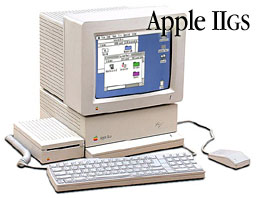
For most of the quarter century since then I loved technology, but wrestled with it trying to get done not only what it was supposed to do, but what I dreamed it would do. Most of those years it was like hot-wiring a car to get even basic things done. I made many an heroic effort to make things work the way the ads promised, yet it was always a struggle. I remember one night in a hotel in Florence ripping the phone wires out of the wall and directly connected them to my laptop to get my email over a brutally slow dial-up connection. Another long night was spent reloading the complete Microsoft Office Suite back on my computer at 4 a.m. - all 30 or so floppies taking several hours - so I could make a Powerpoint presentation in the morning after my hard drive unexplainably blew up. It was like only getting to taste Lafite as a barrel sample: sure it was good, but you knew damn well it was going to get a lot better.
I went through them all: Blackberrys, Treos, Windows this an that, Mac those and these and they only teased me with their potential and never lived up to their advertising. I was frustrated and addicted: until now. For the first time it my life everything is working. My all Apple tool chest includes a MacBook Pro, iPad and an iPhone all tied together with Gmail, Dropbox, Instapaper and Evernote. What has happened is that no longer do I have three devices, but one device with three different user interfaces.
The fluid interaction of these three devices has totally changed the way I manage my wine information. The volumes of wine notes taken over thirty years are being scanned into Evernote, where they become searchable PDFs. The word searchable is the key as it means I can actually use them. No more do I have pockets full of loose notes from every wine I taste. Now I just take a quick photo with my iPhone, which I also put into Evernote, where I add my tasting notes. Articles of interest are clipped into Instapaper for reading when the time presents itself on my iPad. I am sure I am reading twice as much as before. This ability to collect and find all my wine information is not only changing my wine experience, but that of wine drinkers everywhere.
This ability to create your own personal wine encyclopedia reduces an individuals dependence on one or two wine media gatekeepers. It makes it easy to grab information from anywhere and everywhere to come up with your own opinion based on many voices instead of few. This is a very good thing for small wine producers or those of distinctive styles so overlooked or actively excluded from coverage by established wine media. Information is indeed power.
Apple wine is very user friendly.
Do Bianchi on Big Beef and Big Critics
This is a must read. Blogger Jeremy Parzen ruminates on the career of Wine Spectator critic James Suckling, while teaching us how to cook bistecca alla fiorentina.
There’s no two ways about it: during James Suckling’s tenure at the Wine Spectator, the scores he gave to modern-style Brunello — with Casanova di Neri as its poster child — helped to eclipse the sale of traditional-style wines,
link: The James Suckling era ends (and what we ate and drank for my birthday) « Do Bianchi
Number 1! Number 1! Number1!
Latour is top wine of Bordeaux 2009, says survey May 6, 2010 By Richard Woodard Chateau Latour has beaten Margaux and Lafite to be the wine of the 2009 Bordeaux vintage, according to a survey of the international wine trade.
link: Latour is top wine of Bordeaux 2009, says survey - decanter.com - the route to all good wine
Absurd isn’t it? The whole concept of something like wine, based on taste and individual experience, having a number one. It is a concept that is perhaps worse than absurd. You can have a “best” sports team as they are able to win a clear victory over their competition. The team with the most points wins. Yet, perhaps even in such seemingly clear head-to-head competition often the best team doesn’t win. Serendipity can trump skill.
The pitiful absurdity of such a statement from a publication of the stature of Decanter is particularly embarrassing as they know better. It is always important for us to remember that wine publications like Decanter are not in the wine business, they just live off of it. They don’t make or sell wine: they sell magazines. All of their editorial choices are focused first on selling magazine subscriptions and once in a while a some real wine journalism fills in around the edges.
Naming a number one may be a good business decision, but it is not honest.
Living Impressionism - Monet 95 points/Renoir 93 but a "Best Buy"
 The white blurs intertwined and wove themselves in and then out of the lights. They could move from absolute stillness to a dazzling, dizzying swirl of energy and grace. The second act of Swan Lake in this winter’s performance by the San Francisco Ballet was like watching a Renoir or Monet come to life.
As the beautiful vision of the dancers floated from the stage the first row leapt to their feet and, like the Olympics, rated the performers with points. Holding up their placards they reduced art to sport. Absurd, right? While such a nightmare is offensive to anyone who cares about beauty this is exactly what we now do with both food and wine. Today wine is about points and food is about Iron Chef TV slap-downs.
Could there be anything more anti-fine dining than turning wine and food into a sport? Yet this is precisely what we have done. As when you watch a ballet or contemplate a painting, fine food and wine should transport you away from the intensity of day-to-day life and inspire your mind to find peace and pleasure. Dinner should be a time to slow down, not a best of three falls.
There are two big lies in the wine world. The first is that price is related to quality and, second, is that point ratings for wines are worth anything. Beside the fact that rating wines with points is an affront to what they were created for (to be part of a meal), they are a lie on on their own turf - statistics. To be meaningful a critic that rates wines on a numerical scale, be that 10, 20 or 100 points, must be able to repeat those results over-and-over in all tasting conditions. Anyone who knows anything about taste and the human condition knows that is a joke. Critics that use points are not only fooling their readers, they’re fooling themselves.
I defy anyone to take this test. We’ll take twenty-five top quality wines of one place and variety and blind taste them over a five day period without the expert tasters knowing the variety or place of origin having them rank the wine using their preferred scale . Each day we’ll open a fresh bottle, then taste the wines in four flights, in each flight changing the order of the wines being tasted. Needless to say, that if these results were analyzed the worthlessness of reviews based on points would be clearly established. If statistical results cannot be repeated they are worthless, which is exactly the value of the point ratings used by the major wine critics.
Not that anyone would listen because while consumers like points as a simple way to make buying choices, wine producers like them even more as a simple way to market their wines. The point is that points are an easy way out for everyone, but most of all it is an easy way out for the big wine publications. After all we should remember their business is not selling wine or helping people to buy better wine. Their business is selling magazines, which is something rating wines on a point scale does better than reliable information ever would. Their readers want it simple and fast so that’s what they give them.
The title of this article jokes about rating Monet 95 points, but giving only 93 to Renoir although he is given a “Best Buy” nod. The real joke of this is that during their own time Monet and Renoir where given very low “points” by the critics. This should remind us all that the creative pleasures of life: dance, music, painting, food and wine among so may others are not so easily reduced into numerical simplicity. The very complexity of these pleasures combined with the intense differences our individual personalities interact to create something that is not possible to quantify or rank on a precise scale.
When you’re experiencing the best, points are pointless.
Petrus Gets Bad Review from Wine Spectator

2007 Petrus got 92 points from The Wine Spectator. I could not be more shocked to see The Wine Spectator trashing Petrus. However, that’s exactly what they did as any wine selling for $1300 is an abject failure at anything less than 100 points. You’d have to be a fool to bother to drink Petrus with such a rating - at least if you gave any credence to the 100 point scale.
That’s the rub with the worthless pointy system - a $25 wine can get the same score as a $1300 wine thus implying anybody that drinks Petrus is an idiot. Well OK, anybody spending $1300 on a bottle of wine is a sucker, but the fact is that Petrus is as unique and distinctive as wine can be and such silly rankings miss that fact. You may have to be an idiot to buy Petrus, but you’re no such thing if you enjoy drinking it.
At the top of the The Wine Spectator Top 100 Wines of 2009 is the excellent Columbia Crest 2005 Columbia Valley Reserve rated 95 points by The Wine Spectator. I defy anyone with a palate to taste the 2007 Petrus against that 05 Columbia Crest and, without price as a factor, choose the Columbia Crest over the Petrus. Yet that is exactly what The Wine Spectator claims with their rankings. I’m also willing to bet that not one single Wine Spectator editor, including the one that gave the Columbia Crest 95 points, given the choice, would choose to drink (not buy) the Washington wine over the Petrus if they had to pick between the two. Yet, if they give any credence to their own system they would have to choose the Columbia Crest, which their own rating system ranks higher than Petrus.
I’ll happily drink the Columbia Crest, but I’m not hypocritical enough to claim I prefer it over the Petrus. I would never spend $1300 for a bottle of wine as no wine is worth that much, but if you’re buying, just like the editors of The Wine Spectator would, I’ll take the Petrus.
Enthusiastically Born Again

Not so long ago I railed against The Wine Enthusiast for being a boring copy of The Wine Spectator. Not that the writing was exactly the same, but because the format was a duplicate - down to the embarrassing black tie wine orgies of those with more bucks than knowledge, palate or taste, but possessed with a perfect memory for points. So I ignored The Wine Enthusiast for years, after all, what was the point of reading a bad copy of The Wine Spectator.
Recently several things have made me reexamine my prejudice against The Wine Enthusiast, some of which were driven by self-interest, but most were inspired by my admiration for their efforts. Mainly there is the bravado and talent of the Wine Enthusiast’s West Coast Editor Steve Heimhoff, who has argued his positions with intelligence, passion and consideration for the opinions of others, on his own blog, on Twitter and on other social network outlets. While there are many print journalists who try, Heimhoff has engaged the online community with energy, honesty and mutual respect and is now reaping the rewards of his integrity with mainstream exposure and expanded respect.
For whatever reason, The Wine Enthusiast has discovered its reason for being. I don’t know when or why it happened, but I’m very happy that it did.
The Wine Skewer

http://wineskewer.wordpress.com/
You’re Tishin’ me! Lord knows (unless he’s a wine collector) there’s all to little humor in the wine world. If you’ve seen the latest flames on the wine forums you know what I mean. W.R. Tish, known only as Tish to his readers, delivers wit and wisdom in his wine writing and now on his own blog (link above). Tish, former editor of The Wine Enthusiast, is as passionate about wine as he is funny about the absurdities that surround it. This is sure to be good reading.
Il Mio Vino - Current Issue
If you're wondering why print media is have such a hard time, just read Il Mio Vino.
Take Down Two Points - is it best of 3 falls?
http://www.drvino.com/2009/04/16/changes-at-the-wine-advocate-correspondence-with-parker-and-miller/
Dr. Vino is taking on The Parker Empire based on ethics. While I get the point, in all honesty critics cannot be totally separated from their sources and still do an effective job. If a writer doesn't break bread with winemakers and importers they'll never learn the inside scoops. Considering how well most wine writing pays it would mean that most critics could not afford to taste many wines. The real bothersome issue is not that Dr. Vino (Tyler Coleman) brought it up or is pursuing it, but the attitude he's getting back from the Parker side, which would seem to be that they could care less what a wine blogger might think - that they are above such riffraff. At the very least, it makes for some very interesting reading.
It's a Bitch, Alright
Robert Parker’s Bitch from Josh Hermsmeyer on Vimeo
“Yeah, you got to mix it child You got to fix it must be love Its a bitch You got to mix it child You got to fix it but love Its a bitch, alright”
No Sh*t Sherlock
Wine judges are rather unsteady, study finds - Los Angeles Times
 There has been a spate of articles and blog posts about a study that statistically proves that results from large judgings are, for all practical purposes, worthless. They had to do research to figure that out? The wine trade figured this out long ago and the only place a gold medal from some judging does a winery any good is in their own tasting room. Tell a wine buyer in a top restaurant or retailer that you've just won a double gold and best of show and they'll look at you like you're some rube from the sticks. They could care less.
 Everyone who has participated in such events knows that their results are skewed. It's just not possible to taste and accurately rank large numbers of wines. For example, if you took just ten wines and had the judges rank them, then took the same wines, changed the order and retasted them an hour later the results would change. If you did it ten times, in different orders over the course of a day, you'd get different results each time. You would also get different results if you took those same ten wines and had the judges taste one wine a day with dinner over the next ten days. In such a test even a tasting machine like Robert Parker Jr. would give different scores to the same wine as he, like all of us, is not a not machine, but a human whose palate is impacted by too many variables. This is not to say that professional wine criticism is not useful, but it is an opinion, not a science. To be scientific results have to be repeatable.
 The explosion of wine blogs and sites where consumers post their notes, like on CellarTracker and Adegga, offers the antidote to relying on notes from a few critics and competitions. After all, can you think of a worse way to appreciate and understand a wine than sitting down and tasting it buried in a lineup of dozens (if not hundreds) of them? The notes from bloggers and consumers come from tasting conditions more in line with how wines are meant to be actually consumed - leisurely, thoughtfully and with meals. It is also a wonderful thing to have so many different opinions of the same wine tasted in different circumstances by different people. Of course you always have to be aware that some of these new media reviews may come from tasters with little experience, but it's easy to spot that inexperience in their notes. Also the risk of inaccurate information is no greater than that coming from professional judges when those judges are basing their opinions on results from mass tastings.
 Over the last few decades wine sales have been driven by points and medals awarded by tasters plowing through masses of bottles at a single tasting. As a result, wine producers started making wines that tasted great with other wines, but not so great with food. Fortunately the tide seems to be turning back to wines with balance and elegance.
Perhaps with the price of gold these days, wineries should be sending in their old medals to Cash 4 Gold.
Alice in Wonderland
 She’s a rabble rouser and contrarian who was tossed off the Robert Parker Forum. Sorry, I always get that wrong, I mean the Mark Squires Forum. Tried and convicted by Mr. Squires for the ultimate sin: asking questions - Alice Feiring is persona non grata at eRobertParker.com.
For those who have met Alice Feiring in person this image of her as someone who needs to be banned from Parker’s, crap, I mean Squire’s Forum is hard to reconcile with the reality of the woman herself.
Alice floats into a room like the dancer she is and like the wines she loves. Diminutive with an explosion of long, wavy red hair, she seduces all comers with an inviting mixture of confidence and shyness. Soon she charms her audience into actually listening to what she has to say, which is a lot. Alice’s delicate voice is one of the few beacons of light for wine producers dedicated to making wines of a place, or, as she calls them natural wines.
Wines that have a sense of place are an endangered species and Alice is out to prevent them from disappearing from the earth. Putting her natural shyness aside she has become a veritable Woman of La Mancha as she swings her sword at the corporate windmills of modern winemaking: cultured yeasts, new oak, over-ripe grapes and the long list of additives and manipulations available to today’s winemakers.
This Christmas there are few more important gifts that you could give your wine loving friends than Alice’s book, The Battle for Wine and Love or How I Saved the World from Parkerization. Alice’s voice may seem small compared to the bloated wines, points and writers at The Wine Spectator and The Wine Advocate, but her message is more meaningful and honest. With no other agenda than what she believes, Alice writes about wines made by the most passionate of winemakers for the most passionate of wine drinkers. While conformity of taste is the message of so many wine publications, Alice celebrates the diversity of the wine world.
Alice, like the wines she loves and the winemakers who make them, is not for everyone, but for those whose minds and palates are open to the experience she is the most important American wine writer I can think of as what she is fighting to preserve is so valuable.
It may be too late to save the world from Parkerization, but for those who care, through Alice’s looking glass they’ll discover a wonderland of wines.