Road Warrior: Vietti on Tour
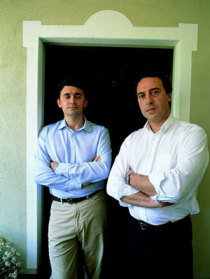
LucaCurrado_MarioCordero.jpgLuca looks tired. At times his eyes wander off and many a suppressed yawn tries to pass his lips. Yet, each time a new person steps before him to ask a question he has heard hundreds of times before he lights up and answers with enthusiasm and charm. He comes back to life for each individual because what he makes means something special to him and he wants them to know.

This Luca is none other than Luca Currado, renowned winemaker for the famed Azienda Agricola Vietti located in Castiglione Falletto in the heart of the Barolo region, Italy’s crown jewel of wine. The name of Vietti is one of this regions most important names as Luca’s father, Alfredo Currado (son-in-law of founder Mario Vietti) played an integral part of making Barolo what it is today as he was the first to bottle single vineyard wines and started the trend that made the white wine Arneis one of Piemonte’s most successful wines. Luca, along with brother-in-law Mario Cordero have taken their father’s success to even higher levels firmly establishing the Vietti label as one of the Langhe’s premier brands.

Luca looks tired for good reason. He has just finished an exhausting harvest and has immediately hit the road to promote his wines throughout the United States and then, after a day or two at home, he’s off to Moscow and St. Petersburg. This is just one of the three trips Luca makes to the USA every year. Yet, with this brutal schedule he is still able to treat every question from every consumer as important - no matter how many times he has heard it. Why is he doing this? The Vietti name is well established in all the world’s markets and they will easily sell the modest amount of wine they produce from their 70 acres of vines. Just watching Luca answers the question. He is on the road yet again because selling the wine is not enough. Luca wants people to understand what they are drinking and why it tastes the way it does. Luca pushes himself back on the road because he believes in their wines. The same passion he puts into growing the grapes and making the wines goes into selling the wines. He wants them to know why they like his wines.

Finally the “Barolo Wars” of the nineties are fading away as producers step back from the excesses of experimentation and emulation to combine the best knowledge of modern enology and viticulture with the distinctive methods and vineyards that made Barolo great to begin with.  The Vietti wines are some of the best examples of this modern, yet more thoughtful and sensitive style. You cannot categorize the Vietti wines as either “modernist” nor “traditionalist” as they combine the best parts of both schools and don’t approach the excesses of the extreme modernists. Luca’s father Alfredo would probably not be pleased to see the barriques in their winery and these are not his fathers wines, but what they do have in common is dedication to excellence - something they both have achieved.

The following wines were tasted on Luca’s recent visits to Liner and Elsen Wine Merchants and Alba Osteria, both in Portland Oregon.

  • Barbera d’Aba, Tre Vigne, 2004 - Brilliantly fresh and clean with deeply concentrated black raspberry fruit. Very lively and mouthwatering with a wonderfully zesty bittersweet finish. ($22)
  • Barbera d’Alba, Scaronne 2004 - If there is a more complex barbera out there than Scaronne I’d be hard pressed to name it. A big wine, but not simply chunky big like Spinetta. Dramatic and intense while still maintaining that punchy barbera verve. Densely colored and expansive from start to the never-ending finish. Wait a few years for this one to grow up. ($43)
  • Barbera d’Asti, La Crena, 2001 - Deep, earthy and brooding with almost a nebbiolo like firmness. A big (not heavy) wine that has no business with a pasta, but would be more at home with a big aged prime steak. Great complexity, with layers of earth and porcini over rich wild black cherry fruit.
  • Nebbiolo Perbacco, 2004 - Bargain hunters pay attention. Here is real nebbiolo character for under 20 bucks. Fresh, bright fruit flavors soon give way to classic leather and dried rose characteristics that can only belong to nebbiolo. Forward by nebbiolo standards and more than drinkable now, I’d still age this another year or so to really squeeze all the complexity you can out of it. A great starting place if you’re new to Barolo and an everyday treat for hard core Barolo nuts. ($20)
  • Barolo, Castiglione, 2000 - Brilliant , classic dark garnet color. Warm and floral on the nose with only sweet touches of tobacco and tar. Round and forward (by Barolo standards remember!) and already drinkable if matched with rich foods. One of the more focused wines you’ll taste from the warm 2000 vintage. The Castiglione selection is still only aged in the large traditional barrels, but exhibits some of the same rounded tannins many modern-style producers hope for. If you have not tasted a Barolo before this is an excellent introduction and a good buy. ($40)
  • Barolo, Rocche, 1998 - A classical beauty with a brilliant translucent garnet color and aromas that won’t let your nose leave the glass. Lean and mean and fantastic - perfectly combining the unique intertwined dance of bitterness, bite, grace, delicacy, power and sweetness that makes for great Barolo. I would wait a few more years as someday this will blow you away. ($90)
  • Barolo, Rocche, 1999 - If you have any chance to buy this wine do so because this is great Barolo. Take all the best parts of the 1998 and turn up the volume and you get this wonderful wine. Far more concentrated than the 98 it still retains the same balance and elegant structure. Nowhere near ready to drink, it’s still closed and brooding. Wait at least five more years and you’ll have a truly fine bottle of Barolo. ( $90)
  • Barolo 2003 new single vineyard releases: Rocche, Brunate, and Lazzarito (all $116) - One sip of these baby blockbusters sends your palate into sensory overload. Huge and round, as you would expect from the burning hot 2003 vintage, Vietti has still put together a group of wines that retain balance - albeit a very rich, powerful balance. It is important to note that while these wines see barriques, they only age in small barrels for six months and spend the majority of their time in traditional large Slovenian oak casks before bottling. Certainly not yet ready to drink unless you happen to be serving well-aged wild boar tonight, with moderate aging - say about 8 years or so - these should be some excellent wines.  In fact they’ll be just right for drinking while your still waiting for your 2001’s and 1999’s to grow up. The tannins in all of these wines are very substantial right now, but are really quite round, soft and integrated for Baroli this young.  As you would expect, the Rocche is the most graceful and fresh of this trio, showing good structure and the wonderful bright floral character that this vineyard always seems to show. The Brunate is a huge mouthful of Barolo that expands and overwhelms the palate with its depth and richness. As usual, in spite of its girth, the Brunate is charming with an almost forward appeal. The Lazzarito will almost take the enamel off your teeth with its biting, powerful tannins and deep bittersweet fruit laden with tobacco and tar. Incredibly intense and powerful, this is a wine you should not go near for years to come as it has plenty of aging to do. I’d say eight years is the minimum for this high-strung monster. If you want drama this is your wine. My vote out of these three would go to the Rocche, but it’s too early to make that call. Tasting them together is a great look at the different characteristics of these vineyards.


(pictured above Luca Currado and Mario Cordero)

Salade de haricots blance et saumon grillé

Salade de haricots blance et saumon grillé
(serves 6 as a side dish, 4 as a main)
400 g cooked white beans or 200 g dried cannellini beans, soaked overnight and then cooked 40 minutes or until tender but still a bit meaty.
800 g salmon steaks
1 small purple onion, chopped
2 handfuls of cress or heirloom spinach
For the dressing:a small handful of basil leaves
3-4 stalks of tender young tarragon
a very small handful of parsley leaves (they are not really out of the nursery stage on my terrace garden yet)
50 ml of your best olive oil
1 tiny clove of spring garlic
2 Tbs of lemon juice

Cook the salmon on the grill until opaque and cooked through, skin side down and lid on the grill. This will ensure that if anything sticks to the grill it's the inedible skin and not the delectable fish. While it is cooking, rinse the beans (if they come from a jar), clean and chop the spinach and mix them together with the onion. Remove the salmon from the grill if it is done. Very finely chop the herbs and then toss them over the bean mixture. Add the rest of the ingredients, first chopping the garlic as finely as you can. Toss the beans and onions mixture.By now the salmon will hopefully have cooled down enough to handle. Break it into just-slightly-larger-than-bite-sized pieces, taking care to remove any bones you may find. Toss the beans with the salmon and serve at room temperature. If you used dried beans, taste first for salt as it may need a pinch.

From: Too Many Chefs: Salade de haricots blancs et saumon grillé

Rôti de Porc au Chou Rouge Epicé, Pommes et Pruneaux

Rôti de Porc au Chou Rouge Epicé, Pommes et Pruneaux

1 tablespoon olive oil

One 800-gram (1 3/4 pounds) boneless center cut pork roast (in French, rôti de porc dans le filet)

Fine sea salt

1 small head red cabbage, quartered, cored, and sliced thinly

2 medium baking apples, peeled, cored, and cut in eighths

8 prunes, pitted and halved

4 whole garlic cloves (with their papery skin still on)

Whole coriander seeds

French four-spice mix (ground nutmeg, ginger, cinnamon, and cloves)

1/2 cup red wine (I used what was left of an excellent Fiefs Vendéens Gamay, “Gammes d’Eté” 2004 by Domaine Saint-Nicolas)

Freshly ground pepper

Serves 4.

Heat the olive oil in a large cast-iron pot or Dutch oven over medium-high heat. Add the roast and sear for a few minutes, flipping the meat regularly, until browned all over. Season with salt and set aside.Lower the heat to medium. Add the cabbage, apples, prunes, and garlic to the pot, stir to coat, and cook for 5 minutes, stirring regularly, until the cabbage starts to soften. Season with whole coriander seeds, French four-spice (light-handedly), and salt. Stir to combine.Form a little nest in the middle of the vegetables and place the roast there. Pour the wine over the meat and vegetables, cover, lower the heat to medium-low, and simmer for about an hour, stirring from time to time to make sure the vegetables don’t burn at the bottom, until the meat is cooked through (I just cut a slice to check when I think it’s done, but if you have a meat thermometer, it should read 70°C / 160°F).Remove the lid, turn the heat up to medium-high and cook for a few minutes, stirring frequently, until the juices have reduced by half. Taste the vegetables, adjust the seasoning, sprinkle with pepper, and serve with strong mustard on the side.


From: Chocolate & Zucchini


The Story of the Two Dog in a Room Barolo

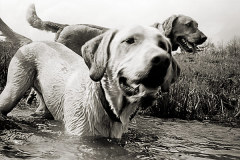
wetdogs.jpg“When I visited Maria Theresa Mascarello in Barolo last spring one of the questions I asked her was, “Who has been the most detrimental to the state of barolo, the Wine Spectator, Parker, Marco DeGrazia or wine consultants? She laughed. She found this all amusing. “All of them go in the same direction of modern barolo. But all of them needed to learn from Luigi Veronelli,” she said referring to the late, most prominent Italian wine critic.“I do not like this American way of judging wine,” she continued. “Veronelli connected the culture to the wine, he judged wine in its context.” Then she said, with a scorn-edge in her voice, “Do you know, Wine Spectator’s James Suckling said my 2001 wine smelled like a room with two dogs in it!”What she didn’t know was that Suckling gave it an 84. Here’s the review.Very funky. Smells like a warm room with two wet dogs in it. Yet some of the funk blows off, giving it lovely plum and berry character. Medium-bodied, with a sweet fruit finish. Drink now. 1,570 cases made. –JS.”

Alice Feiring - In Vino Veritas


These comments by Alice Feiring (click on the link above for the whole article) highlight one of the most confusing issues in wine journalism today. Why does The Wine Spectator not do anything about James Suckling? Only weathermen and economists are allowed to make so many blatant mistakes and still keep their jobs. We can assume there were be a long line of competent writers lined up to take this position and almost anything would be better than this for Italian wines.

If the 2001 Mascarello Barolo smells like “a warm room with two dogs in it”, I’m going out today and getting two wet dogs. This is a lovely wine (as Alice also reports in her article) and Sucklings comments don’t reflect personal taste, they reflect ignorance of the character of young, natural Barolo.The Barolo of Bartolo Mascarello is stunning its balance between elegance and power.

Here are my notes from my visit to Mascarello in 2005: These are wines that are defined by complexity not brute strength and they flow seamlessly over the palate and with each second reveal new layers of nuance. The tannins, while substantial, have a refinement that adds its own complexity and are surprisingly delicate in spite of their intensity. A tasting of recent vintages reveals an amazing consistency of style with the differences caused by the qualities of the vintage alone standing out. A side-by-side tasting of Mascarello Barolo  2001, 2000 and 1999 revealed a consistent range of flavors featuring a refined floral nose full of violets and roses layered with touches of caramelized oranges and bittersweet tar. On the palate the wines almost float with a high-strung elegance that features notes of fresh wild strawberry, bitter black licorice, fresh porcini and black truffles and what seems like hundreds of other flavors that play hide-and-seek with your senses. As you would expect from such young Baroli the tannins are still intense, but are so refined they don’t seem harsh. The 2000 is clearly the most forward of these wines and is recommended for drinking prior to its tenth birthday, which is perfect as you will have to be much more patient with the 1999 and 2001, which demand the respect of at least ten years of aging, but waiting longer is recommended. The 2000 shows a riper note of cassis in the fruit and is decidedly softer than the 1999. The 1999 and 2001 are classic Baroli that show beautifully every aspect of what makes Barolo a great wine. The 1999 is just starting to reveal its greatness and shows perfect balance and incredible complexity. It is a “must have” wine for any collector. The 2001 is still extremely young and unresolved, but the great potential of this vintage clearly shows in the wine, which has the potential to surpass even the great 1999 in the future. They did not produce a Barolo in 2002 due to the devastating weather conditions in La Morra and the Barolo commune. 


La Gramière! On The Water!

 News from La Gramière:

“Colorado, Germany and California - here comes La Gramière! Yup! It’s a very busy time as far as shipments go. On October 2nd we shipped 60 cases to ColoradoPict0033_1 and then on the 6th, 50 to Germany. Our garage, where the wine is stored (in a temperature controlled setting, of course) only has river rock on the ground. At bottling we leveled the palates and then stacked the wine on case by case. This poses a problem when it comes to moving an entire palate though, no way to get a fork-lift in, or even a pallet mover. Hmmm. We built a platform for the pallet-mover to roll on and placed an empty pallet on the ground. Then we put a second empty pallet on top of the first, and subsequently re-stacked all 60 cases onto two pallets for the Colorado shipment. In Europe the standard wine box only contains 6 bottles. As you know, in the US, it’s 12 bottles. So for US customs we had to tape two boxes together in order to say that there were 12x750ml bottles equalling 9 liters of wine in each box. More fun with tape here at La Gramiere! Of course when the transporter arrived, he didn’t have a pallet-mover like he was supposed to, so we had to go borrow one from the village garden store. Luckily they could do without it for awhile! When we rolled it in and it wouldn’t fit under the slats! The pallets were too low! UGH! We finally got the first one out with a little prying and tugging, then the second one was much easier. Luckily the truck driver was super nice and more than happy to try every option in order to get them out! I won’t even go into the pick-up for Germany. It’s another funny story, but too long for this post!On Monday they are picking up 4 pallets, 200 US cases, or 2400 bottles, heading for Kermit Lynch’s store in Berkeley. Needless to say, we are spending the weekend working on our paletting techniques!”

la gramiere: Colorado, Germany and California - here comes La Gramière!

Everyone who has followed the lovely story of La Gramière on their blog should get their orders in now as their wine is on the way to the USA. I’m calling in my order for a case to San Francisco tomorrow!


World Wine Cup

worldcup.jpgFrench wine writer Francois Mauss and his Grand Jury European just could not leave well enough alone. Instead of letting the Judgement of Paris 2 fade into memory they had to try, try, try again. Seeming determined to prove the superiority of French wines he staged his own head-to-head competition under what he deemed more fair conditions as he selected a year that was equally fine in both Bordeaux and Napa - the 1995 vintage. Once again the California wines whipped the French wines - much to the delight of the Californians. Check out the comments on the blogs listed here.

Vinography    Fermentation PinotBlogger

I think both sides are missing the point as all such tastings do is show what wines taste better when compared with other wines. What they don’t show is what bottles will better grace your dinner table. Proving that we all come from the same genetic code, the French judges showed they have the same human faults as Americans when presented with rows and rows of glasses to rank the bigger, oakier and fruitier wines won out.

Think not? Check out the results for the most part the bigger wines are at the top of the charts, while more elegant bottles languish at the bottom. So you get winners like the Beringer, Valandraud, Latour and Shafer and losers like Margaux, Spottswoode, Dominus and Cheval Blanc.

It is ridiculous to try to prove somehow that French wines are better than California wines or Italian wines or Australian wines for that matter. The wines of each country and region are supposed to taste different. All these competitions do is fuel the fire that is burning away those individual characteristics in the pressure cooker of commercial realities.

Hopefully, someday we once again can think of wine as part of a meal instead a culinary World Cup. 

Below are the results of the Grand Jury. What each of these wines have in common is their excellence - something demeaned by putting them in such a ranking. There in last place at #39 is the Diamond Creek Volcanic Hill made by winemaker Al Brounstein who recently passed away.  Such a wine and such a winemaker deserve more respect. As the Californians rejoice over their latest victory they should remember as long as we judge wines in such a pointless way that their turn will come - just like it has for the French. We can only hope that the Australians don’t catch on.

1 Abreu (Madrona Ranch)
1 Beringer Private Reserve
3 Pahlmeyer Propriatory Red
3 Valandraud
5 Latour
5 Shafer Hillside Select
7 Arrowood Cabernet Sauvignon Special Reserve
7 Ausone
9 Leoville Les Cases
9 Phelps Insignia
11 Mouton Rothschild
12 Mondavi Reserve
13 Cheval Blanc
13 Palmer
15 Staglin Family Vineyard Cabernet
16 Trotonoy
17 Araujo
18 La Jota Anniversary Reserve
18 Le Bon Pasteur
20 Pride Reserve
21 Haut Condissas
22 Spring Mountain
23 Petrus
23 Rollan de By
25 Chateau Montelena
26 Mouton Rothschild
27 Monte Bello Ridge
28 Cheval Blanc
29 Dominus
30 Colgin
31 Margaux
32 Spotteswoode
33 Le Tertre Roteboeuf
34 Haut Brion
35 La Mission Haut Brion
36 Croix de Labrie
37 Screaming Eagle
38 Harlan Estate
39 Diamond Creek Volcanic Hill

Chips On Their Shoulders

“FRENCH AUTHORITIES TO BAN OAK CHIPS France’s National Appellations Institute (INAO) said it had proposed a law to allow the country’s Appellation d’Origine Contrôlée (AOC) regions to ban or limit the use of oak wood chips in wine. Although the practice was approved by the European Commission, the INAO remains concerned that using oak chips may damage the quality of wine in higher quality appellations.The decision from INAO has left some in the French wine industry a bit apprehensive as the country continues to struggle with exports. Allowing the use of oak chips in wine was adopted by the European Commission earlier this year to help modernize and relaunch EU wines on the world market after meeting with staunch competition from New World winemakers.”

Wine & Spirits Daily: FRENCH AUTHORITIES TO BAN OAK CHIPS

Now here’s an unenlightened approach. Does the INAO really think that Lafite, Lafon, Clape and other such producers are really going to start using wood chips in their wines? This is a technique that has a legitimate use as a way to improve wines priced and created for everyday consumption. What a pain it must be to make wine in France. Such tools will be used by industrial winemakers and will be of little interest to those dedicated to terroir. No such ban is required.


The Burgundy Report

“1999 Michel Gay, Savigny-lès-Beaune 1er Serpentièrs - Medium-plus ruby-red. The nose is forward and deep but to my taste unfortunately pruney - though there is a core of red fruit. The wine is concentrated and well textured - there’s plenty of wine here, ripe and sweet but again there’s that rather blocky, pruney element here in the mid-palate, some raisin too. As said, there’s a lot of wine here, unfortunately I don’t like it very much… Rebuy - No”

Burgundy-Report

 burgundyreport.gif
From this pithy, straightforward prose you can tell here is someone both knowledgeable and passionate about Burgundy. If you’re into Burgundy and not subscribing to Bill Nanson’s Burgundy Report Blog you are out of the loop. Between the Burgundy Report and Allen Meadow’s Burghound there are no better resources for American consumers of Burgundy. What is amazing is that The Burgundy Report Blog is still free and connected to the another resource that is absolutely necessary for any Burgundy collector, The Burgundy Report Website.

Back to School

lecole.jpg“I’m not drinkin’ any &%#*&$# merlot!”

The movie that kick started pinot noir sales had the opposite effect on merlot sales. Although the Sideways slap was no news to wine geeks, who had long known that merlot was the worst value in the market. Merlot, once the darling of industrial wine world, was suddenly out. Like a congressman caught paging too many pages, one day merlot was hot and the next it was not. Those in the wine-know snickered with glee.

Perhaps now the dust is settled we all need to go back to school on merlot. After all, they make a pretty good one in France that they call Petrus. You would be hard pressed to find a more expensive wine than Petrus, although I doubt that most of those that gulp it because of the price alone actually know their drinking merlot.  There’s a lot of excellent merlot being made in Bordeaux and Washington State and to blow it off is to miss some outstanding wines.

I can think of no better place to go back school on merlot than the 2002 L’Ecole No. 41 Columbia Valley Merlot. This wine is a svelte beauty that came alive paired with some grilled lamb chops. Seamlessly smooth and velvety without any heaviness, the bright ripe plum fruit is highlighted with spicy oak and a refreshing herbal touch that is dominated by a lively minty-ness laced with traces of thyme and sage. I really loved the lean, angular character that well carried the ripe fruit flavors. I would only recommend short term aging for this wine because it is so good to drink right now, but a year or two more in a good cellar is sure to add complexity. A blend of 80% merlot, 12% cabernet franc, 7% cabernet sauvignon and 1 % carmenere aged 18 months in French and American oak.

I’m guess I’m drinkin’ &%#*&$# merlot again.

At What "Cost"

costco_wine_3.jpgThe nation’s largest wine retailer, how could I not go? Armed with a new membership card from my company I entered Costco. The size lives up to the reputation. What didn’t live up to the hype was the wine. Me and my gigantic shopping cart circled the wine section ready to stock up on the fabled bargains. I left without buying a bottle . The most exciting wine offered was Grgich Hills Cabernet Sauvignon, which is hardly a hard wine to find and not a very stimulating wine to drink.

There indeed is a sucker born every minute, because everyone else was packing their carts with bottles from Costco. There were no hot wines there,  just the same industrial crap that fills the aisles at most grocery stores. Were they cheaper? Who cares. These are wines not to buy.

While reading my Sunday paper I grabbed the Cost Plus ad. In the ad were such fine choices as Wrondo Dongo Mourvedre, Red Guitar, 7 Deadly Zins and Sin Zin. Cute names, but bad wines. Great prices? Sure enough, but who cares.

There can be no more reliable indicator of over-manipulated, industrial wines, that are the worst wine values in the world, than the regular wine selections of these “Cost” stores. In these stores you’ll find a list of wines to avoid. The wine buyers for these stores must be lazy, for there is no excuse in offering such mediocrity in an era that is producing better and better wines at lower and lower prices.  They certainly have no creativity or passion for the product that they buy.

What is the  “Cost”  that the buying power and marketing power of such mega-stores have on the industry? They don’t cost the industry a thing, but they cost the consumers a lot. If you want a good wine value avoid these “Cost” stores. Costco and Cost Plus and their brethren are to wine what McDonald’s is to hamburgers.

Peter Reinhart's Napoletana Pizza Dough

101 Cookbooks Logo

Peter Reinhart’s Napoletana Pizza Dough

Heidi notes: Peter’s recipe says the olive (or vegetable oil is optional). I use it every time - always olive oil, not vegetable oil. I love the moisture and suppleness it adds to the dough, and it makes your hands soft too.

4 1/2 cups (20.25 ounces) unbleached high-gluten, bread, or all-purpose flour, chilled
1 3/4 (.44 ounce) teaspoons salt
1 teaspoon (.11 ounce) instant yeast
1/4 cup (2 ounces) olive oil (optional)
1 3/4 cups (14 ounces) water, ice cold (40°F)
Semolina flour or cornmeal for dusting

1. Stir together the flour, salt, and instant yeast in a 4-quart bowl (or in the bowl of an electric mixer). With a large metal spoon, stir in the oil and the cold water until the flour is all absorbed (or mix on low speed with the paddle attachment), If you are mixing by hand, repeatedly dip one of your hands or the metal spoon into cold water and use it, much like a dough hook, to work the dough vigorously into a smooth mass while rotating the bowl in a circular motion with the other hand. Reverse the circular motion a few times to develop the gluten further. Do this for 5 to 7 minutes, or until the dough is smooth and the ingredients are evenly distributed. If you are using an electric mixer, switch to the dough hook and mix on medium speed for 5 to 7 minutes, or as long as it takes to create a smooth, sticky dough. The dough should clear the sides of the bowl but stick to the bottom of the bowl. If the dough is too wet and doesn’t come off the sides of the bowl, sprinkle in some more flour just until it clears the sides. If it clears the bottom of the bowl, dribble in a tea- spoon or two of cold water. The finished dough will be springy, elastic, and sticky, not just tacky, and register 50 to 55F.

2. Sprinkle flour on the counter and transfer the dough to the counter. Prepare a sheet pan by lining it with baking parchment and misting the parchment with spray oil (or lightly oil the parchment). Using a metal dough scraper, cut the dough into 6 equal pieces (or larger if you are comfortable shaping large pizzas), You can dip the scraper into the water between cuts to keep the dough from sticking to it, Sprinkle flour over the dough. Make sure your hands are dry and then flour them. Lift each piece and gently round it into a ball. If the dough sticks to your hands, dip your hands into the flour again. Transfer the dough balls to the sheet pan, Mist the dough generously with spray oil and slip the pan into a food-grade plastic bag.

3. Put the pan into the refrigerator overnight to rest the dough, or keep for up to 3 days. (Note: If you want to save some of the dough for future baking, you can store the dough balls in a zippered freezer bag. Dip each dough ball into a bowl that has a few tablespoons of oil in it, rolling the dough in the oil, and then put each ball into a separate bag. You can place the bags into the freezer for up to 3 months. Transfer them to the refrigerator the day before you plan to make pizza.)

4. On the day you plan to make the pizza, remove the desired number of dough balls from the refrigerator 2 hours before making the pizza. Dust the counter with flour, and then mist the counter with spray oil. Place the dough balls on top of the floured counter and sprinkle them with flour; dust your hands with flour. Gently press the dough into flat disks about 1/2 inch thick and 5 inches in diameter. Sprinkle the dough with flour, mist it again with spray oil, and cover the dough loosely with plastic wrap or a food-grade plastic bag. Let rest for 2 hours.

5. At least 45 minutes before making the pizza, place a baking stone either on the floor of the oven (for gas ovens), or on a rack in the lower third of the oven. Preheat the oven as hot as possible, up to 800F (most home ovens will go only to 500 to 550F, but some will go higher). If you do not have a baking stone, you can use the back of a sheet pan, but do not preheat the pan.

6. Generously dust a peel or the back of a sheet pan with semolina flour or cornmeal. Make the pizzas one at a time. Dip your hands, including the backs of your hands and knuckles, in flour and lift I piece of dough by getting under it with a pastry scraper. Very gently lay the dough across your fists and carefully stretch it by bouncing the dough in a circular motion on your hands, carefully giving it a little stretch with each bounce. If it begins to stick to your hands, lay it down on the floured counter and reflour your hands, then continue shaping it. Once the dough has expanded outward, move to a full toss as shown on page 208. If you have trouble tossing the dough, or if the dough keeps springing back, let it rest for 5 to 20 minutes so the gluten can relax, and try again. You can also resort to using a rolling pin, though this isn’t as effective as the toss method.

7. When the dough is stretched out to your satisfaction (about 9 to 12 inches in diameter for a 6-ounce piece of dough), lay it on the peel or pan, making sure there is enough semolina flour or cornmeal to allow it to slide. Lightly top it with sauce and then with your other top- pings, remembering that the best pizzas are topped with a less-is-more philosophy. The American “kitchen sink” approach is counterproductive, as it makes the crust more difficult to bake. A few, usually no more than 3 or 4 toppings, including sauce and cheese is sufficient.

8. Slide the topped pizza onto the stone (or bake directly on the sheet pan) and close the door. Wait 2 minutes, then take a peek. If it needs to be rotated 180 degrees for even baking, do so. The pizza should take about 5 to 8 minutes to bake. If the top gets done before the bottom, you will need to move the stone to a lower self before the next round. if the bottom crisps before the cheese caramelizes, then you will need to raise the stone for subsequent bakes.

9. Remove the pizza from the oven and transfer to a cutting board. Wait 3 to 5 minutes before slicing and serving, to allow the cheese to set slightly.

Makes six 6-ounce pizza crusts.

 http://www.101cookbooks.com/archives/print/001199.html

Mann-oh-Mann - That's Real Riesling

manntonneau.jpgI had heard good things, but did not hold out much hope. My tasting experiences with Alsatian wines as of late had almost always been disappointing with seemingly every wine being over-ripe and botrytized. They were heavy boring wines. Yet I loved Alsatian wines so much in the past that I can’t help but keep trying them and a bottle on sale at my local store tempted me once again. The producer had been recommended to me several times so I put down my twenty bucks and gave it a shot.

Hallelujah! Finally some great white wine from Alsace. The Albert Mann 2004 Riesling is an absolute delight. It’s a tightrope of acidity and mineral essences over unmistakable, absolutely bright riesling fruit that even sports a nice touch of petroleum.  This wine was a bargain for $19.99 and I am going out of my way to track down the Grand Crus from this estate. This beauty was made by the  brothers Maurice and Jacky Barthelmé who own 19 hectares of prime vineyards, of which five are in Grand Cru vineyards. 

In such a wine you can taste varietal, vineyard and vintage - none of which are overwelmed by cellar technique or ultra-ripe fruit. The  Barthelmé brothers are to be complimented for their skill, vision, focus and their courage to make a wine counter to the “hot” style in Alsace these days. They made an outstanding wine with this riesling and I’ll soon report on their other offerings. As good as this wine is, I’m sure they’ll be excellent. Not suprisingly, the Mann wines are selected by the talented importer Peter Weygandt and imported by the Weygandt-Metzler company.

Sleight of Hand

sleightofhand.jpgToday there are key words that wine writers love; gravity-flow, indigenous yeast, low-yields and on-and-on. Key words are great for writers, but have little to do with the realities of making wine. Good winemakers are quick to spot problems and deal with them in the best way possible. Often these solutions do not meet the idealistic simplicity of right and wrong that most wine journalists push. However, they can make better wine. Using the advances in winemaking knowledge in a judicious way is not always some evil sleight of hand. Like most things it’s not only what you do, but how you do it that matters. Good winemakers have to think on their feet and react quickly to what nature has dealt them otherwise they’ll have a lot of wine that has to be poured down the drain. Consumers need to taste with their own palate, if the wine is good it’s good. Like most things, modern winemaking techniques are not simple black and white issues, but provide a full menu of solutions that can be both used and misused. For example, Luca Currado, the fine winemaker at Vietti in Barolo, abandoned his experiment with roto-fermenters for obvious reasons, but he kept just one “for emergencies”. While roto-fermenters destroy the character of good vintages, in a bad vintage he can use it to help improve his wines. No, they won’t be great wines, but they’ll still be very good if Luca decides to put his label on then. Yes, even the evil roto-fermenter can have its place when used by thoughtful hands in the face of disaster. Good winemaking is never a simple recipe to be followed, but must be adapted to new situations with each vintage. Today’s best winemakers use what could be called a minimalist philosophy, in other words they do as little as possible to their wines, but that doesn’t mean they don’t do something when it needs to be done. It’s unfortunate that the wine press, whose simplicity shows their ignorance of what it takes to make great wine, has made winemakers afraid to talk about  anything that is not seen as politically correct winemaking. This makes them seem like they are using some kind of ethical sleight of hand, when, in fact, what they are doing is giving us better wines to drink.

Whew!

Whew! I’m glad that’s over. As romantic as harvest may be to both consumer and winemaker, the fact of the matter is that for those involved in the work it becomes a grind. There may be the charming popping of the corks on bottles of bubbly for that first bin of grapes to arrive at the winery, but after a succession of 16 or more hour days the challenge is to be as committed as you were when the first grape arrived to quality.

What the harvest always reminds the winemaker is the simplicity with which the press views each vintage. Like a wine world version of CNN, writers look for key words and flashy headlines to pigeon hole each vintage.  This simplistic version of the winemaking process promotes ignorance and misconceptions and blinds the public in general to the realities of winemaking. I’ll try to take that on as Wine Camp continues to evolve.

I’m glad to be back to the keyboard after having a close relationship with 300 tons of Oregon grapes over the last three weeks.