Listening, Wine and Bach
My wife is out-of-town, visiting her sister. That means I can crank up the tunes. I was rockin' out tonight during dinner. My Sonos was shaking the house with - Glenn Gould's 1981 recording of Bach's Goldberg Variations.
What's fascinating about loud Bach is that you feel much the same as if you were listening to The Beatles or the Stones (yes, I'm old). The passion and beat makes you tap your toes. One of the compelling aspects of this recording (listened to loud!) is that you hear Gould's humming and grunts as he plays Bach with the same emotional intensity that B.B. King plucked Lucille on The Thrill is Gone.
Said Gould, "I believe that the justification of art is the internal combustion it ignites in the hearts of men and not its shallow, externalized, public manifestations. The purpose of art is not the release of a momentary ejection of adrenalin but is, rather, the gradual, lifelong construction of a state of wonder and serenity." Can you think of a better description of a great wine?
This is the why a point scale can never hope to define, or explain, much less quantify the experience of wine. It is too complicated to boil down this complex interaction of humans and nature over literally thousands of years to a decimal point.
Dinner tonight was pressure cooker wine-braised pork short-ribs (90 minutes) with a reduction made from the broth and for the wine 2010 Donkey & Goat "Five Thirteen" El Dorado, Red Wine Blend (47% grenache, 21% syrah, 16% mourvèdre, 10% counoise, 6% cinsault). Like Gould, this wine hummed and grunted in the background during its performance with a whiff of volatile acidity and a little funk, but like Gould it delivered. Exciting and fun it lifted the dinner to a new height. How many points? Don't insult it.
As Bach proved and Gould restated, there is real power in refinement, elegance and discipline. Power itself is not something to be revered. Powerful wines get high points because, as Gould said, they deliver "a momentary ejection of adrenalin." I think in winemaking a little reflection on Gould's thoughts on the justification and purpose of art can be applied to our craft. All to often we pursue the external, not the internal, or nature's purpose for wine.
To repurpose the Gould quote, the purpose of wine is not the release of a momentary ejection of adrenalin but is, rather, the gradual, lifelong construction of a state of wonder and serenity. Powerful wines may give that injection of adrenalin on the first sip, but they do not deliver a sense of wonder and serenity instead becoming trophies to hoard.
It takes courage to let your own personal vision and passion show through in your work. You'll be hard pressed to find wine brands that roll off your tongue that have even a bit of courage.
When you first hear the humming on Glenn Gould's recording of the Goldberg Variations (both the 1955 and 1981 versions) you think something is wrong with the recording. Then, with repeated listening and a little homework on your part you understand that you are hearing something personal and truly expressive. With compelling, memorable wines the experience and requirements are the same.
It's not how loud it is, it's how well you're listening.
Barrel Roll

You need a license to drive a car. Permits for hunting and fishing are required. In general if it’s dangerous you need to prove you’re competent to get a permit. Perhaps winemakers should have to get a permit before they're allowed to use new oak barrels.
Admittedly new oak barrels are not dangerous to people, but they can be very dangerous to wine. Today's wines rarely taste of basic mistakes in the cellar. Cultured yeasts, enzymes and cutting edge machines that can take out almost anything have seen to that. But the neutral ripe black-fruited wines produced by these techniques are, to say the least, boring. So new oak flavors sing a siren's song that few winemakers can resist. If new barrels are not an option, no problem. There are inner-staves, chips, powders and many other products made out of oak to bring those flavors to your wine.
There’s the problem isn’t it? The whole idea of “bringing flavors” to a wine should be controversial. After all, wine critics look down their nose at Retsina, spiced wines or any wine that has something added to alter its flavors. Yet when it come to new oak, they’re suckered in with an almost religious fever that anoints these oak flavored wines with big points.
The concept of terroir is dear to wine lovers around the world. Yet can you think of a bigger enemy of terroir than the pronounced flavors of new oak? If you mostly taste the oak, you are not tasting the wine.
That is not to say these flavors can’t have their place. Certainly cabernet sauvignon and other Bordeaux varieties can be lifted to new heights with the judicious use of new oak. However, there are so few varieties and appellations that use or benefit by the use of new oak that perhaps more winemakers should step back and reconsider its use. Just because new oak flavors are associated with the two of the most famous wine regions should not be in itself a reason for a winemaker to equate those flavors with quality. The worldwide success of cabernet sauvignon and the exalted status of Bordeaux, and now the Napa Valley, has established the taste of new oak itself, instead of the flavors of the land and variety, as the goal to be coveted by many winemakers and sought out by consumers.
This, of course, is much more a New World than an Old World problem. Most of the other European regions that flirted with new oak in the 80s and 90s have backed off and returned to their more traditional methods. It was sad to see some Italian producers destroy the character of classic, individualistic wines in Piemonte and Toscana during this era. Fortunately, almost all of those producers have either severely reduced their use of new oak or abandoned it all together and returned to making wines true to their regions and varieties. As it turns out, it's good business to be different in the world of wine instead of tasting like you could come from anywhere. In fact, now Barolo has almost become the new "Burgundy" with rare single crus, high prices and allocated wines.
Then there are “oak products” like inner-staves, chips and powders that are added to a wine simply to add that oak flavor. These producers are doing the same thing ancient winemakers did when they created wines like Retsina. The pine flavors covered up other faults, which is exactly the reason “oak products” are used in winemaking today. The most important purpose of a wine barrel is to allow controlled amounts of oxygen to interact with the wine, not to add flavor to it. Obviously these oak products don't have anything to do with the amount of oxygen the wine is exposed to as they only add flavor. They create the modern version of Retsina.
There is using new oak as part of your basic manipulation winemaking recipe, or there is using new barrels like a great chef uses herbs and spices. A soupçon here and there brings a dish to life, too much and you become TGIF. Wine with too much oak makes me think of pizza. On one end of the spectrum you have Pizza Napoletana with its thin, crisp crust graced by light touches of the finest ingredients. Then you have Chicago deep dish pizza where a single slice has more gooey cheese than two, maybe three, whole pizzas in Naples. In Italy one person can eat a whole pie, while two slices of Chicago deep dish is a gut buster. I grew up loving Chicago style, but once I tasted pizza in Italy I could never go back. This is the choice a winemaker has with new oak. What kind of pizza do you want to make?
The use of new barrels is very much a decision that should be made by variety and region. For example, here in the Applegate Valley it has become very clear to me that new oak barrels are just not a good idea. The wines here are too graceful and refined with naturally silky tannins and layering new wood flavors and tannins on top of them buries the character that makes this place a special wine growing region. There are more regions like this in the world of wine than there are those like Bordeaux and Napa.
Like most fashions, even the use of new oak in winemaking has reached its logical extreme. For some, even 100% new barrels was not enough and now there are wines with 200% new oak. How is that possible? Simple, after its first year in a new barrel you transfer a wine into yet another brand new barrel for another year or more. The resulting wine is, of course, 100% devoid of terroir and 400% more expensive. Such is the new math of wine.
While we won't be issuing new barrel permits to new winemakers, perhaps we could at least consider learner's permits? No new oak barrels for five years? Certainly learning how to make good wines without the crutch of new oak, from either barrels or oak products, would make for better, more thoughtful winemakers.
In the meantime, it's in my interest that winemakers retain their addiction to new oak. Every year I can buy beautiful French Oak barrels thoughtfully broken in for me by other winemakers. I can buy these one, two, three and four year old barrels at a tiny fraction of what they cost new and then have the pleasure of using them for years to come.
Come to think of it forget the permits idea, I hope they keep using them.
Production Winemaking

Winemaking is often referred to in the trade as production. That's just the right word for it as the vast majority of the world's wine is a product. An industrial product - beverage alcohol as they call it.
Big wineries are stuck with reproducing a replica of the same wine every year as that's what the mass market wants. They are the equivalent of national restaurant chains whose customers want a dish to be exactly the same no matter what city they are in. Small wineries can make wines that reflect vineyard, vintage and variety, which means that they will be different every year. Obviously this is not always good, but in the hands of a skilled winemaker is always interesting. The choice is between consistency or individuality.
Large production winemakers are very technically skilled. It is not easy to make thousands, if not millions, of cases of wine that, vintage in and vintage out, is indistinguishable to their customers. Consistency is to be valued more than anything once you have a winning formula. When producing beverage alcohol be that wine, vodka, gin or whatever the last thing you want is for anyone to be able to discern any difference from batch to batch. To be able to accomplish this takes amazing technical skill and can't be done by just anybody. These winemakers are true professionals.
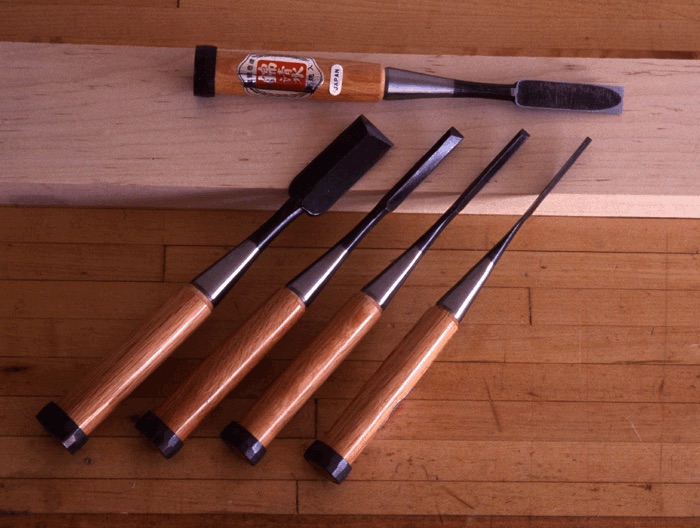
On the other end of the spectrum are the small artisan winemakers. Their craft more resembles a fine woodworker making one-of-a-kind pieces of furniture. While these pieces may not be perfect, as they let the natural grain of the wood define the character of the piece, they have more natural beauty and individuality than furniture turned out in a factory. It's because of their individuality that these artisan products sell at higher prices than those rolling off of the assembly line.
Artisan winemaking is expressed in the same way. When you taste a vintage you are tasting something that can never be repeated. Each vintage for an artisan winery is a unique expression of what Mother Nature has created. Each is an experience and an expression never to be repeated. But that's the beauty of it isn't it?
However, faults are still faults. While production wines become boring due to their palate dulling consistency, all too often consumers shy away from artisan wines due to the jarring faults apparent in too many of them. Winemaking faults are not terroir. Small wineries have something to learn from the technical proficiency of their big brothers. A fine woodworker possesses amazing technical proficiency with the tools and raw materials of his trade. The same should be true of artisan winemakers.
If your goal as an artisan winemaker is to treasure terroir and Mother Nature you need to be committed acquiring the technical skills necessary to make natural wines. It is a great challenge to make wines using indigenous yeasts and forsaking the chemicals and technology employed by the big wineries to make their standardized products. The risks are high and there is more pressure than ever on the winemaker's skills as there is no "magic pill" to be used if things go wrong - and go wrong they will.
A fine wood craftsman will consign a piece she is working on to the junk pile behind her workshop if she makes a mistake beyond repair. Too many artisan winemakers bottle up their mistakes and sell them citing their natural winemaking practices as reason enough to buy them as if the word natural itself is justification to forgive all.
The artisan winemaker is revered in Europe. Some of our greatest importers have made a career out of bringing their wines to American consumers. The lists of these importers are filled with amazing values from such producers. It's easy to find wonderful, naturally made wines from Europe in the under $30 price category. Rarely do I find winemaking faults in these wines. The same is not true for such wines produced in the New World. Not only are they more expensive, but they are often not as well made.
Young American sommeliers seeking naturally produced wines are often criticized for their Euro-centric wine lists. However, I can empathize with their position. When the customer doesn't like a wine it's the sommelier that's face-to-face with them, not the winemaker. They need reliable wines at affordable price points to meet today's more casual, bistro-style of dining.
We need to stop selling the winemaking and start selling the wine inside the bottle. I want to be inspired by the wine, not the winemaking.
ArrivederLa
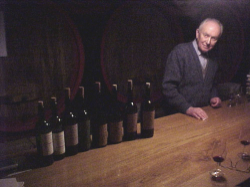
It was a cold spring morning and we could just see our breath as our eyes swept over the gentile beauty of Valpolicella. The air around us was hazy with the smoke of burning vine cuttings and the blossoms were just breaking on the trees. Just then his daughter appeared and led us down into his cellar. After a short wait he arrived surveying the group with a casual curiosity.
Over the next hour and a half he talked softly and smiled gently. For him it was enough to let his wines do all the talking. He was not looking for the deference with we treated him, but it fit him well. As always in such a group some did not understand what they were tasting, but he took no offense at their lightness any more than he did at those who where too ernest in their worship.
We tasted through the entire gallery of his creations. Their greatness requires no comment here
When we left I was the last to go. “Ringrazie, arrivederLa,” I said. I stood a good foot taller than the great man, who then reached up and patted my cheek and said, “bravo.”
We live in a “ciao” world, but to say “ciao” to such greatness just seemed wrong.
Ringrazie e ArrivederLa Signore Quintarelli
Pictured above is that tasting with Signore Quintarelli in the spring of 2000
The Sad Passing of Winemaker Baldo Cappellano
He fought tirelessly against the homogenization and over-commercialization of wine and was a steadfast opponent of the use of international grape varieties in Italian wine. Memories of Baldo Cappellano « Do Bianchi
One of those gentle giants, long and weedy, he is winemaker, jokester, philosopher.
—Alice Feiring
The world of wine — and not just Piedmontese wine and not just the Barolo and Langa community (which he represented with authority) — is in mourning today for the sudden and cruel passing of Teobaldo Cappellano. He was a tireless activist and an advocate of lost causes — causes even more worthy for the very fact they were lost — because when you know that you have no chance to prevail, defending your beliefs is even more righteous.
—Franco Ziliani, Vino al Vino

Powered by ScribeFire.
Save Brunello! A Debate
I received this press release below from noted Italian wine writer and blogger Franco Ziliani, who has been the source of so much good information on the recent "scandal" in Brunello. This should be well worth tuning into as staunch traditionalists Ziliani, Jeremy Parzen and the great Teobaldo Cappellano of Barolo take on hard core modernists Ezio Rivella and Vittorio Fiore. The modernist are lobbying to allow varieties other than sangiovese in Brunello di Montalcino. I shall be heartily rooting for Team Ziliani.
Face to face on Brunello
Controversial views of Ziliani and Rivella’s challenge, are the highlight of the first face to face on Brunello, developed after well-known facts that have involved the most famous Italian wine. The debate will see as protagonists the journalist Franco Ziliani, editor of the wine blog www.vinoalvino.org coupled with Barolo producer, Teobaldo Cappellano, and the oenologist Ezio Rivella, managing director of Villa Banfi for many years, coupled with the oenologist Vittorio Fiore. All it will be moderated by professor Dino Cutolo, teacher at Siena University, anthropologist and wine lover. The “duelers” will challenge until the last word, supporting their theories, and all will be live broadcasted in streaming on www.intoscana.it and on www.vinarius.it. The rendezvous is on the 3rd of October, at the first floor of Palazzo del Rettorato, Via Banchi di Sotto, 55 in Siena.
Note: I assume you'll get more out of this if you speak Italian. If not, I'm sure we can depend on Jeremy to have a report in English on his blog, Do Bianchi.
Italy Guarantees Brunello
The recent “scandal” in Brunello di Montalcino has forced the Italian government to guarantee that all Brunello wines hitting the American shore are made from sangiovese and sangiovese alone. Funny, I thought that’s what the DOCG did.
The hypocrisy of the TTB in such matters is truly sad. Under the guise of consumer protection, the TTB continues to make the American market a mess with reams of confusing and contradictory regulations. Their wasting time on a matter the Italians were clearing handling on their own only shows how out of touch with the world of wine they are. Anyway, anyone who has gotten a look at the true majesty of Italian bureaucracy, which may be the most complex and convoluted in the world, would realize that the piling on of an American bureaucracy was redundant at best.
Perhaps the best thing to come out of this scandal is a new blog in English that comes from the heart of Montalcino itself. Alessandro Bindocci, who makes wine alongside his father Fabrizio at the outstanding Tenuta Il Poggione in Montalcino, has launched a blog that truly tells the story of making wine in Montalcino. The Montalcino Report gives you an insiders look at the news and vintage from people who really know what is happening. Anyone interested in the wines of Montalcino should subscribe to this blog.
Another important blog for those who, like me, are seriously smitten by Italian wines is Franco Ziliani’s VinoWire. Also in English, Ziliani, along with American writer Jeremy Parzen, author of one of my favorite American blogs Do Bianchi, offers up to the minute information on the entire Italian wine industry. Those that can read Italian will find Ziliani’s Vino al Vino blog another excellent resource.
Blogs like these really show how the Internet is changing the way you get information. If you follow these blogs and others like them the wine news you get from traditional print media will be old news by the time it arrives in your mailbox.
A Little Sad
 It was a little sad. Our host pulled out a bottle of 1992 Robert Mondavi Cabernet Sauvignon and poured it around the table and we all immediately raised our glasses to the memory of Robert Mondavi, who recently passed away. The wine was lovely, everything a mature cabernet should be with a firm elegant character, a wonderful cigar box nose and that long, linear, intellectual finish that defines the variety at its best.
The sad part was not the passing of Mr. Mondavi, who lived a full and meaningful life into his nineties. It's hard to think of someone who lived a fuller life and no one left a bigger imprint on the American wine industry. The sad part was a wine blog post I read earlier in the day that grumped away about all the coverage of his death, wondered what the big deal was all about and why he should care. Writing a wine blog and not knowing about Robert Mondavi is like writing a blog about American history without knowing who George Washington was. How can a wine writer that doesn't understand the immense impact of Robert Mondavi provide meaningful commentary on the American wine industry? They can't and that's a little sad.
Understanding the sublime art that great wine can become is more than pulling the cork and giving it points. In every bottle of California wine that achieves greatness there will always be a bit of Robert Mondavi. To not understand that is to not fully know or appreciate that wine. It is the human spirit that raises wine from a beverage to an emotion.
We can be assured that there have been thousands of corks pulled from treasured old bottles of Robert Mondavi's wines in the last week and tens of thousands of glasses raised in his honor and memory. I can't think of a better tribute.
| Share this post : |  |  |  |  |  |  |  |  |
Tony Rynders Rolls On

Natural Spoofulation
 The passionate Alice Feiring and her new book, The Battle for Wine and Love, have fanned the flames of the natural winemaking debate. In particular she has bruised the feelings of the California wine industry, to which she has not been very complimentary. This has resulted in some lively back and forth on the side of the Californians in The Los Angeles Times, hardly a surprising forum for the pro-California view. I applaud Alice’s spirited attack on industrial wines and support of wines with personality and a sense of place. Her intensity has helped keep the debate a debate.
Extreme positions help sell books and it looks like Alice has done a good job in riling up the Californians and keeping her book in the headlines. I’m sure if the truth came out Alice, like me, has a long list of California wines she loves.
It’s becoming the spoofulators vs. the natural movement and the main spoofulators seem to be in California. Yet this raises the question of what’s really natural or not and at what point the line is crossed from one to the other. It’s not as clear as it may seem. At some point it is just as bad to do too little to the wine as it is to do too much. Bad wine is bad wine, natural or not.
Let’s take a look at the revered (I agree) wines of Josko Gravner in northeastern Italy on the border with Slovenia. Gravner ferments and ages his white wines on the skins and seeds for six or seven months in terra cotta amphorae coated with beeswax. This has a somewhat dramatic (to say the least) impact on the flavor and color of his wines. Is this natural winemaking or a kind of natural spoofulation? The wines of Gravner are extreme wines manipulated to that style by the hand of the winemaker. Are the techniques of Clark Smith more intrusive than this? I’m not sure this is a question that has been answered.
There are a few buzzwords out there that seem to define the natural wine forces: biodynamic, indigenous yeasts, little or no sulfur and never, never any machines. Yet there are a whole array of interventions other than these that winemakers impose on their wines either because they dream of crafting great art like Gravner or because they are commercial winemakers that must put out a good tasting stable wine year-after-year to keep their jobs. It seems a bit preposterous to return to primitive methods of winemaking that more-often-than-not have the potential to produce faulted wines. Not all progress is inherently bad and any good winemaker will do everything needed to improve their wines. Many winemakers resolve this conflict between their desire to be part of the natural movement and the realities of putting better wine in the bottle by forgetting to talk about certain things when they talk to the press.
Great wines are made, they don’t just happen. That’s why they call them winemakers. There is an incredible array of tools and knowledge available to today’s winemakers. To not make use of any of these tools and techniques does not make any sense. However, what you do with these many new tools is all important. You can’t make wine without manipulation, but without a doubt you can’t make great wine with with over-manipulation. I believe in terroir. I have tasted it in wines way to often to have any doubt. As long as a winemakers manipulations are designed to enhance that terroir I don’t have any problems with them.
| Share this post : | | | | | | | | |
Debating Points: Spoofulation
 I find George Will particularly irritating. The conservative columnist and television commentator is just too smart and well-spoken. All too often in face-to-face debates he shreds the argument of the liberal commentator across the table from him with his swifter wit and broader knowledge. It ticks me off no end.
In the debate about so called “natural” winemaking we have the same situation. Clark Smith, winemaker, super-consultant and king of spoofulated wines as the owner of Vinovation, is becoming as irritating to me as Will and for the same reasons. Smith, who makes his own wines besides consulting and “correcting” wines for hundreds of wineries, just has too much knowledge and experience for it to be a fair fight when it comes to debating winemaking ethics with people who have never made wines themselves. All to often these people are known as wine writers. It does surprise me how many writers who have don’t have enology degrees and whose experience working harvests is more akin to adventure vacations than real winemaking come to consider themselves winemaking experts. After all, does a trip to a dude ranch make you a cowboy?
Smith uses his superior knowledge and experience to effectively dismantle the “natural” winemaking debating team’s positions (which I mostly agree with) as he did in a recent article published on Appellation America’s website called Spoofulated or Artisanal, which is well worth reading. Spoofulated, for those unfamiliar with the term that debuted on the Wine Therapy Forum and became part of wine lingo, refers to manipulated wines, which are often made in a style that appeals to Robert Parker and The Wine Spectator. It is a word used as an insult by those seeking a more terroir-driven winemaking experience as spoofulated wines all-to-often taste more-or-less the same.
Is spoofulation always evil? I don’t think so. Commercial wines, which are produced for consumers not seeking nuance or complexity, but just a “winey” tasting beverage are better wines than ever due to these techniques. For all to long these inexpensive wines produced in huge quantities were thin and faulted. However, now those seeking nothing more can easily buy clean, fruity wines that neither require nor invite thought or contemplation. It is a fact of the market that the vast majority of consumers are perfectly satisfied with such wines and want nothing more. Clark Smith and his methods are a positive boon to such consumers.
It’s when wines pretend to more lofty goals that Clark Smith and I part company. I’ll draw an arbitrary line at the $10 a bottle point. That’s starting to get expensive and I think the consumer has a right to expect that wines with different labels will actually be different wines. The main problem with spoofulated wines is that they all taste the same. The differences get manipulated out as the wine is more-and-more manipulated. The fact that there are so many expensive New World wines that exhibit the bright simple ripe flavors of the commercial wines mentioned above is a real problem that is starting to destroy the reputation of places like the Napa Valley. Consumers that are willing to spend a significant amount of money for these wines are starting to realize how boring they are.
On the other end of the argument are writers who are “natural” wine fundamentalists who seem to believe the high point in winemaking knowledge was achieved by the Romans and any technique or knowledge achieved after Nero are unnatural manipulations that destroy a wines terroir. Of course such extremists only display their limited winemaking knowledge and a lack of sophistication as they (instead of the wines) are manipulated by winemakers who tell them only what they want to hear. While there are many winemakers who believe in and practice minimalist, natural winemaking, there are few to none willing to let several tons of fruit in a fermenter with problems become garbage without taking actions that don’t always meet these ideals. These are stories that journalists are unlikely to hear or understand if they did. Contrary to some writers opinions, winemakers sometimes actually have to make wine.
Spoofulators like Clark Smith and biodynamic guru Nicolas Joly actually have more in common than partisans on either side of the debate understand. Both are passionate, brilliant winemakers who are driven to pursue their vision of what makes a wine great. To make a truly great wine you need to ignore the ranting of journalists and the whims of consumers and make the wine you believe in. This is something that winemakers like Smith and Joly share.
As always, those that oversimplify issues are usually blinded to the finer points of the debate.
Big Pinot
 I never got the big pinot thing. Happily, it seems now that the pendulum is swinging the other way, best of all, it's back to my side. My biggest complaint about the point-driven fad for big pinot is that they really had no reason to exist. If you wanted a big wine there were varieties out there that could handle the job with more elan. If you want big drink syrah or zinfandel, which excel at the task, not super-charged pinot that is barely holding itself together as a wine.
Oddly enough I seem to have a new teammate in this struggle against goopy pinot noir. The odd part is that it is winemaker Brian Loring, the "poster boy" of big pinot. On a recent thread on Wine Therapy, winemaker Loring makes the following statement, "While I was the poster boy for "the darker side" of Pinot Noir... I'm happier now making wines that are in the mid 14s (alcohol) and have enough acid to live at least 3 or 4 years in bottle. I'm done with the "dry port" style... that just turns to prune juice after 3 years."
I applaud Brian for his guts and honesty. This is an almost unbelievable statement for a winemaker to make these days and only someone of great passion would take the risk. I can't wait to try some of his new wines.
While this is a testament to Brian's integrity and devotion to winemaking, it is a strong indictment against those wine writers who gave 90+ score-after-score to wines, which in Brian's own words, "that just turns to prune juice after 3 years". I can't fault Brian for this as he was doing what he truly believed in and when he found it was the wrong path changed directions. As in all art, not everything works. However, the so called expert critics should have known better. Once again reviews provided by "sixty second tasters" fail the consumer.
With all varieties there will be excellent wines made that range from robust to delicate. However, wines that are over-the-top should be easily recognized by any critic worth following.
Perfection in Pleasure
It’s no surprise these gems are imported by Louis/Dressner, who comments on their web site about Brun’s wines, ” Brun’s view is that Beaujolais drinks best at a lower degree of alcohol and that there is no need to systematically add sugar to the must (chaptalize) to reach alcohol levels of 12 to 13 degrees. So he chaptalizes minimally or not at all — depending on the vintage and the cuvée. His Beaujolais is made to be pleasurable — light, fruity and delicious — not an artificially inflated wine that shines at tasting competitions. Only a minimal amount of S02 is used at bottling to keep the wine fresh and “headache-free”. Fermentation naturally produces a lot of CO2, which acts as protection against oxidation during aging; leaving some in the wine at bottling time also helps to keep it fresh. Filtration is also minimal so that the wine keeps its original fruit and aromas. Brun’s wines are not ‘blockbusters’ in the sense of ‘big.’ The emphasis is not on weight, but on fruit: Beaujolais as it once was and as it should be.”
I have never tasted a wine from Brun that was not delicious and in the excellent 2005 vintage he has reached new heights. While Brun’s Beaujolais à l’Ancienne seems readily available in many markets, his Cru wines are not. If you want them I’d quickly check out Chambers Street Wines as they seem to have most of the few bottles available.
The first thing that these wines have in common is that they are absolutely alive. Not just lively, which they are, but alive. While most wines lie dead in the bottle waiting to be consumed, Brun’s wine seem coiled like a spring in the bottle waiting for the experience of your palate to complete the winemaking process. Next is a brilliant, ruby purple color that seems to radiate out of your glass. Then there is their purity. There is just something about these wines that that communicates the purity of the process that brought them to your table. You’ll not taste cleaner wines.
Brun’s 2005 Beaujolais releases:
- Beaujolais à l’Ancienne - this has been my house wine of choice for several years now. Always perfectly balanced and mouthwatering, I can think of few wines that can bring alive such a broad range of foods. You’ll need to buy this by the case as you’ll find yourself grabbing for a bottle again and again. While always delicious, this wine has reached new heights in pure pleasure in 2005. While drinkable now, it will certainly keep for a few years.
- Fleurie - a high strung, delicate flower of a wine. Electric and racy with a graceful swirl of wildflowers and spice.
- Morgon - Richer and rounder, but no less alive. Deeply zesty black fruits open into minerals, spice and lilting wisps of cassis. Weightless power.
- Moulin-a-Vent - The biggest, most powerful delicate wine I’ve ever tasted. With some kind of sleight of hand, this wine teases the palate with a richness that refuses to be heavy handed. A brilliant wine with amazing complexity and a balance that should inspire all winemakers.
Belli Gemelli
The passing of winemaker/artist Bartolo Mascarello caused much concern for the future of the 
Her current releases of 2004 Bartolo Mascarello, Barbera d’Alba, Vigna San Lorenzo and 2005 Bartolo Mascarello, Dolcetto d’Alba, Vigne Monrobiolo-Ruè are beautiful twins, though certainly not identical twins as they each reflect the beauty of their varieties and vineyards, but are twins related by a pure winemaking style that makes them both sing on the palate.
These are two wines that lift the spirit and your meal. No they don’t challenge the complexities of her Barolo, nor should they, but you will find no better examples of Barbera and Dolcetto in their purist form. These are wines to buy by the case (if you’re lucky enough to be able to do so) for drinking over the next several years.
Hot Pepper
 Norm McKibben is Walla Walla. Obviously, you also have give credit to Leonetti, L’Ecole No. 41 and Woodward Canyon, whose great wines showed the possibilities of this region, but it was Norm that pushed it over the top. In 1991 he planted Pepper Bridge and in 1994 he purchased Seven Hills Vineyard making him the owner of two of the Northwest’s finest vineyards and the two vineyards that define Walla Walla.
As well as Norm speaks, nothing can speak better than his wines at Pepper Bridge, which are nothing short of spectacular. The Pepper Bridge wines, merlot and cabernet sauvignon, are wines that make you stop and take notice that you are tasting wines on a different level. Sourced from both Pepper Bridge and Seven Hills vineyards, these wines prove the potential for greatness in wines from Walla Walla.These are world-class collectibles that should be cellared for years before pulling their corks. Those that wait will be rewarded with wines of incredible depth and complexity. Those that don’t will get the same thing, but on a lower plane of consciousness.