Electromagnetic Soil Scanner
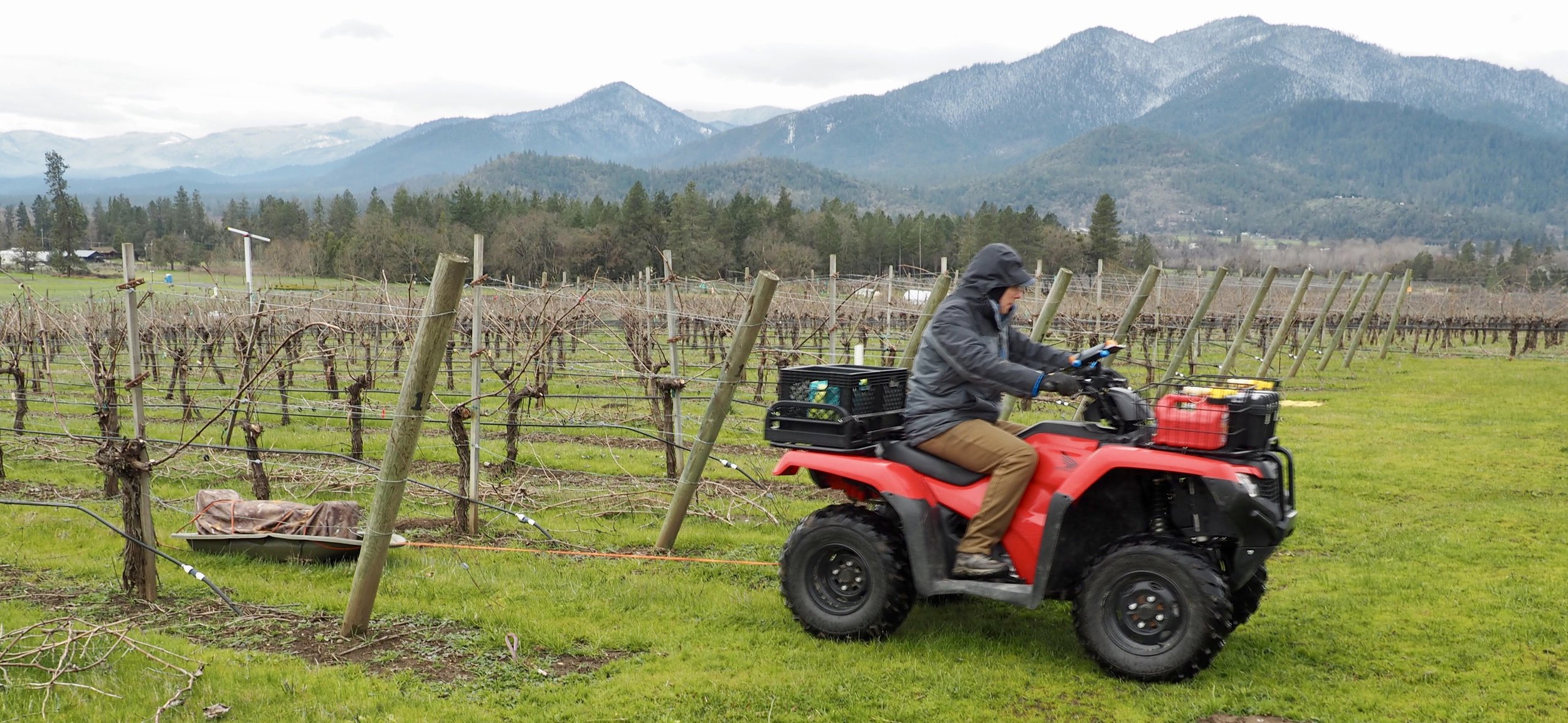
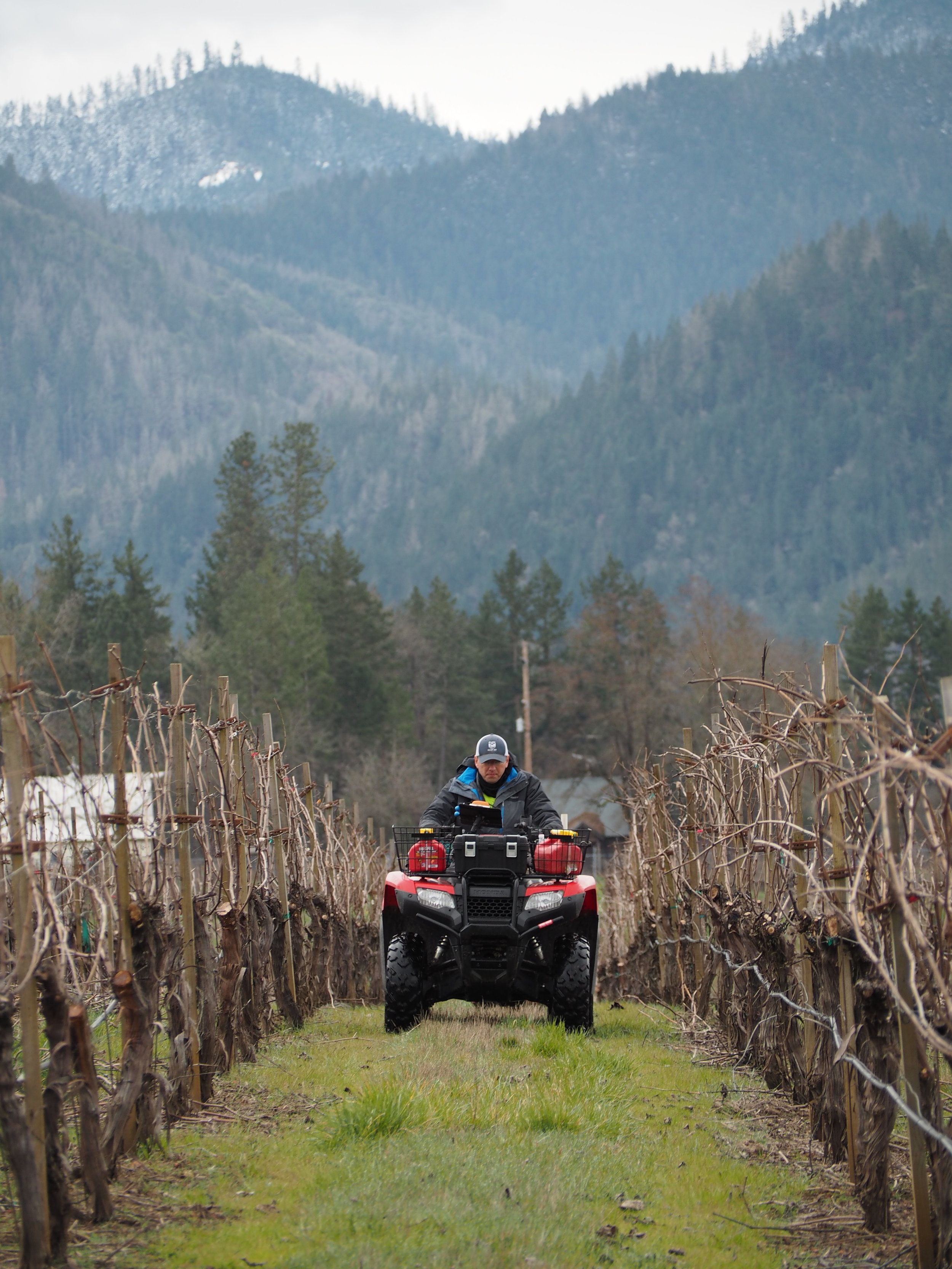
Our soil studies at Troon Vineyard started today with Nick Madden here for the day to do a complete electromagnetic soil scan of our vineyard blocks. We've retained Dr. Paul Anamosa and company to do a complete analysis of our vineyard blocks. Armed with this scan data we will be selecting locations for about eighty 5 feet deep pits to fully map our soil types. This data will help us select the proper varieties as we add new vineyard blocks and replant old ones. The scanner is on the sled behind the ATV. Here is some information on exactly what Nick is doing https://d.pr/dtaYMK
”Electromagnetic induction (EMI) has been used to characterize the spatial variability of soil properties since the late 1970s. Initially used to assess soil salinity, the use of EMI in soil studies has expanded to include: mapping soil types; characterizing soil water content and flow patterns; assessing variations in soil texture, compaction, or- ganic matter content, and pH; and determining the depth to subsurface horizons, stratigraphic layers or bedrock, among other uses. In all cases the soil property being investigated must influence soil apparent electrical conduc- tivity (ECa) either directly or indirectly for EMI techniques to be effective. An increasing number and diversity of EMI sensors have been developed in response to users' needs and the availability of allied technologies, which have greatly improved the functionality of these tools. EMI investigations provide several benefits for soil studies. The large amount of georeferenced data that can be rapidly and inexpensively collected with EMI provides more complete characterization of the spatial variations in soil properties than traditional sampling techniques. In addition, compared to traditional soil survey methods, EMI can more effectively characterize diffuse soil bound- aries and identify areas of dissimilar soils within mapped soil units, giving soil scientists greater confidence when collecting spatial soil information. EMI techniques do have limitations; results are site-specific and can vary depending on the complex interactions among multiple and variable soil properties. Despite this, EMI techniques are increasingly being used to investigate the spatial variability of soil properties at field and landscape scales.”
Get Set, Go!

Biodynamic consultant Andrew Beedy and Troon winemaker Steve Hall on the spot selected for our compost program.
This is the spot that will become the most important place of the vineyard. We’ve chosen the spot for the compost piles.
There is a day that dreams, plans and goals become a reality. On your mark, get set, go! As we crossed the starting line this week, we were firmly aware that we were starting a marathon, not a dash. This week we took our first steps to converting Troon Vineyard to organic and biodynamic agriculture. We have our eye on 2020 to achieve our first organic and biodynamic certification, but that will not be the finish line. In agriculture, there is no finish line.
We had already taken some steps forward as we had received our L.I.V.E. and Salmon Safe sustainable certifications, but we have now committed to biodynamics as our vision for the future of Troon. Our first big step was to secure the services of Andrew Beedy ([https://www.andrewbeedy.com]). Andrew's speciality is designing a complete plan that looks at your property as a whole, not just as a vineyard. Andrew has spent his entire life immersed in biodynamics as he was born on a biodynamic dairy farm in Pennsylvania. He attended a Steiner elementary school that was attached to a biodynamic farm. As a teenager, he worked on an organic farm in England. After university, he moved to California, where he worked with his mentor, the famed biodynamic consultant Alan York, who also was the biodynamic consultant for our neighbor, Cowhorn Winery, here in the Applegate Valley. Today, Andrew’s clients span the entire nation coast-to-coast.
After walking for hours with Andrew through our vineyards and our entire farm property, you can feel your perceptions began to change as you start to look at your farm as a whole rather than as simple blocks of vineyards. This extends beyond our property lines as you understand that the Applegate Valley itself is included in a whole farm, holistic plan for farming.
With conventional agriculture you identify problems and then apply various applications. Many, many of these applications are nasty indeed. While they may solve one problem, the collateral damage they cause slowly, but surely kills your soils. Soil is the plant’s foundation, and dead soils cannot produce great wines. When you farm biodynamically you eschew these chemicals, which means you have to deal with the threats to your plants before they appear. In other words, biodynamics is all about prevention. A healthy plant can better resist diseases and pests than one living in dead soils relying on chemical fixes to deal with each and every problem.
Our new compost piles will be the heart and soul of the vineyard as this is how we will be bringing our soils back to life. One way I like to explain biodynamics is that it is organic agriculture with probiotics. It is the bacteria and fungi surrounding a plants roots that allow it to take nutrition from the soil. Conventional agriculture destroys this natural system. The power of biodynamics is that it brings the microbiome of your farm back to life, which brings your soils and plants back to life.
I will be chronicling the process of bringing Troon’s soils back to life here on this blog. Over the next weeks, we are evaluating our soils and the microbiome of our vineyards, and we will be carefully monitoring and documenting the changes in our soils and vines as we practice biodynamic farming over the next years. It is a story I am very excited to be sharing. It is a process that will change our farm, our vines, our wines and us.
It will be a steep learning curve. Could anything be more exciting?
Here is a link to the Demeter Biodynamic Farm Standard for certification.
Ten #WBC

10 years of Wine Blogger Conferences
A decade of anything seems significant in a world that gets its dander up about Twitter expanding from 140 to 240 characters. However, a decade needs more than even the new verbosity now found on Twitter can handle. Ironically, the decade and the event I’m thinking about was mainly documented in 140 character bursts on Twitter.
Having just attended my tenth Wine Bloggers Conference (WBC), which is all of them by-the-by, I can’t help but take some time to contemplate the changes in the conference and the industry over the last ten years. As that’s a topic worth far more Twitter can contain, it would seem that blogging about it is a rather obvious idea.
In ten years, WBC has gone from a wine hackers party of rebels in year one to a decidedly establishment event. I am sure it is more profitable now - it certainly looks that way - but the edginess is gone that existed in the early years, both of which are probably good things. If WBC could not show a profit it would have disappeared years ago. The edge is gone because the genre has matured and that’s the natural way of things. Wine blogging is not cutting edge anymore as well proven by wine blogs that have become the wine corner of the Internet’s equivalent of “newspapers of record”. I remember how exciting it was to discover Alder Yarrow’s Vinography in 2004. Then it seemed subversive, today it is a standard recognized as important by wine writers of all stripes.
In year one, 2008, the conference was controlled more by the attendees than the organizers. Held at the delightfully kitschy Flamingo Hotel in Santa Rosa, in the heart of Sonoma wine country, at #WBC08 you were more likely to find a bigger crowd by the pool pulling corks than in the seminars. Sonoma was the perfect place to host this first year as there were a lot of rebel winemakers there too. In the evenings we took over an undecorated conference room where many dozens of bottles of wine contributed by the bloggers, not the sponsors, were shared in a free-form bacchanalia. There was no controlling this crowd and no one tried.
It cannot be forgotten that the original crew that attended the first WBC was a creation of Twitter. In those days, Twitter was more like a chat room, not at all like the behemoth it has become. We had all met each other online and had become a community before we ever met each other at #WBC08. Meeting in person all of these people that had become your friends online instantly transformed the experience into a celebration - a celebration of new friendships that continue to this day.
Perhaps sensing the un-conference in years to come, a group of us did not stay at the hotel, but at the beautiful vineyard home of @PinotBlogger (Josh Hermsmeyer). My other roommates were @LennThompson and @WineHiker (Russ Beebe). It was here that the first “going rogue” party happened, but we did not know it at the time. Dozens of wine bloggers descended on our house that night and it is impossible to guess how many bottles were opened and shared. It was a good thing the house was out in the country as I am sure any neighbors would not have been pleased.
Needless to say, after such an experience few who attended year one missed year two.
The success of the first year meant that in the years following the inmates lost control of the asylum. But this was not to last for long as soon the un-conference, so named at the first year of WBC, would return. There needed to be a place for the old guard, the hackers. Over the years, the original crew would be joined by like-minded wine bloggers as they lost their newbie status and started to understand the real value of the event. That value is the community and the event itself is simply a framework to bring us all together.
The organizers of the Wine Bloggers Conference have a real dilemma. How do you create a conference that will please both veterans and newbies? The answer is simple, you can’t. This conflict was sure to mean an un-conference would have to exist. The un-conference is not an insult to the organizers or the event, but is a natural expression of the maturity of the event and the complexity of the now wide range of people that call themselves wine bloggers. In my opinion, it adds richness and a depth to the event that keeps the veterans coming back for more.
The tenth conference, #WBC17 was held at the Hyatt Santa Rosa, quite a contrast to the original site at the Flamingo. There is nothing kitschy about a Hyatt. Smooth and professional from start to finish, the Wine Bloggers Conference reflects the state of wine blogging today. No longer just a bunch of wine hackers, wine blogging too has become smooth and professional. A quick look at Twitter today and you’ll find wine bloggers being whisked off, all expenses paid, to wine regions all over the world, their published words now just as coveted by wine marketers as those in the increasingly irrelevant glossy wine magazines.

Going Rogue dinner #WBC17 in Santa Rosa
There have been many WBC highlights over the years: Walla Walla, Penticton, Finger Lakes, Willamette/Portland come to mind right away. At every event, other than year two, I have been a host of a un-conference event. But it was not until #WBC11 (the fourth conference) in Virginia that my, now annual, WBC un-conference Saturday night dinner came into being. What started as a few people escaping in search of better food and air conditioning (summer in Virginia!) evolved year-after-year into a WBC tradition. I will say that none of this would have happened without my friend and un-conference dinner partner-in-crime Thea Dwelle (@LusciousLushes). I am always honored by those that attend my humble dinners, while they may not have the elegance of the events at the big corporate winery sponsors, they do have the best conversations and, if I say so myself, more interesting wines and people.
Now that the hackers have lost control of the conference itself, un-conference events are the only way left for wineries that are hackers to share their wines with WBC attendees. The costs of official sponsorship at WBC are now simply out the range of small wineries. I, for one, will refuse to give up on WBC, but from here on out you’ll only find my wines at the un-conference and, of course, at my dinner.
#WBC18 will be in Walla Walla once again. A wonderful town and wine region. However, reflecting the now corporate nature of WBC, they have planned the event in October. That means during harvest, which means actual winemakers will, at best, have a difficult time participating. I understand why the organizers are not concerned as most winery representatives that attend don’t get their hands very dirty during harvest. Marketing and sales directors will have no problem attending and, perhaps, this better represents what the conference is about today. However, I will be there at least one day. There is a dinner tradition I need to keep up.
A WBC without a un-conference would be soulless, like a wine without terroir. Don’t worry, you’ll be able to find all the wine hackers at #WBC18 on Twitter. We’ll be pulling corks with the same passion we did in year one.
See you at #wbc18alt.
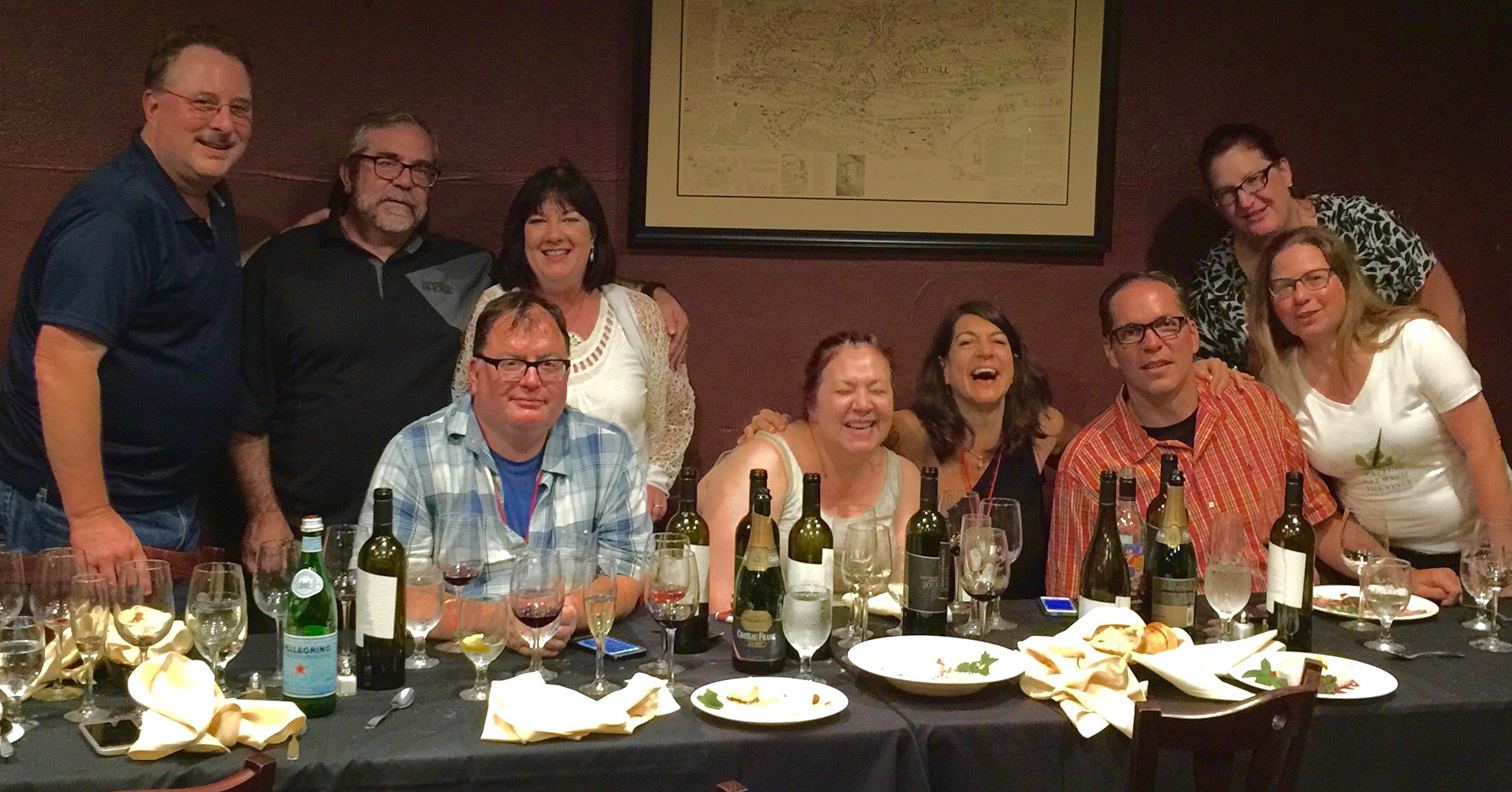
Going Rogue Dinner #WBC15 in Corning New York
Provence 1970 and How We All Changed the World
My sister Susan is an excellent cook and her garden is a thing of culinary beauty. I’m not a bad cook either, if I say so myself. This is a gift from our family. While we were both raised in the fifties and sixties, the dark ages of American cooking, we were lucky as, for us, food was something tied to family and celebration. Our mother lovingly prepared our meals and dad manned the grill in summers. We always sat down as a family for a dinner that did not include a television set. Our parents also loved to entertain, so adults gathering around food and cocktails (wine had not yet been discovered in Harvard Illinois) made good food and good times synonymous for us.
Then there was our grandmother, my mother’s mother Goldie, who was simply one of the greatest cooks I have ever experienced. Her repertoire was formidable, but it was only in one genre - classic midwestern farm cooking. This was a hybrid of English and German cooking that had been transformed into the cuisine of the American prairie. Portions were substantial, as this was fuel for families spending their days doing the hard physical work that was life on a small dairy farm. Her Christmas dinner was a tour de force: roast turkey, roast beef, ham, oyster stuffing, mashed potatoes drenched in butter and seemingly countless other side dishes. A table bent under the weight of pies and cakes. Almost thirty of us would gather at one long table and eat until we could eat no more. But eat more we would as the pièce-de-résistance would be unveiled - the suet pudding. She would only make this pudding once a year at Christmas. It was sublime. It was also the single richest dish I have ever eaten in my life.
Special note must be made of my grandmother’s pies. Thank goodness these were the days before cholesterol and Crisco. Goldie made her pie crusts with lard and the fillings from what grew on the farm - apple, rhubarb, cherry. If you have never tasted a pie crust made from lard, you have not tasted a real pie. The memories of these pies (rhubarb was my favorite) makes my mouth water to this day. Growing up I never wanted a birthday cake, I wanted a birthday pie.
Such positive memories of food in your youth cannot help but lead you into the kitchen yourself. When I started to get seriously interested in cooking, I was lucky to have some very special teachers. There was Julia Child, James Beard, Richard Olney, M.F.K. Fisher and Marcella Hazan at my side in my kitchen as I taught myself to cook. Their cookbooks were stained and abused as I tried to follow the recipes. Indeed my first copy of Mastering the Art of French Cooking was severely singed on the back cover due to a brush with a hot stovetop. To me, the wear and tear on these books was a badge of honor. I inhaled these books like a mystery fan reads Sherlock Holmes.
This was learning to cook in the 1970s. Food had been born again in the United States led by these now venerable cooking and food writers. My entire life and career was influenced by these writers and they led me down the path to my love of wine and my, now over thirty-five years, career as a fine wine professional. Due to them, for me food and wine has always been the same topic and it is this philosophy that guides my winemaking goals to this day.
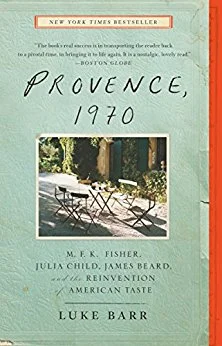
I was filled with these memories and feelings as I read a book that has to be profoundly moving to anyone who experienced the rebirth of American cooking . Provence 1970 by Luke Barr chronicles the experiences of M.F.K. Fisher (his great aunt), Julia and Paul Child, James Beard and Richard Olney as their love of France and French cuisine transformed American cooking and eating and then, eventually transformed them as they went beyond the limits of French cooking and help create a uniquely American food and wine culture.
Provence 1970 is one of those books that brings you a touch of sadness when you reach the last paragraphs as you become so personally involved in the world the book recreates as your own memories weave together with the events and experiences so vividly and thoughtfully recounted by Barr in this lovingly written book. As you read the last words you know that the world the author has created is one you do not wish to leave.
Perhaps you have to be of a certain age to feel the emotional tug that this book had for me. The food culture in the United States no longer takes a back seat to those of Europe. American restaurants are on the cutting edge of fine dining, leading the way, not following, to the next big thing. That American wines are as good as any made anywhere is old news, not even considered by younger wine buyers. Fabulous natural cheeses, charcuterie and excellent espresso are easy to find throughout the country. Farm-to-table restaurants and farmers markets with gorgeous organic, even biodynamic, produce are commonplace coast-to-coast. When I first started visiting Europe in the seventies I would smuggle cheeses, prosciutto and salami back hidden in my suitcase because such things did not exist at home. Today’s travelers don’t need to bother except for sentimental reasons as, not only can you find those things here, but often find better products made by artisan producers in their own home towns. The food culture in America has been totally transformed in just fifty years.
Provence 1970 recounts the beginnings of this change, but also tells the story, not only of my introduction to good food and wine, but the story of many, many thousands of American cooks, both home and professional. The American cooks, that learned to cook from the likes of Child, Beard and Hazan together changed the world of American food and wine.
It was a circuitous route we took to return to the locavore, organic cooking of my grandmother. We had to pass through the rigid rigors of haute cuisine and a Francophilia driven by our culinary insecurities to get back were we started from - local food, simply and well prepared. Which, come to think of it, also are my favorite dishes in France and Italy.
Christmas dinner will be here soon. As I plan the menu, my grandmother will be there with me. I hope to make her proud as the flavors of her table live in me and are a part of who I am. I can taste the suet pudding now.
Winemakers (and Vineyards) Need to take Probiotics Daily

Your microbiome is suddenly fashionable. The bugs in our gut are chic. We can’t get enough of probiotics and fermented foods. This is a very good thing and a trend that will certainly lead to healthier people. The bugs love us and now, finally, we love them. Good thing, because we would not exist without them.
However, the microbiome is not just in your gut. It’s everywhere - literally. It’s part of everything you touch, breathe, eat and drink. Yes drink. That includes wine. Bugs in wine? Not so much really because alcohol and bugs do not get along well. But before fermentation wages its war on bacteria (sometimes more successfully than others) there are grapes in a vineyard and the key to a healthy vineyard and great wines is the microbiome of the vineyard itself. Just like us, for vineyards there are good bugs and bad bugs and the key to good health is maximizing the good ones and minimizing the bad ones.
Conventional farming has destroyed the microbiome built up by Mother Nature over the millennium. The resulting soils are dead requiring mainlined injections of petrochemicals to grow anything at all. Soon, like any addict, the plants require stronger and stronger doses to survive. A vicious dead-end cycle that ends up the same for the plant or the drug addict.
Just like we need to take probiotics to repair the damage we’ve inflicted on our microbiome, a vineyard needs the same remedy. Unfortunately, for a vineyard it’s a bit more complicated than simply taking a pill. However, there is a proven cure - biodynamics .
First let’s make one thing clear - I believe and revere science and scientists. I know that climate change is real. I know that astrology is ridiculous and that relativity is not. So how does someone who believes these things also believe in biodynamics? That’s a good question and in a very real sense many aspects of biodynamics and science are in total conflict. Yet, I think with deeper thought and research the gap between them is not a chasm, but is in fact semantics. Clearly there are aspects of biodynamics that are absurd to any educated person, but there is a major problem here because, very simply, biodynamics works. Biodynamics not only works, but works dramatically well. The list of wineries using biodynamic agriculture is a who’s who of exceptional winemaking. The results speak for themselves.
Often it is argued by anti-biodynamic crusaders that it is not biodynamic practices that improve a vineyard, but the simple fact that the owner must spend more time in the vineyard. Without a doubt there is an element of truth here for as they say, “the best fertilizer for a vineyard is the owner’s boots.” Yet there are many dedicated viticulturists who spend endless hours in vineyards that produce flavorless wines from dead soils that have had the soul ripped out of them by chemicals. Time spent in the vineyard alone cannot be the answer.
However, if you strip the voodoo out of Steiner’s biodynamic program (and Steiner was loaded with voodoo ideas) what you get is a discipline dedicated to putting the bugs Mother Nature intended to be there back into your vineyard. Burying horns filled with manure, hanging stuffed animal organs in trees then spreading their contents over your vineyard is very simply creating a probiotic for your vineyard. Almost all of the numbered biodynamic preparations are focused on composting. It’s in the area of composting that biodynamics meets science as there is hard data showing that compost treated by biodynamic methods is more active microbiologically than untreated compost. I believe this extremely proactive composting program is the heart and soul of what makes biodynamics effective. You are simply creating a giant probiotics therapy program for your vineyard. It is here that science and biodynamics reconcile. Any plant scientist will tell you that a healthy microbiome is key to a plant taking nutrition from the soil. Kill nature’s bugs and your vines will slowly starve to death. It is at this point that biodynamics goes beyond simple organic farming, which tells you what not to use, but biodynamics goes a step farther by telling you what to put back in. The goal of biodynamics is not simply sustainable agriculture, but to restoring and building the microbiome of your vineyard.
There is an obvious conflict between science, facts and biodynamics. I have no doubt that there are parts of biodynamics that are total hooey. The problem is that we don’t know which parts work and those that are a total waste of time. That means for now a winegrower committed to both a natural sustainable vineyard and great wine must take the bad with the good of biodynamics until science and biodynamics catch up with each other. Until they do and we fully understand how and why biodynamics works I do not intend to take a risk that would mean wines that are not all they can be.
Starting in 2018 we are launching our program at Troon Vineyard to achieve biodynamic certification. We do this fully understanding that some of the things we’ll have to do will seem absurd, but we know that others will create miracles in the vineyards that will take our wines to greater and greater heights. To achieve that, I am more than happy to practice a little voodoo.
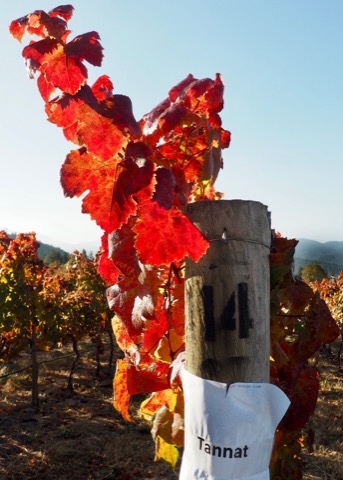
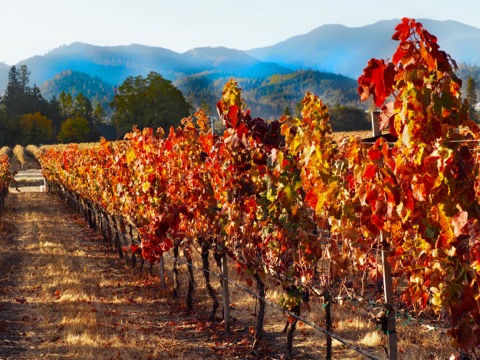
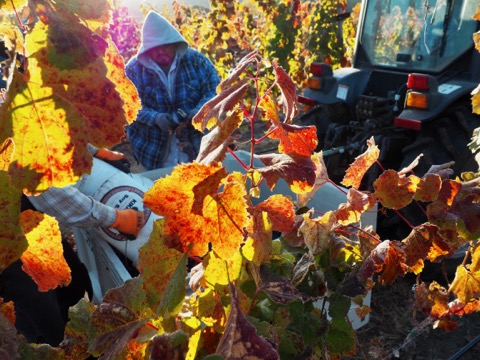
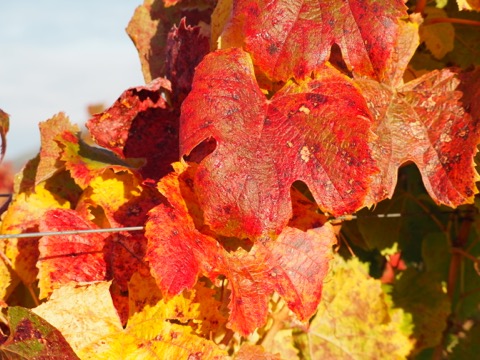
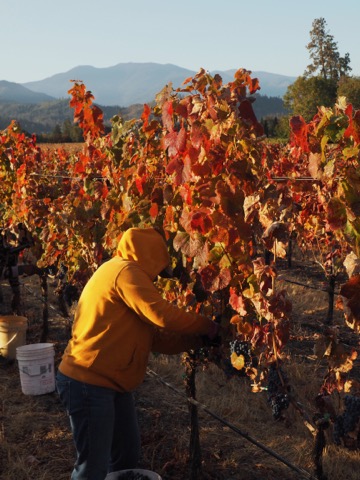
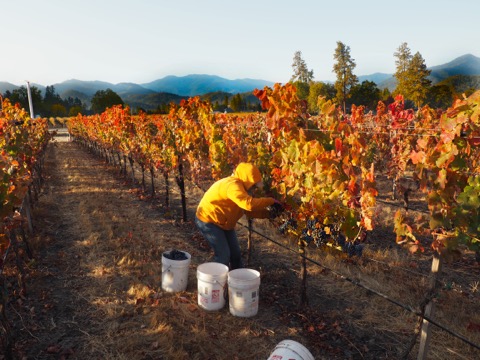
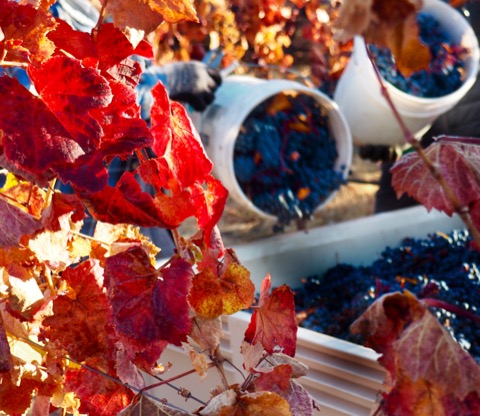
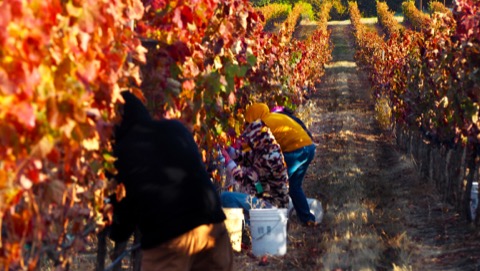
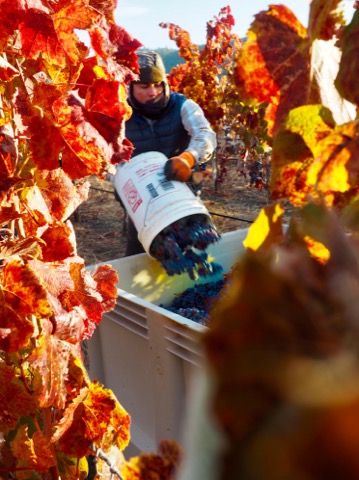
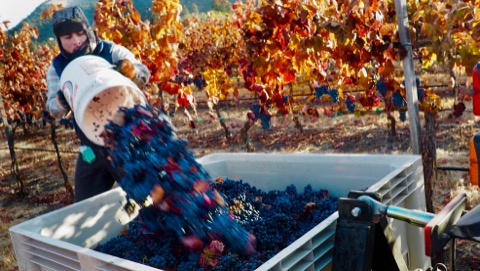


Harvest 2017 Kubli Bench Applegate Valley Oregon: Vermentino

We know the vermentino is getting close when it starts to turn golden Everyone around us has picked theirs, but we're holding out and going for the gold and more flavor and complexity. Should be picking in about 10 days.
Selling Wine in Mason Jars

I’m holding a bottle of wine it's taken me almost sixty years to make. I pull the cork and pour a few ounces into a more-or-less clean Mason jar. It seems we are going back in time.
Decades ago, when I was building a new fine wine distribution company, I would take winemakers that are now wine legends - Angelo Gaja, Dominique Lafon, Josh Jensen, Tony Soter, Cathy Corison, Richard Sanford and others around Chicago, where we would pour samples of their wines into small plastic cups and try to convince buyers to give these newcomers a shot. Needless to say, those buyers never got a glimpse of the true greatness of these wines and winemakers out of those little plastic cups.
Fast forward from the 1980's to 2017 and selling great wine is a lot more glamorous, right? Sharing your wines with the sommelier at Castagna or Nostrana could not be more pleasurable - if you make good wine that is. Yet, all to often, we've not progressed beyond those pitiful little plastic cups.
In states that allow both distributors and retailers to sell wine and spirits, the profits from spirits make their cash flow work. These profits from quick, large-margin spirit sales are the lifeblood of large liquor stores, which give them the opportunity to build broad, but slower selling wine selections. In states like Oregon, where spirits sales are ridiculously limited to state controlled “liquor stores” that means amazing wine and spirits stores like K&L, Binny’s and Zacky's cannot exist. In state controlled Oregon, grocery stores have a significant advantage over wine-only shops as they have many other products to give them the cash flow required to support the inventory in their wine department - just like full-service liquor stores in other states.
This means that I spend a lot of time in Oregon selling wine to grocery store buyers. While tasting wines with buyers in the back room of a grocery store out of old Libby glasses may not have the panache of sampling your wines in Riedel on white tablecloths it's just as important to your sales. Also, most of these grocery store buyers are just as serious as any sommelier. They too are passionate to find wines that their customers will love. Also, like a sommelier, they are out on the front lines and if the customer does not like a wine they are just as likely to blame them as to blame the winery.
It's not a bad system. Or, at least it used to be not a bad system. Fine wine and corporations do not mix well and management at some important Oregon chains are taking their local buyers out of the game and sending them home with Mason jars of wine in their backpacks.
No longer can you taste your wines with these buyers. You go into the back room, among the storage shelves of dog food and canned goods and pour your samples into well used Mason jars or some other even less glamorous receptacle. You pour your wines into old jars or bottles as the buyers are no longer permitted to taste wines on the job. Which, as that is a big part of their job seems, well for lack of a better word, stupid.
We go to a lot of work to be sure our wines are presented and sold in the proper condition. Pouring them into a Mason jar that is then tossed into a backpack, that may spend time in a hot car or that then may not be tasted for days is not fair to us or the final consumer. Grocery chains should treat both their wine buyers and the wines they buy with more respect considering the significant profit they generate for these corporations.
Next time you buy a wine in a grocery store you don't enjoy, please don't blame the wine buyer. The wine they tasted from that Mason jar after it had sloshed around in their backpack while they rode home on their bike on one of those one-hundred degree days last week probably did not taste much like the bottle of wine you took home.
In thirty years we've graduated from plastic cups to Mason jars. A long way, baby, we've not come.
Courage of Our Convictions
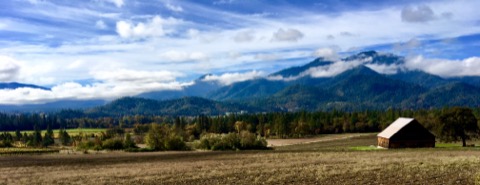
The Applegate Valley in Southern Oregon
A winemaker in Bordeaux has a universe of five. In Burgundy a winemaker has one, maybe two varieties that demand their focus. In Beaujolais they live by gamay. In Barolo nebbiolo defines the reputation of a winemaker. In Napa, if you make great cabernet sauvignon no one will much notice what else you do.
In the established wine regions of the world, a winemaker’s universe of options is preordained. In no way does this diminish their skills and accomplishments, but it does allow them to focus. To be able to focus is to be efficient and efficiency leads to consistency, which is an essential aspect of mass market success. Yet market success does not often fire the imagination or inspire innovation.
They say the pioneers take all the arrows. Welcome to the world of winemaking in one of the world’s emerging fine wine regions. I’m in the Applegate Valley of Southern Oregon, but I believe that winemakers in emerging regions around the world get hit by the same arrows. Winemaking in an emerging wine region requires the courage of your convictions. Planting a new vineyard in a new region is a true leap of faith, but as they say, the greater the risk the greater the reward.
But we don’t work in a vacuum. Years of knowledge and science have accumulated from the work of winemakers and viticulturists before us so we don’t have to push blindly forward. There are pioneers in every new region that took a lot of the arrows for all of us. Admittedly, many of these people that first planted vineyards in new regions were learning only by trial and error, but from their failures and successes, we can build a foundation for an exciting new wine region.
One such exciting new region is on the Kubli Bench of the Applegate Valley. Applegate Valley is not new as it was established as an AVA in 2000, but there is a growing energy here and we are on the tipping point. The Applegate Valley is now on the edge of breaking out. The varieties that will fuel that breakout are coming from the shores of the Mediterranean and the rugged hills of Southwest France, not from Bordeaux, Burgundy or Napa. The Rhône will have a voice, but the future of the Kubli Bench will be in the tradition of Bandol, Languedoc-Roussillon, Cahors and Madiran. These regions are now, after centuries of winemaking, escaping the shadows of their famous French cousins because of an exciting revolution in winemaking and winegrowing in those regions. We will be joining them in this winemaking revolution.
We are now making plans to either graft or replant many sections of our existing vineyards with the varieties that belong here. We’ll be planting more tannat, malbec, marsanne, roussanne and mourvèdre for sure (we already have significant acreage of syrah and vermentino), but varieties like picpoul, petit manseng, carignan, grenache (red and white) and cinsault will also find a home on the Kubli Bench. Because of everything that we’ve learned and the excellent quality of the wines we’ve already made I do not feel planting varieties like these is a leap of faith. We have the courage of our convictions.
I like making wines that people drink rather than collect. Wines that are delicious, richly flavored, and affordable that bring pleasure to people lives are as rewarding to make as they are to drink. There is no bottle more exciting than the wine that is open on your table. The Applegate Valley is a perfect place to make these kinds of wines.
I have to admit. Making wines like this is fun.
Pursue Your Passion
This article first appeared in the Dracaena Wines blog series"Pursue Your Passion""the story of one person in the wine industry, as told by them"

It all started with Watergate. How topical is that? That scandal hit just as I started college. Armed with no passion except football at that time in my life I suddenly saw a bigger world and signed on to my college newspaper. I was going to be Woodward and Bernstein.
I packed on the history hours eventually spending a semester in Europe "studying" (Nixon resigned during my flight back). While I was graduated as journalist, just four years later I was part of a start up wine importer and distributor. Now instead of reading All the Presidents Men I was immersed in Lichine, Penning-Rowsell and Bespaloff.
What happened? On that trip to Europe I was introduced to wine and food. Having grown up in a land were food and drink were eptiomized by Pabst, Manhattans and friday night fish fries the experience was a revelation. A chain reaction was started. This growing transition from news to wine was fueled by my friend Don Clemens, who had landed job with Almaden Imports, who in those days (the late 70s) had a cutting edge portfolio. My mouth still waters today as I remember drinking Chapoutier Tavel with ribs at Don's apartment. There was no going back.
In 1978, with zero experience, I talked my way out of journalism and into wine with a new job as the midwest rep of Peartree Imports, whose main brand was the Burgundian négociant Patriarche, but the portfolio was rounded out with a range of spirits guaranteed not to sell in 1978. I hit the books for my first sales calls - work-withs - with the sales team of Union Liquor Company in Chicago. I memorized each vineyard and the precise details of each spirit. On my first day I jumped into the salesman's car and we headed into Chicago's war zone. The main brand of these salesmen was Richard's Wild Irish Rose in pints. We'd get let in the back door of a fortified "liquor store" that consisted of several revolving bulletproof windows where customers would place their cash and, after spinning the window around, would get their pint of Richards. The salesman (there were no women in those days) would get his order for 100 cases of Richards, get paid in cash for the last order, then I had a few minutes to pitch my brands to the owner. I was not very successful. Then the owner would take his shotgun and walk us back to the car so no one would steal the wad of cash we'd just received. Even with this dose of intense realism I was not deterred.
The dismal state of the wine industry in those days ended up being an amazing opportunity. In 1979 I joined Sam Leavitt as a partner in the newly formed Direct Import Wine Company and over the next twenty years we built the first mid-west wine company focused on imported and then domestic estate wine. First came Becky Wasserman in Burgundy, Christopher Cannan in Bordeaux (and then Spain), Neil and Maria Empson in Italy then new upstarts from California like Calera, Spottswoode, Shafer, Corison, Iron Horse Soter and Sanford. Not far behind were Northwest wineries like Leonetti, Domaine Serene and Panther Creek. The first big break we got was selling the 1982 Bordeaux futures to the famed (but long gone) Sam's Wines. I literally got paid for these future deals with bags of cash often holding $20,000 or more. Chicago was the wild west of the wine business and, yes, [he too had a gun.]
This was a very special time for me. It was a great privilege to work with people of such integrity and creativity. They all inspire me to this day.
Then my partner wanted out and I did not have the money to buy him out so we were acquired by The Terlato Wine Group. I had a five year contract to stay, but those were some of the darkest years of my life in wine. Instead of integrity I was tossed into the world of simply moving "boxes". When my sentence was up I escaped to Italy for three years and due to the graciousness of extraordinary winemakers like Luca Currado (Vietti), Manuel Marchetti (Marcarini), Tina Colla (Poderi Colla) and Andrea Sottimano in Barbaresco I dug deeper into the spirit of what makes a wine great. Many hours in the cellar and vineyards with them brought me back to the world of wine I loved.
Refreshed and inspired I returned the the United States and now have spent almost 15 years divided between the vineyards of Napa and Oregon. During these years I have drawn on the knowledge and inspiration of all of the great winemakers I have known over more than three decades in wine. I will freely admit my winemaking heart now firmly resides in Oregon. There is a fresh spirit here. You just know the best wines are yet to come and I relish being a part of that energy.
In the end there is no final satisfaction in winemaking, because there is no such thing as perfection. The concept of a 100 point wine is simply absurd. However, while you may never be totally satisfied with any wine you make, you can be totally satisfied by experience of making them. There is a deep satisfaction at the completion of each vintage, be it great or difficult, that is not only deeply rewarding, but addictive. You have to come back for more.
I think we should start flowering in the Applegate Valley next week. Only in agriculture are you reborn every year.
Loving Grana Padano

You're at the store with two pieces of cheese in your hand. They are equal in size. They are the same price. One is Grana Padano the other is Parmigiano Reggiano.
You'd buy the Parmigiano right? The king of cheeses, why not go for the best? But think for a second. These two pieces of cheese are the same price. That means you're probably getting top-of-the-line Grana Padano, while the Parmigiano is almost certainly mass produced and on the lower end of the Parmigiano spectrum. Do you want to pay for the name or the cheese?
You're at the store with two bottles of wine in your hand. They are equal in size. They are the same price. One is cabernet sauvignon the other is syrah.
You'd buy the cabernet right? The king of wines, why not go for the best? But think for a second. These two bottles of wine are the same price. That means you're probably getting top-of-the-line syrah, while the cabernet is almost certainly mass produced and on the lower end of the cabernet spectrum. Do you want to pay for the name or the wine?
Grana Padano and Parmigiano Reggiano are the same type of cheese. While at its pinnacle many connoisseurs consider Parmigiano the ultimate expression of this style of cheese, there are many passionate producers and consumers of Grana Padano that would take exception with their position.
One thing I've learned is that dollar-for-dollar you get better value for Grana than you do with the more famous Parmigiano. Often it's a far better choice to buy the most expensive product with a less famous name than the lowest price product with a more exalted name.
I apply the same strategy to buying wine. If I have $30 to spend cabernet sauvignon, pinot noir and chardonnay don't even enter my mind. My thoughts go to gamay, syrah, tempranillo, aglianico, vermentino, chenin blanc and on and on. Today it seems the choices are limitless.
Like the Reggiano cheese place name, many wine appellations get bonus points for name recognition that spot them extra dollars on each bottle over their competitors. When you buy wine from a famous place name you pay a premium for that privilege. Is it worth it? Sometimes yes. There are experiences you can get from Bordeaux, Burgundy, Barolo and Napa that are truly sublime. But with the $30 I want to spend, sublime will not be found in those appellations. You can find extraordinary wine experiences on a budget if you're willing to go beyond these famous place-names. Think El Dorado, Mendocino, Rogue, Sablet, Madiran, Languedoc, Corsica, Sardegna, our own Applegate Valley and, as with the varieties, the options go on and on.
Never in the history of wine has it been easier to drink great wines without spending a fortune. Next time you're in a wine shop hold that bottle of cabernet in one hand and a different wine from a place or variety you don't know in the other and ask yourself what you want to pay for - the name or the wine?
Table to Farm

Picking Vermentino at Troon Vineyard in the Applegate Valley
It's an iconic episode of Portlandia. Appearing in the very first season, it's a skit that even those that have not seen the show know. When you enter a search for Portlandia Chic... Google auto-fills the link before you even can finish typing. It's the Portlandia chicken episode. A couple in a Portland restaurant become so obsessed with determining just how local the chicken is that they actually leave the restaurant without eating to go to the farm itself.
Like most things in Portlandia, as outrageous the skits are, anyone who knows the city understands that there is a bit of reality in each of them. Indeed there are few cities where the restaurants are more obsessed with farm-to-table provenance. And with good reason, the farmers, dairies, fishermen of the Northwest provide exceptional foodstuffs. It's very hard to understand why so many of the best chefs in Portland know every farmer they work with by name - except the farmers that grow wine grapes.
In Portland restaurants that would not consider buying an egg from more than a hundred miles away, or use a cheese not from the Northwest, or pork not from Carlton Farms, it’s common to find wine lists dominated by wines from Europe. While working dead center between two world-class wine regions in Oregon and Washington they somehow rationalize buying wines that have to be shipped in containers across the ocean instead of the internationally respected wines made in their own backyard. Not too long ago I walked into a Portland oyster bar to do some serious slurping only to discover that not a single wine-by-the-glass was from the Northwest. The essentially French list was well chosen, but considering they only featured Northwest oysters maybe a local wine or two might have been in order. Perhaps I'm overly sensitive, but I'd think anyone can see the irony here. However, I am sensitive to their pain. It can take a lot of work to find interesting American wines in the wine-by-the-glass price range. But isn’t that the work that a sommelier is paid to do?
We're not talking about restaurants in Arkansas or Alaska with no significant local wine industry to draw upon, but a city within a few hours driving distance of important, world-famous wine appellations like the Eola and Dundee Hills, Yamhill-Carlton, Walla Walla and Red Mountain. These are not some upstart appellations, but vineyards that have been researched and worked for decades. These AVAs and many others literally produce wine in any style from almost any variety you could want. - also in any price point.
Incredible as it may seem, I constantly meet wine buyers in Portland who've never gotten their shoes dirty in a local vineyard. People that pour over books breaking down every minuscule detail of tiny appellations in Burgundy or Barolo ignore the vineyards that surround them. While most have understandably never been to France or Italy, it is hard to comprehend why they’ve not been to the Dundee Hills or Walla Walla. One thing for sure, you never truly understand a wine region until you’ve walked in its vineyards.
You're either a farm-to-table restaurant or you're not. It’s time they got off their butts and buy local wine as well as local food. You want biodynamic we've got it, want commercial plonk, we've got it, these and everything in-between. Cheap, expensive, rare, widely available, no problem we've got them. Popular varieties, obscure varieties, we've got them. High alcohol, low alcohol, no problem we've got them. Literally, no matter what you want in wine you can find it in the Northwest. What is their excuse? I have no problem with European wines just don't pretend to be a farm-to-table restaurant if they dominate your wine list.
Italian and French restaurants feel they need to sell wines from those countries, but little or none of the products they use to cook come from Europe - they come from here and for good reason. I understand that if you’re an Italian restaurant you feel the need to have a decent Italian wine list as part of your motif. After it all it makes you seem more authentically Italian. Yet the very essence of the best Italian cooking is based on quality local ingredients. In a country not much larger than Oregon itself, cuisine changes dramatically with a drive of a few hundred miles. When dining in Piemonte the wine selection from Toscana is going to be pathetic at best - and vice versa when you’re having dinner in Siena. No matter if you’re a French, Italian or Spanish restaurant in the Northwest, there is a wide range of local wines that will match perfectly with any dish that you are cooking - with your exclusively local farm-to-table ingredients. Wine comes from farms too.
I love farm-to-table restaurants, but I think it’s time for a table-to-farm movement for wine buyers in the Northwest. The chefs are out with the farmers and fishermen, but sommeliers need to get out with the winegrowers. The wines of the Northwest should be treated with the same respect on a wine list that local produce gets on the menu.
The closer the farm and vineyard are to my table the happier I am.
“Ignore the Snobs, Drink the Cheap, Delicious Wine"*

This weekend there was a wine article in the New York Times by Bianca Bosker, but it was not in the Food Section, you had to veer over to the Opinion Section to find it. These days the Opinion Section of the New York Times has been a refuge I seek out when trying to reclaim my sanity in these insane political times in the United States. However, today there was little comfort there as, in addition to the missives from both the right and left assaulting Trumpism, I found a piece about wine. Well actually not about wine, but about the business of a beverage alcohol product that also uses the noun wine to describe itself.
“Ignore the Snobs, Drink the Cheap, Delicious Wine,” screamed the headline in the New York Times, but the word wine should have really been replaced by, “beverage alcohol produced from grapes,” but that would not have gotten nearly as many clicks. There certainly are cheap, delicious wines and I seek them out all the time. Oddly enough, considering this article, these cheap wines I like to enjoy on a regular basis are made in a natural style. Cheap does not have to mean “Two Buck Chuck”, which is produced with less integrity than Coca-Cola. At least Coca-Cola is honest about containing sugar, which industrial wines are not. Cola-Cola has to list the ingredients it puts in the bottle. Two Buck Chuck does not. Most people are all in favor of ingredient labeling for food products, yet for beverage alcohol not so much. The big wine producers shouldn't worry about ingredient labeling when it comes to their products. Those that grab their bottles of “Cheap, Delicious Manufactured Wine” are unlikely to be deterred.
The author, Bianca Bosker, says, “The time has come to learn to love unnatural wines.” It seems to me the world, or at least Americans, love unnatural wines already. Most of what is thoughtlessly swilled down under the name “wine” is beverage alcohol made from grapes, and not very good ones at that. Americans need to understand that natural wines are good values too. Not every “natural wine” comes from some ultra-chic biodynamic Burgundy domaine, but they also come from impassioned winemakers selling under $20 Beaujolais, Muscadet, Valpolicella and includes wines from California, Oregon, Washington and the rest of the New World. There is a lot to choose from.
(You can read my recent article on what I feel defines natural wines here.)
In her article, Ms Bosker describes the process of producing industrial beverage alcohol from grapes. It made me realize that although soon I will have been in the wine industry for four decades, never once have I knowingly met one of these technicians and know essentially nothing about that end of the business. What was clear from this article is there are two winemaking worlds. One where a winemaker makes what they believe in and then seeks out customers that share their vision and those that make whatever beverage the marketing department says the consumer wants. Oddly, this last group includes everything from the cheapest to the most expensive wines. At least those on the low end of the price spectrum possess the integrity of honestly knowing the value of what they produce.
Winemaking technicians that pursue the corporate winemaking way are not to be disrespected. What they achieve is a technical marvel. To take an agricultural crop and produce hundreds of thousands of cases of a uniform, repeatable and stable commercial product that exactly matches the flavor profiles that your marketing department has defined is an amazing skill. I have no idea how they do it.
As a winemaker on the other end of the world from those described in this article, I was comforted by the support on Twitter from wine writers Eric Asimov and Alice Feiring and the general rage against the article on social media, but I think the wrath aimed at the writer was off the mark. She was simply reporting the truth. The beverage alcohol side of the wine business appears to dwarf those of us committed to terroir, sustainable agriculture and natural, or what I would call real wine. Real wine is an expression of time and place, while industrial beverage alcohol produced from grapes is, very simply, just another alcohol delivery system. Consumer flavor trials do not produce poetry in a glass, but they do provide a solid buzz.
In between the excesses of the extreme edge of natural wine movement and dull industrial wines, there is a whole world of excellent, more-or-less natural wines being made without one consumer focus group being involved. The article says, “the time has come to love unnatural wines.” But why? The shelves in wine stores throughout the United States are full of wines from Spain, Italy, France and the entire New World that are made in a natural way with minimal handling. Writes Bosker, “when it comes to sub-$40 wines - the winemaking process can be surprising high-tech.” That’s only true if you insist on buying neutral wines from big industrial producers. The simple truth is that the vast majority of winemakers in the world are small and make their wines in a more-or-less natural way. That under $40 price range is full of beautiful wines from Beaujolais, the Côtes du Rhône, Valpolicella along with New World Zinfandel, Syrah, Grenache and many other examples of delicious, more or less "natural" wines. There is only one thing the under $40 consumer, or those at the $9.89 average price quoted in this article, needs to do to drink natural wines and that is stop buying wines made from famous varieties like cabernet sauvignon and chardonnay from famous places like Napa, Bordeaux and Burgundy. Oh, there is one other thing, stop buying wines in most grocery stores and take the time to find a decent wine merchant. Buying wine from a real wine merchant that you have developed a relationship with is the most important thing you can do to save money in the long run.
When I first sit down and think about what kinds of wines we will produce at Troon in the next vintage, my first thoughts do not go to the consumer. First I think of the varieties and the vineyards we have and what I believe will be the best wines we can make from them. Then, when we make the best possible wines we can, I go out in search of consumers that agree with the vision that we have expressed in the wine. That is the advantage of not making very much wine. We can make what we believe in. The wine we make is an extension of us as people working in agriculture. I understand that those making hundreds of thousands, if not millions of cases, do not have this luxury. However, when you take all the small producers in the world making natural wines based on personal vision and nature and combine our productions we too make millions of cases.
The world is filled with both millions of cases of processed industrial wines and millions of cases of natural artisan wines. Often the prices are the same. You do have a choice.