Fun in the Cellar, Fun in the Bottle - Piquette!
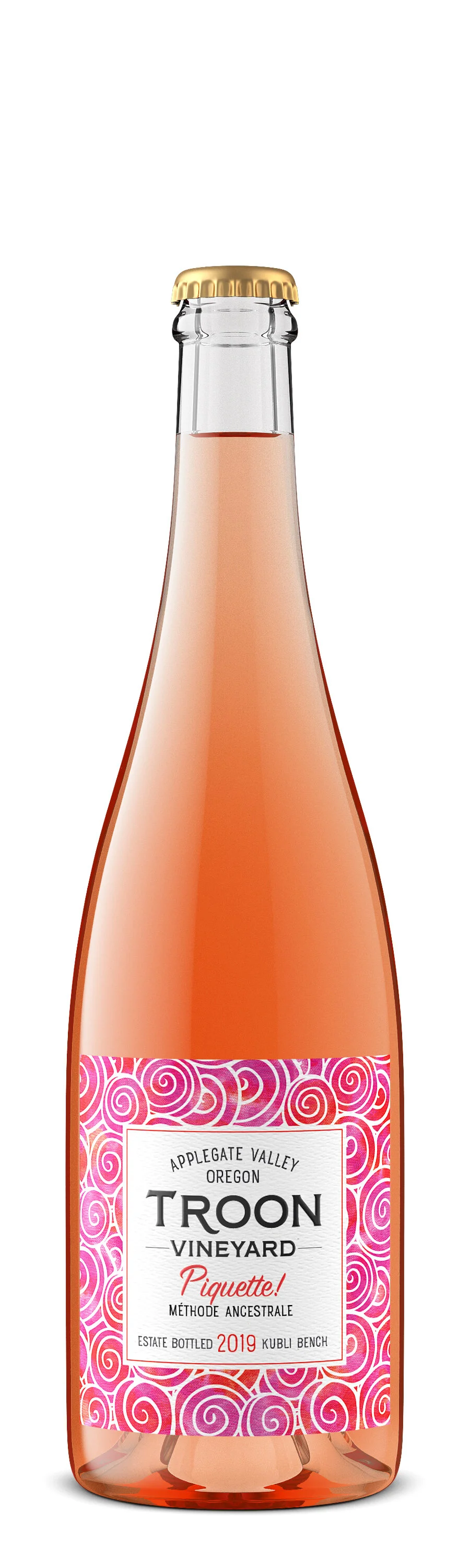
It was fun!
Browsing through my RSS feeds one morning I spotted an article about a type of wine called piquette. What was that? The article was about a piquette being produced by the biodynamic Wild Ark Farm in New York’s Hudson Valley. This, I thought to myself, looks like fun. I forwarded the article to Troon Vineyard’s winemaker, Nate Wall, with a simple note saying exactly that, “this looks like fun!”
Nate obviously agreed as here we are one year later releasing our own 2019 Troon Vineyard Piquette!. I’m sure you’re asking the same question I had, “what is piquette?”
Only in recent history has wine become an elite product requiring certified sommeliers to guide you through encyclopedic wine lists. In the past, wine grapes were just another agricultural crop that required lots of sweat and delivered little reward. Farmers couldn’t (and still can’t) afford to waste anything. Winemakers would press off their best juice to use for wines they would sell, then re-hydrate the remaining pomace, add some sugar or honey, let it soak, and then ferment that for a daily quaff for their workers and themselves. Light in alcohol and lightly sparkling, piquette was frugal farmer fizz. Piquette is anything but a “serious” wine.
The trick here was that none of us had ever tasted a piquette. That’s a very odd experience as normally we would have tasted dozens of wines made by other producers as we tried to deeply understand a variety or blend before we launched off on our own project. Not this time. Nate put together a plan and off we went.
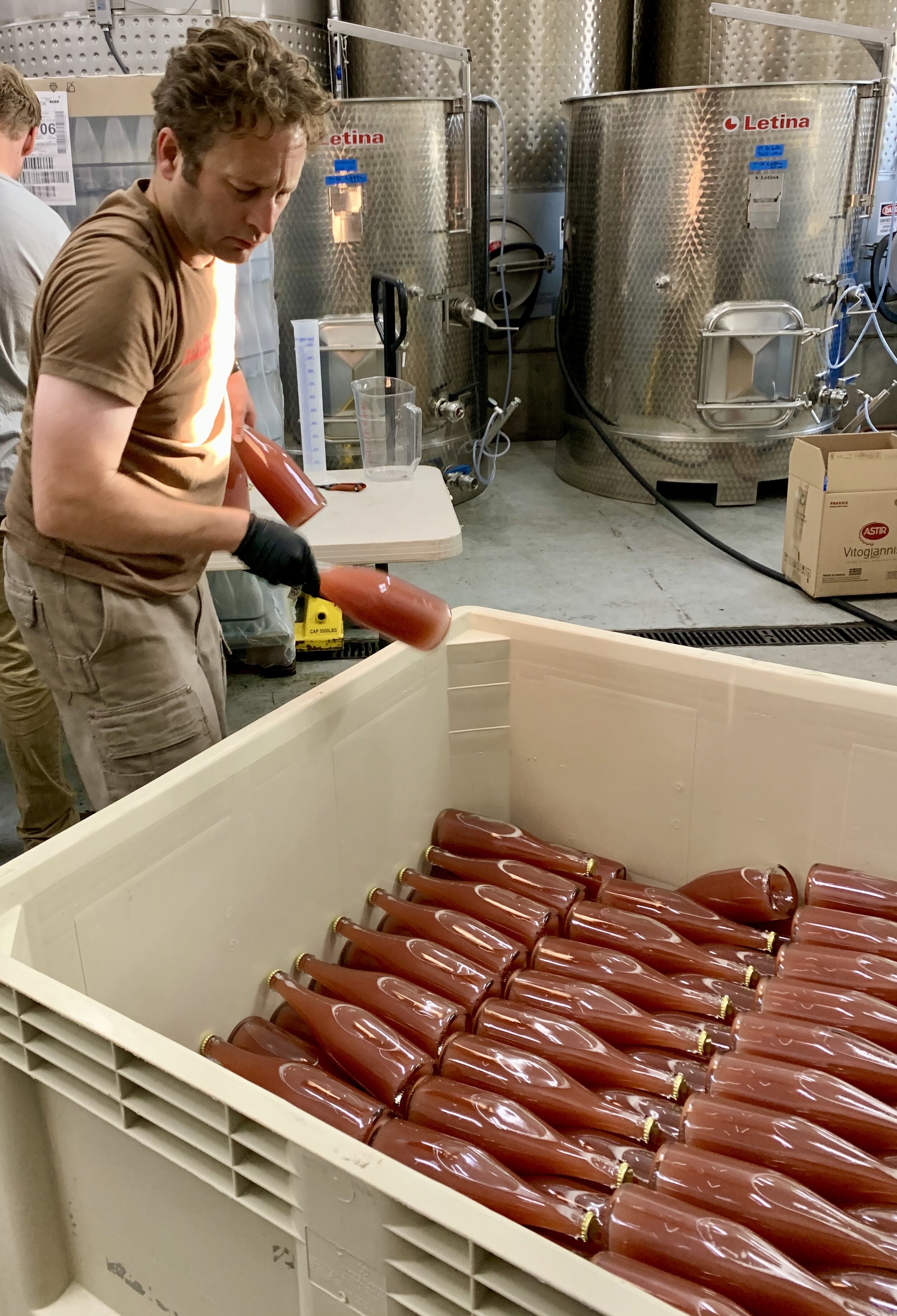
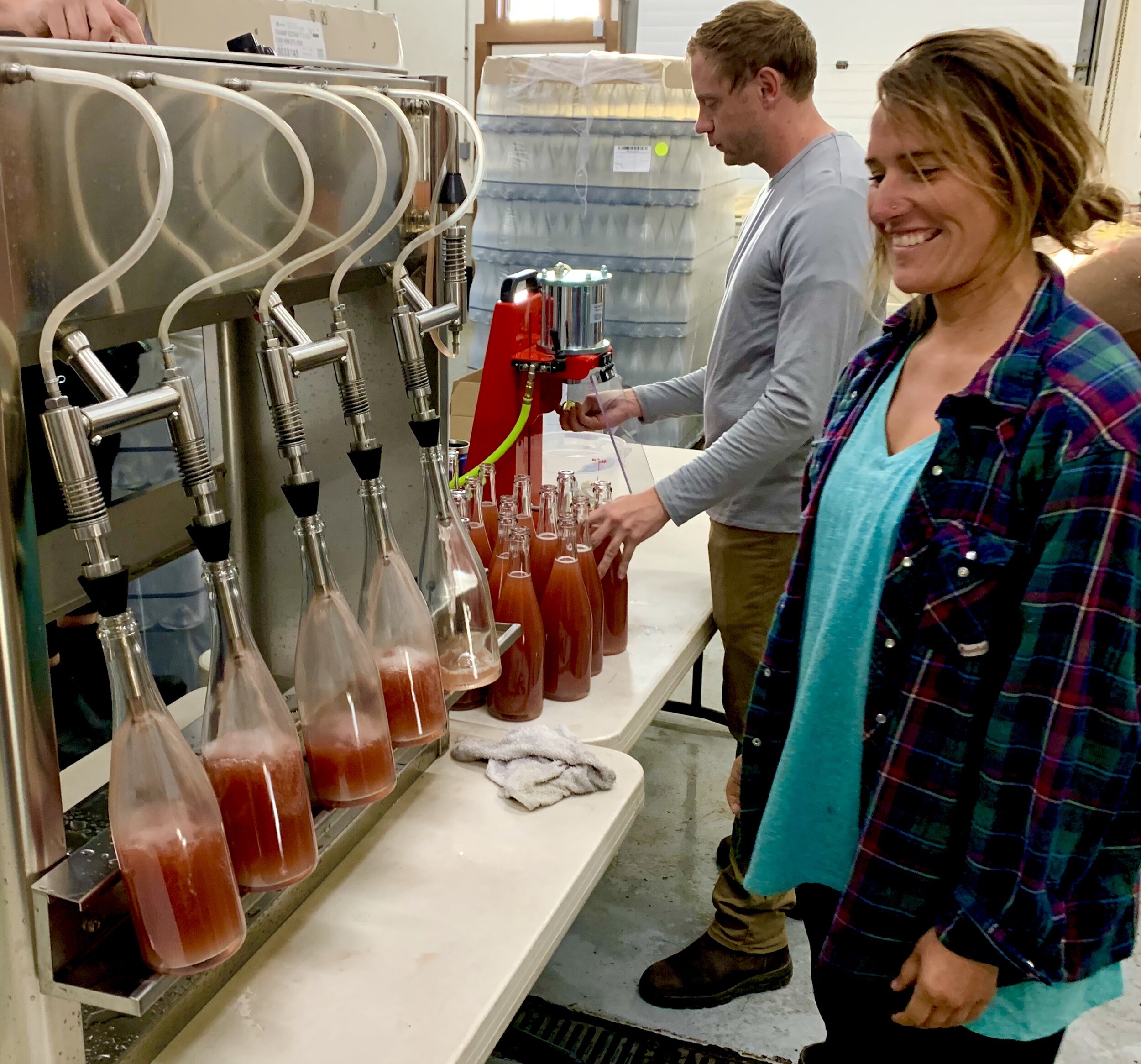
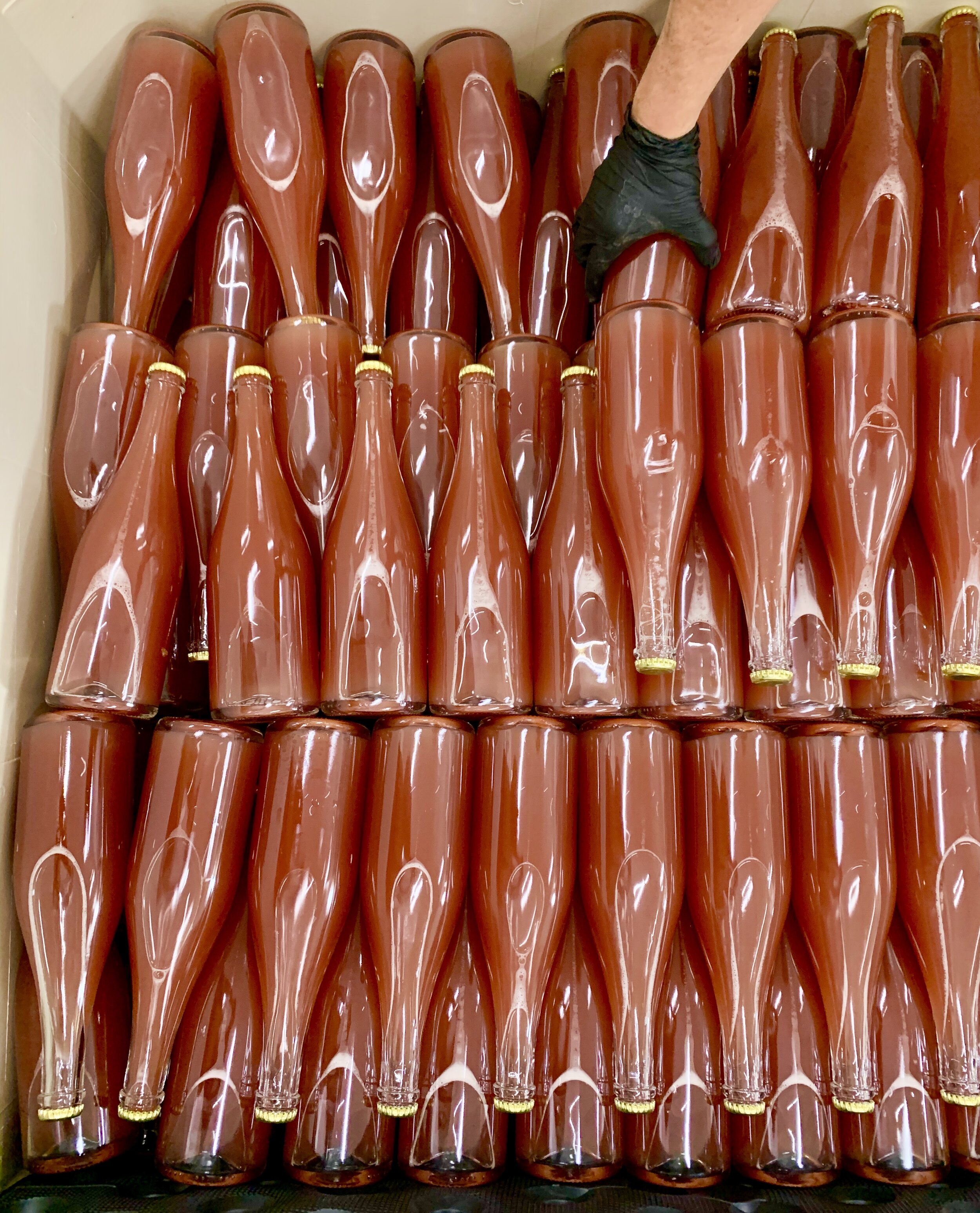
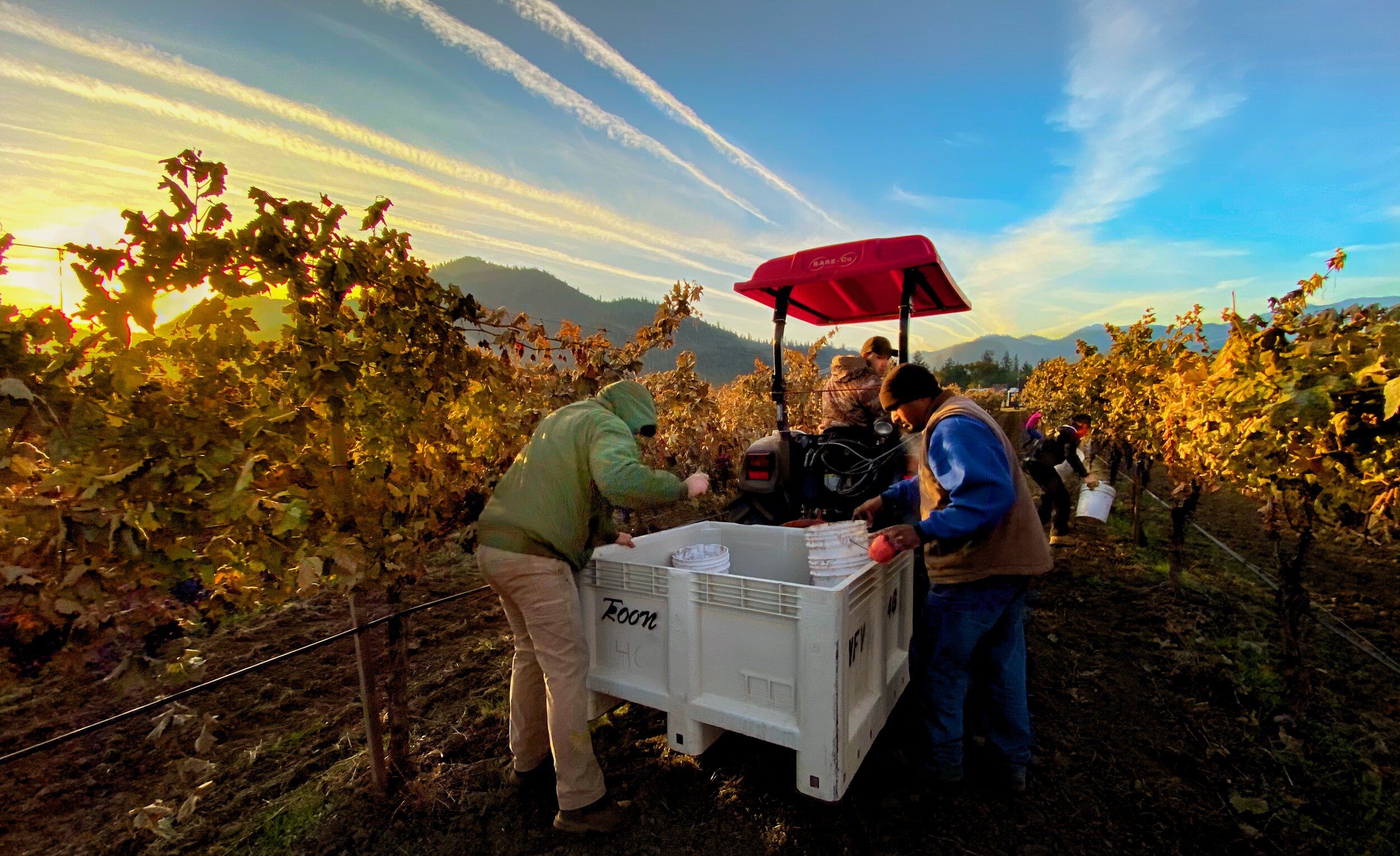
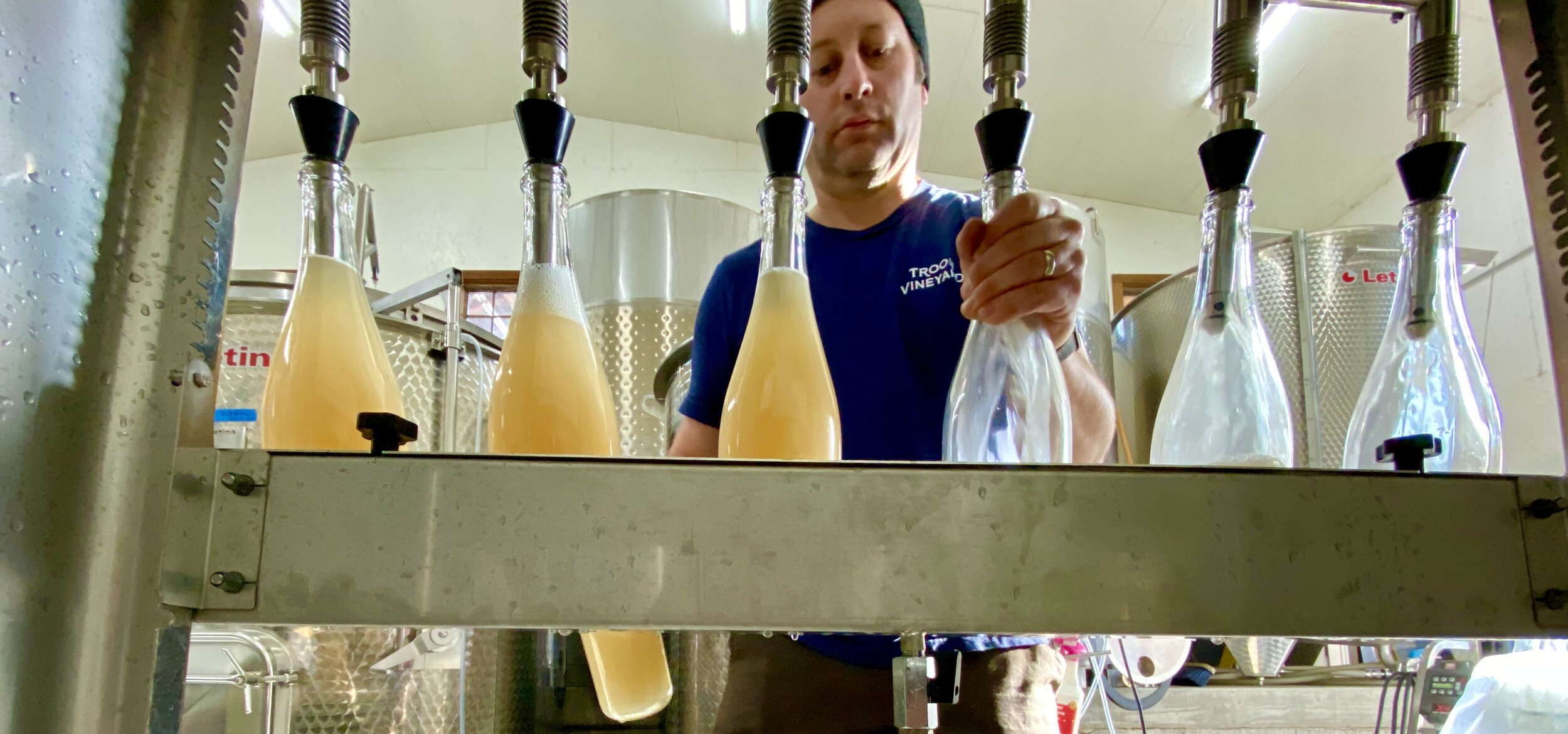
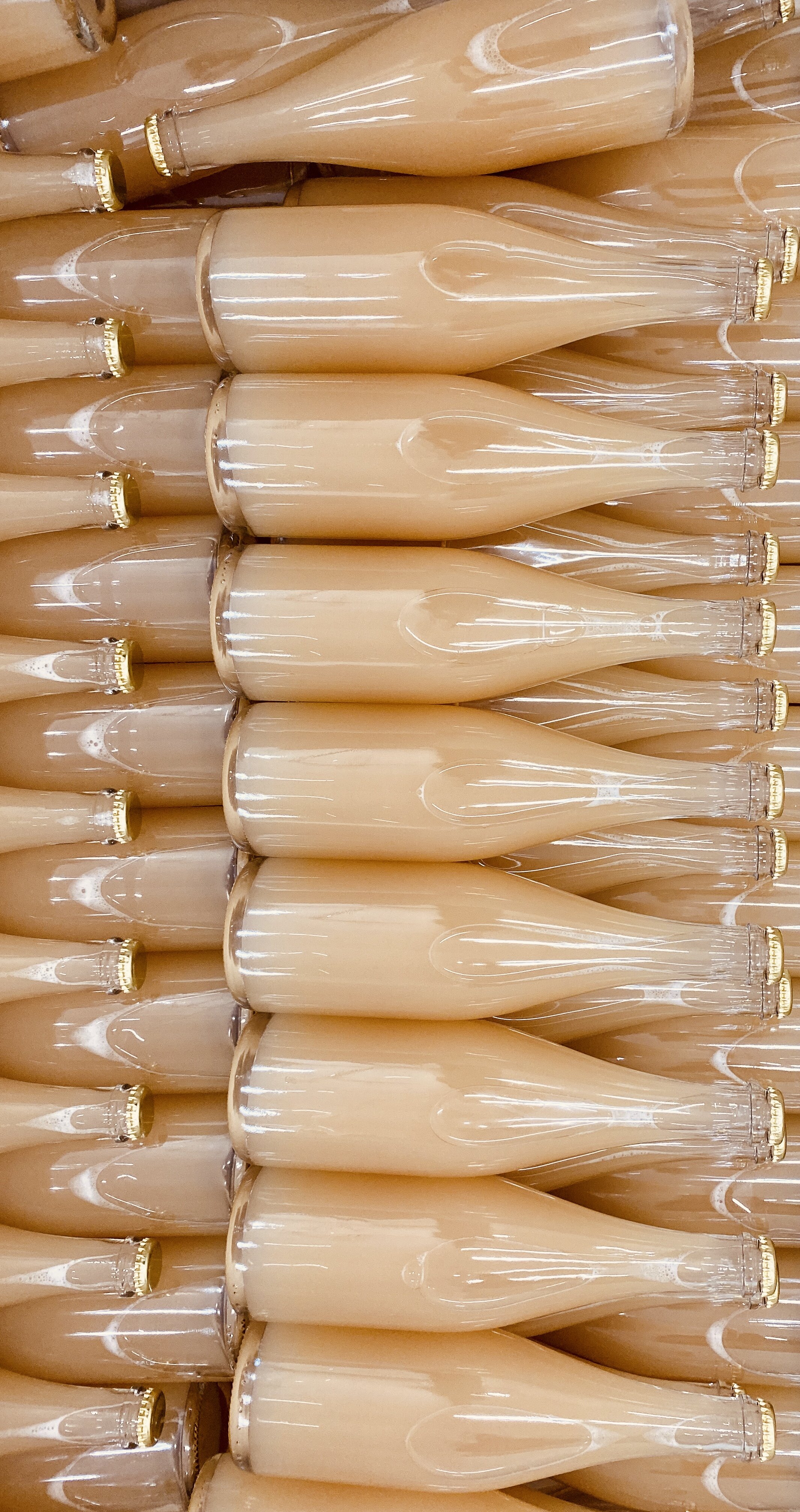
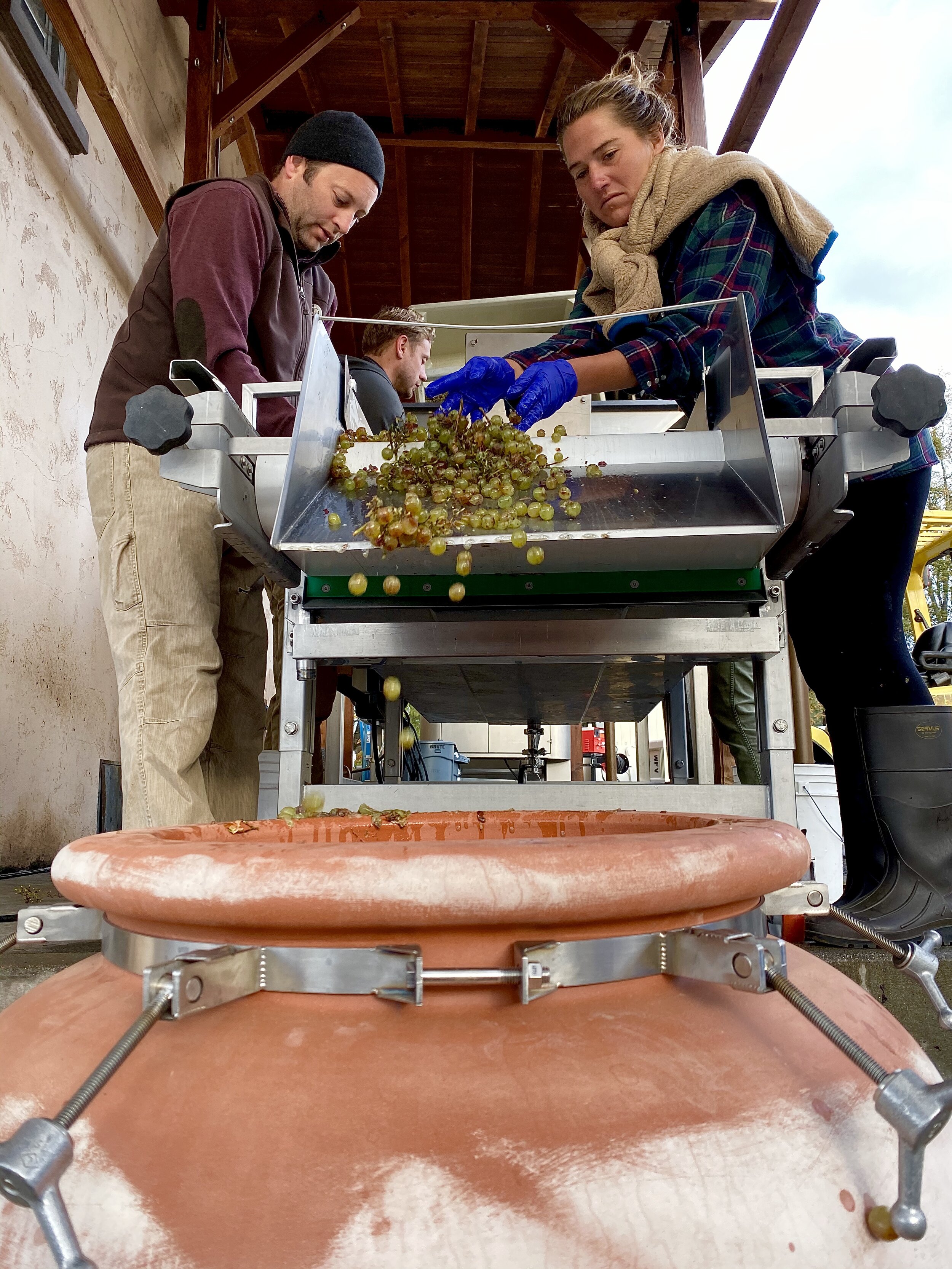
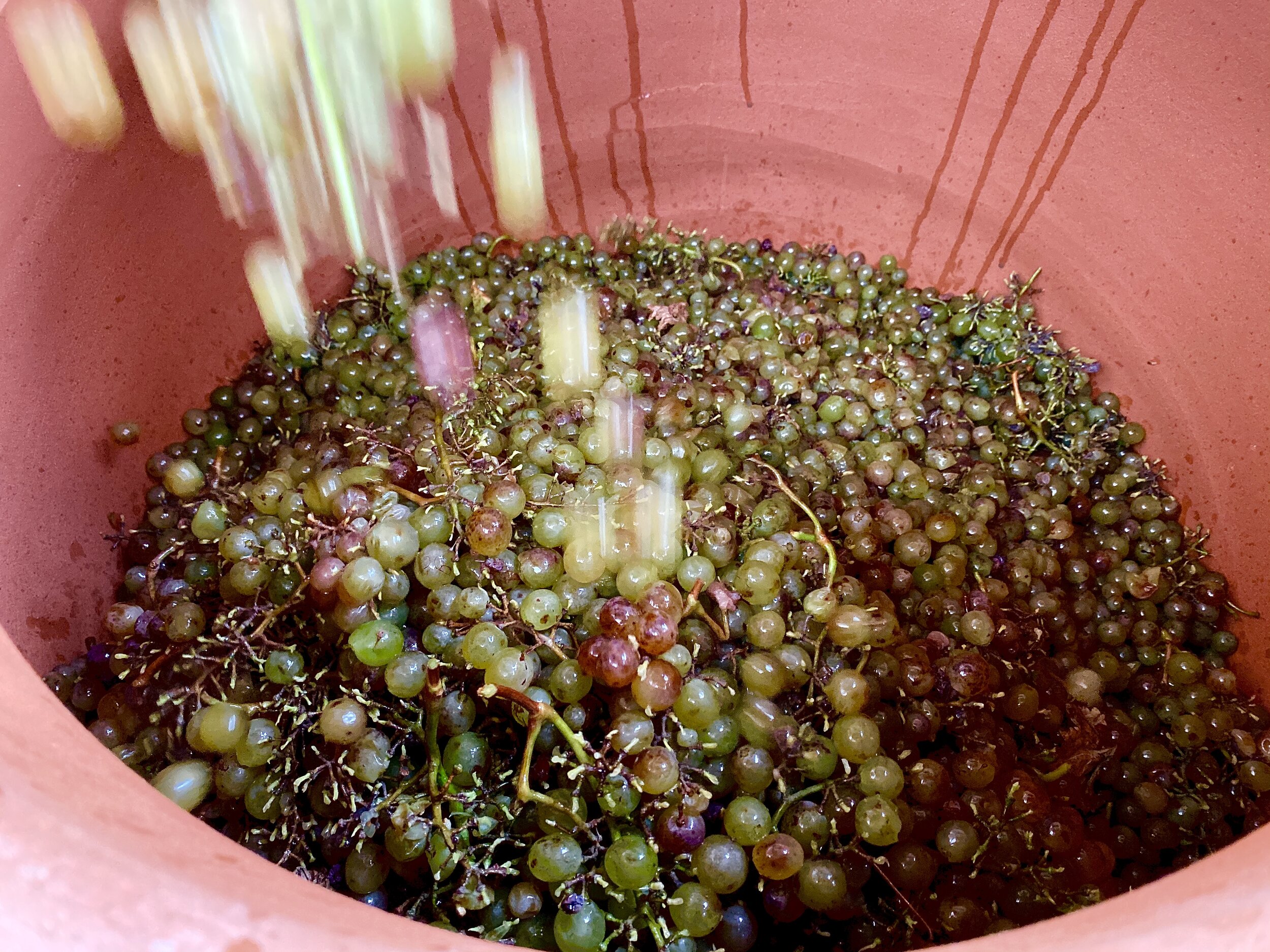
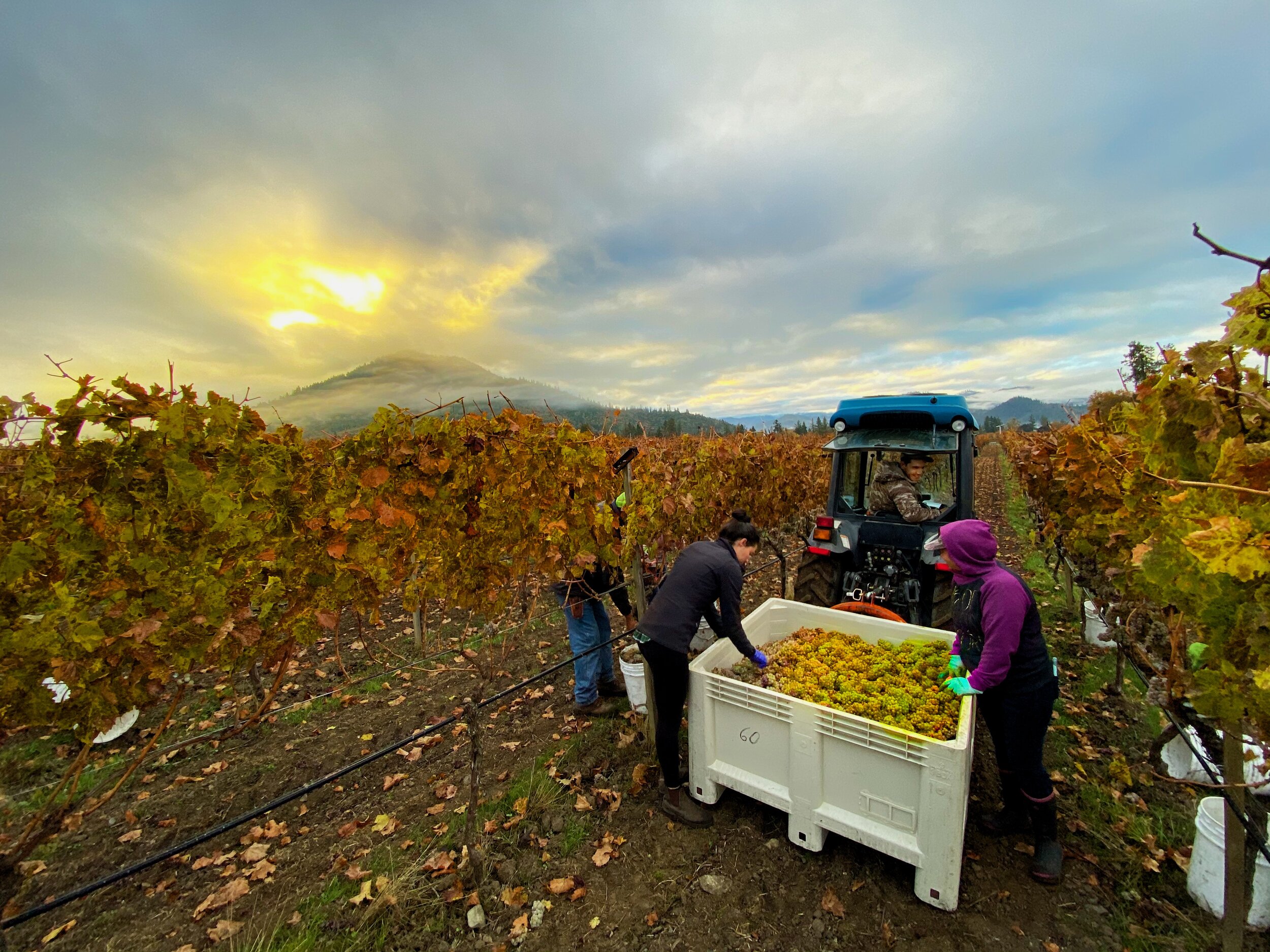
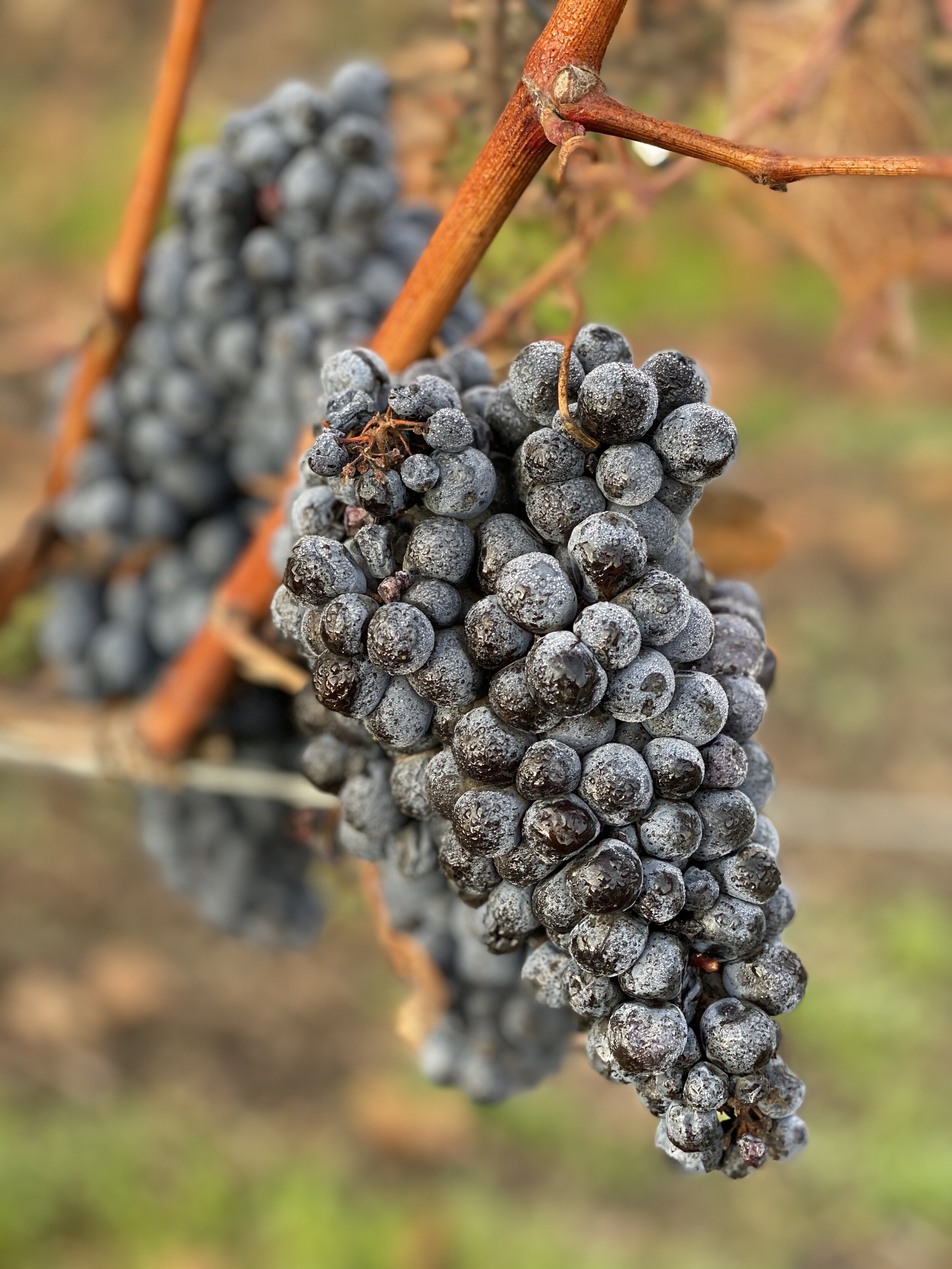
That plan was to use the pomace from our whole-cluster pressed white grapes (marsanne and vermentino) and red grapes (tinta roriz, primitivo, tannat) destined for rosé. We also used pomace and juice from another new Troon Vineyard sparkling wine, Pét tanNat, a pét nat made from 100% estate tannat. A relatively small amount of water was added to the pomace that remained in the press and was allowed to soak overnight. Without any additions, we naturally achieved an alcohol of 10.5% - obviously, there was plenty of juice left in the press. Then the pomace was pressed again and the juice was collected in a stainless steel tank, where a native yeast fermentation easily started. When a small amount of sugar still remained in the fermenting juice, we quickly bottled it under crown caps to complete its fermentation in the bottle. What makes this tricky is that you have to bottle this type of sparkling wine right in the middle of harvest - a time of year that is already busy enough! On the day the wine is ready to be bottled, it has to be done right now, tomorrow will be too late. When fermentation completed we did a light disgorgement, only removing the heaviest lees so there is a light haze remaining. As you would expect from the red grape skins, there is a tannic edge to the bright, fruity flavors of our Piquette!, which is very different from our soon to be released pét tanNat. For me, it reminds me of some crazy combination of a fresh peach juice Bellini, cider and Cava - sparkling, bright fresh and fun.
Our 2019 Piquette!, Estate, Applegate Valley was fun to make and is equally fun to drink. What fun is that!
Please watch this video as Troon Vineyard winemaker Nate Wall describes how we made this wine:
Weed Slayer
UPDATE: Since I wrote this in February of 2020, Weed Slayer has been banned by USDA Organic and Demeter Biodynamic® Certifications for containing prohibited ingredients and is now the subject of lawsuits.

I can’t forget when I first saw the results after we applied a new organic herbicide based on clove oil and molasses called Weed Slayer. Put very simply; it worked too well. It worked like Roundup but smelled like allspice.
In the past, products that were approved to use on a certified organic farm never caused any worry about being too effective. Many barely worked at all. But those days are changing, and the effectiveness of organic vineyard applications is now quite impressive. I tend to worry if an organic product is almost as effective as the chemical options, as there may be something to worry about. Chaos theory is a real thing. There is always the chance that these newly approved organic products are good at one thing, but they are also doing damage in some way we never imagined.
In the past, certified organic products always seemed to have friendly names...Regalia, Prevont, Clean, BioLink, and so on. Weed Slayer is not a nice name, but it certainly does what its name suggests. A natural plant-based herbicide derived from eugenol, an essential oil of clove, and molasses. How bad can that be? Theoretically, not at all, but you can’t help but worry. One thing for sure, if you apply it at the right time, it works.
Now Weed Slayer is on the fast track as the miracle weed control product for organic agriculture, I can’t but help to be concerned as there is so much we do not know when it comes to the living system of our soils. Everything we introduce is bound to have outcomes that we cannot predict - chaos theory. My concern is that a product that kills weeds (note that weeds are simply plants that grow where we do not want them) so effectively could be very well having an equally devastating impact on the fungi that make our soils live. I have no proof of this, but the microbiome of soil is a very delicate system that is easily disrupted.
The question we should be asking is, what is so wrong with a few weeds? The solution is not Weed Slayer or finding something even better. The answer is learning to live with weeds. With proper farming, you no longer have weeds, just a cover crop that you have designed. No-till is the best form of weed control in a vineyard because you end up with no weeds. Once the plants surrounding your vines are there because you want them there - magically, the weeds are all gone.
But nothing happens magically in agriculture. You have to work and plan over the years to achieve your goals. At Troon Vineyard, we are moving towards no-till as quickly as we can. The major impediment we face in moving to no-till is that our older blocks suffer from the Red Blotch virus. While there is yet no absolute proof of the vector that spreads this virus, the leading suspects are leafhoppers. Practicing a full no-till system in the infected blocks could encourage the leafhopper population. We need to take precautions not to spread the virus into our new blocks. So while aggressively working towards no-till in the newly planted blocks, we have to practice a modified approach in the existing blocks. That includes only tilling every other row and mowing. While working this hybrid system, Weed Slayer becomes a necessary evil, but certainly a far lesser evil than Roundup.
It just a few years, we will achieve our goal of no-till agriculture for the entire farm. In my view, the foundation of practicing biodynamics is the regeneration of the natural microbiome of your soils. No-till is the natural partner to biodynamic farming as few things are more disruptive to the mycorrhizal community in your soil than tillage. On top of that is carbon sequestration that no-till farms support. This alone is reason enough to transition your farm to no-till.
It is fascinating to watch how agricultural science is moving towards biodynamics, not away from it. Soil scientists are now focused on the microbiome. Articles on fungi are everywhere. Huge corporate farms profess to be practicing regenerative agriculture, though this is more lip service for marketing reasons. Wineries feel compelled to become “sustainably certified” so they can get a green-sounding logo on their label due to market pressures. The double impacts of academics and market pressure are forcing more-and-more producers to adopt greener methods. But this is not enough, and it is moving too slowly. You are not practicing regenerative agriculture unless you give up chemicals (Roundup being the most famous of these, there are many others), feed your soils via compost, and are working towards no-till.
For us, using Weed Slayer is temporary. A means to achieve a larger goal. Even something that sounds as benign as clove oil and molasses, and is permitted under CCOF Organic certification, may have a negative effect on everything else that we have been working to achieve. It takes years to rebuild the mycorrhizal communities in your soil, and using anything that can disrupt that is a risk. I am very uncomfortable taking this risk, but the threat from the virus is also a reality. Finding the proper balance is a struggle.
I am not picking on Weed Slayer here, it is a product produced by people trying to find a safe alternative to Roundup. Certainly, that is a worthwhile endeavor. My point is that all inputs can have unintended consequences. Less is more when it comes to farming. The fewer products we use the better.
Regenerative agriculture is not a goal you achieve, but an ongoing and never-ending process to work in harmony with nature. As we will never know all the secrets that nature is hiding from us, we can only strive to learn what the plants are trying so hard to tell us. We need to learn their language more than they need to learn ours.
Another Beginning - Vintage 2020

Planting marsanne vines at Troon Vineyard in Oregon’s Applegate Valley
Just last week, the vineyard was buried in snow, and the vines were slumbering in the coldness of days with little sunshine. Today the sun was shining, and there was a hint of spring in the air as January released its frigid grip on the Applegate Valley. But now the cycle that came to a close with harvest 2019 begins again, and the vines are about to awaken for their labors in vintage 2020. Looking over the snow in the vineyard and the white peaks of the Siskiyou Mountains surrounding us, I cannot help but feel optimistic about this upcoming vintage. Now, after years of effort, the rewards of Biodynamics are showing in our vines and our wines.
At Troon, it is not only the start of another of Mother Nature’s cycles but the addition of new layers of nuance as we expand and develop our practice of biodynamics each year. From pruning to picking, a vintage year at Troon Vineyard follows several tracks: biodynamics, organics, and Mother Nature’s. Of course, these all overlap in many ways, but in others, while complimentary, often they don’t. Weaving between threats and disease to craft positive, pro-active strategies in the vineyard is a daily conundrum. Biodynamics demands planning.
When it comes to most environmental threats, we are lucky, and I have to admit we don’t face many of the insect and weather threats that most farmers live with every year. The Applegate Valley is a wonderful place to grow things, and we don’t have many of those issues. Warm, dry summers combined with cold, but not bitter winters make this valley an ideal spot not only for vines but for many other crops. I remember when our biodynamic consultant, Andrew Beedy, first visited Troon Vineyard and told us this was the perfect place to farm biodynamically. No matter the crop, if you can’t farm those plants organically on a commercial scale, you probably should not be growing that crop there.
We are now deep into our replanting program, and this year we'll be farming almost as many newly planted vines as mature vines. That means two diverse farming strategies, one for our new healthy vines and another for our older vines, which are living with many diseases.
There are three primary reasons for the decision to completely replant our vineyard. First was the Red Blotch Virus, which was present in every block. That virus, combined with the resulting range of fungal trunk diseases were relentlessly squeezing the life out of the vines. Second, these issues were exacerbated by years of conventional farming that had devastated the microbiome of the soil, further weakening the vines. Third, many of the varieties planted were just not ideal for this site and climate. Three strikes and you’re out.
The Applegate Valley is such an ideal place to grow vines, it makes it even sadder that we have to replant these vines. If they had been appropriately selected and farmed, they would have lasted many decades. That is exactly what we hope for the vines we are planting now. Fifty or more years would mean that we had done our job well.
However, as Eric Idle sang, “Always look on the bright side of life.” This replanting project gives us the chance to do things right. The right vines in the right places planted the right way. The potential of healthy vines farmed properly on such an ideal site fuels that optimism I feel as we approach vintage 2020. Considering the excellent wine quality we have been able to achieve with fruit from these weakened vines, it is with exceptional excitement and confidence that I look forward to the wines these new healthy vines grown on healthy soils will give us as they mature.
Our replanting plan means that we are removing and planting ten acres of vines each year. Last year was the first ten, and now we’re getting ready for another ten, so we’ll have twenty acres of young vines in the ground by this summer. In 2019 we planted mourvèdre, syrah, marsanne, roussanne, grenache, tannat, and malbec. This year carignan, vermentino, and more syrah, grenache, and mourvèdre. This replanting program will continue through 2023 when the entire estate has been replanted with a diverse range of southern French varieties.
In the meantime, our wearied old vines are giving their best as they try to hold out a few more harvests. While biodynamics is a long-term strategy, it has also saved us in the short-term as it has breathed new life into these vines. We are doing everything in the biodynamic and organic playbook to bring life to the soils around them and to assist them in taking in that nutrition. We can only hope this will make their last years more comfortable after years of stress. After all, a vine is not happy unless it is ripening grapes. They certainly look happier as they are producing more and better fruit each vintage.
Happy soils make happy vines, that ripen happy grapes, that make happy wines, that make people happy. That is the definition of biodynamics.
Wine Kaleidoscope
Wine Refinery
You see them standing in the wine department aisle at a large grocery store or major liquor store with bewildered faces facing a bewildering selection of labels. There is a kaleidoscope of bottles with bright colors, gold medals and cute labels. How in the world can they choose - at least choose well?
In the Chardonnay section alone, there are dozens of different labels in the ten to twenty dollar price range. Certainly, you must become a wine expert if you are to choose correctly from among that wall of labels trying to get your attention, right? Fortunately, the answer is no you don’t.
The reality is that although all those labels look like different wines they are all more-or-less the same wine. In fact, despite having different labels, some of them are actually exactly the same wine, all coming from the same massive tanks with labels simply changed to fill production orders from the marketing department. The vast majority of wines on the shelves at larger stores are produced by gigantic producers whose only goal is to produce a standardized product that market research tells them the largest percentage of consumers will like. They use the same methods as large soft drink and snack producers to identify the flavors that the mass market wants. Once that profile is defined they use every technology, additive, and manipulation that science can conjure up to achieve that flavor profile bottle-after-bottle, year-after-year. Obviously, these wines do not fit the romantic image of the vigneron working in the vineyards and making their wines with their own hands.
These are not wines, but simply beverage alcohol. Just another alcohol delivery system on par with vodka and light beer. Just pick a bottle, you can’t go wrong, but you also have no chance of going right.
Wines made by people with a love of the land instead of market research exist and you can even find some of them in the big chain stores. They are there, but they’re hiding on the fringes of the wine department. Don’t look for them in floor stacks and end-caps. They’re also waiting for you on the back pages of your favorite restaurant wine lists. These wines hiding in plain sight offer some of the top bargains in the market today. Bringing these wines to dinner parties or selecting them when you order in a restaurant will quickly earn you the reputation of being a wine expert.
For years, people were consumed with consuming the wines with the highest “points” and discovering the absolutely perfect food and wine match. Things are fortunately changing. Today, wine in cans is a hot new trend and “natural” wine bars are popping up across the country selling wines from all sorts of obscure grape varieties. The wine for the people revolution is happening now. This wine revolution is no longer a fringe movement.
How can you identify these wines?
Find a good merchant
Always the surest route to finding the best wine for your money.
Avoid famous varieties and wine regions
Big name wines from big name regions are often rip-offs. When faced with the choice between a $50 Cabernet or a $50 Syrah, you’re probably choosing between an average Cabernet and an exceptional Syrah.
Look for regenerative agriculture: Biodynamic or Organic
Sustainable? All too often a sham that allows Roundup and other nasty stuff. I remember finding a product called Venom being used when I arrived at Troon. Obviously, I killed that right away. By the way, it kills bees. All of them. However, the “sustainable” certification was fine with that product. Farmers with Biodynamic and Organic certifications are putting in extra effort and the results show in the wines.
Moderate alcohol
Wine is not a martini. If you simply want an alcohol delivery system pick an efficient one. Moderate alcohol levels are signs of precision harvesting and a more moderate climate. Both are keys to elegant, balanced wines.
Avoid big, heavy bottles and look for wines with no capsules
The bigger and heavier the bottle, the less profound the wine inside. Only those with inferiority complexes need those monstrous bottles - that goes for both the maker and consumer. Why continue to screw up the planet for cosmetics that have nothing to do with wine quality?
Industrial wines create a kaleidoscope of labels, but the myriad textures, aromas and flavors that come from wines of the soil create a kaleidoscope of experiences in the bottle and the glass. Good wine comes from a farm, not from a marketing strategy.
I’ve lived in both hemispheres of this wine world. I helped build a wine company in Chicago built on soulful wines and then economics, for a brief period, dragged me into the corporate world of wines. There is nothing these two worlds have in common - including the wines they both create. Natural wines are crafted, while industrial wines are fabricated.
Put a little effort into choosing the wines you are drinking. When your efforts combine with the efforts of the winemakers - that’s where the magic is to be found.
My Cellar is Filled with Friends

I’ve seen some amazing wine cellars - dazzling collections of bottles. I too have a wine cellar, but it’s not filled with bottles - it’s filled with friends.
My favorite wines are all from people that have meant something in my life. When I was younger I chased labels like everyone else, always seeking the latest and greatest. Now, decades later, I want to hear the voices of far-away friends when I swirl their wines in my glass. Memories are mixed into each wine.
Wine is a living beverage crafted by people full of life. It is that energy that makes wine more compelling to me. Perhaps this feeling is what led me to biodynamics as the essence of practicing biodynamics is weaving the power of life into agriculture - into wine. Vibrant wines, wines that live and speak of the people and the soil that made them.
There are so many memories that pulling the corks on these bottles releases. Wines without those emotions seem somewhat academic to me now. Delightful to be sure, but intellectual exercises as compared to passionate ones. The emotional connection to wine given to me by all of these memories is what I want to express in our wines at Troon. A winemaker’s wines should be filled with the dreams of other winemakers that have gone before them. Winemaking should be a quest for to transfer the life energy of the vineyard into the wine. The world is full of technically proficient winemakers and there is a need for industrial wines. However, there is still a niche left for soulful winemaking. It will always be a niche, but it is in this niche that memorable wines are found.
The wine is no longer enough. I want to remember a face and a voice, recall a conversation, a walk through their vineyard, remember a special dinner and on and on. Fortunately for me, after many years in the wine business, that list is long.
Now when I taste an exciting new wine, the first thing I want to do is meet the winemaker and walk in the vineyard. It is only there you can discover the more profound meaning to be found in wines full of life. That life comes equally from the vineyard and from the people that grew the fruit and made the wine. The total of a wine’s energy comes from all of these things. Perhaps this should be the definition of natural wine.
Of course, there is the other side of this. Wines that come from mistreated farms made by people that care more about trends than character always leave a bad taste in my mouth, no matter how expensive or famous they are.
Most people can never have these experiences. I know I am more than lucky to have met so many wonderful winemakers and walked in so many true terroirs. But there is the next best thing. This is where fine wine writers make a difference. I’m not talking about wine critics here. Nothing can steal life from a wine's story more than point scores. A great wine writer’s words made you feel like you know the winemaker and walked in the vineyard. If you choose well in what you read, you too will have a cellar full of friends.
Time to open a bottle for dinner. I wonder which one of my friends will be joining me tonight?
Selling Sustainability
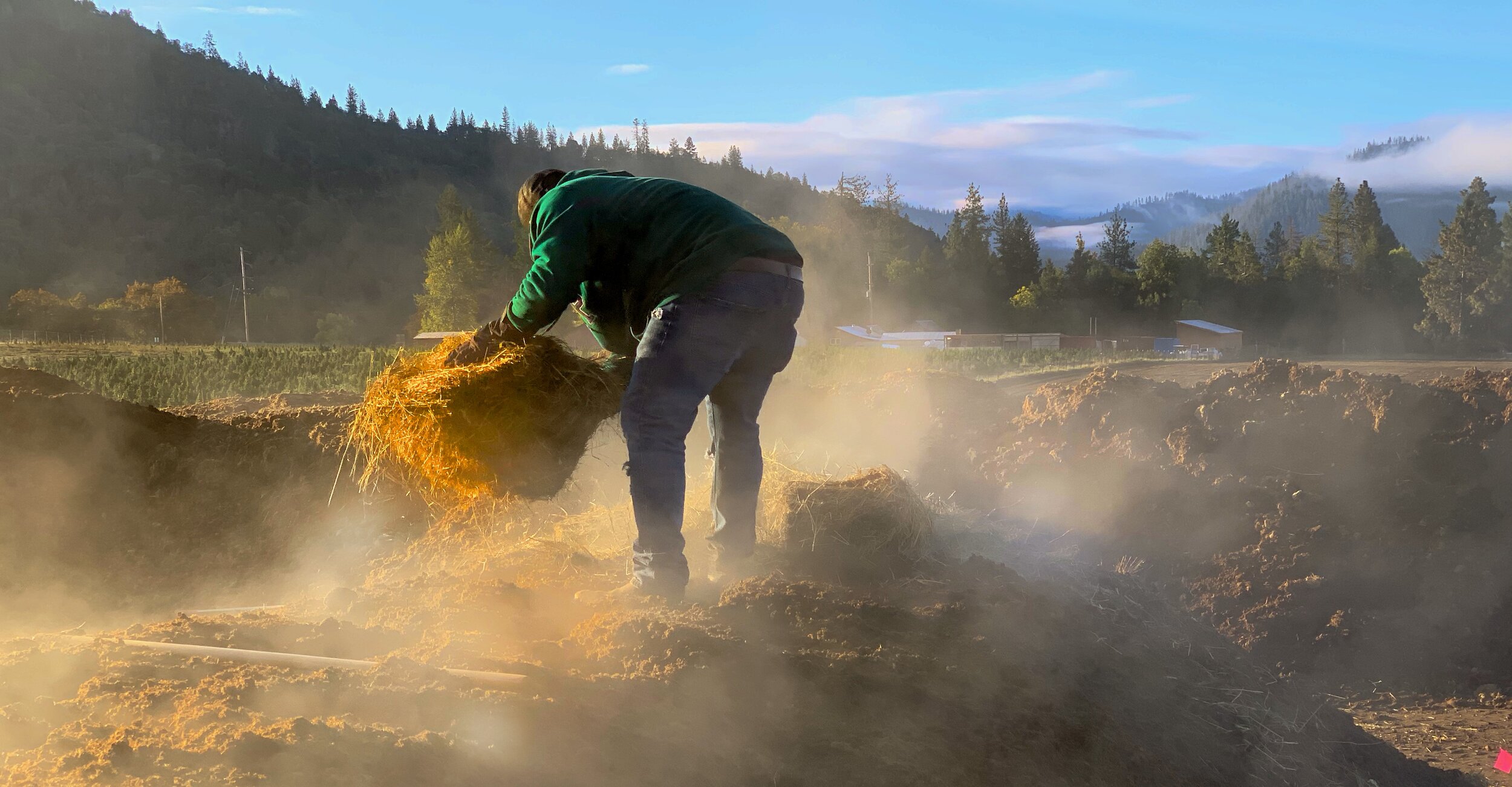
Adding pomace from the press to organic manure to build our compost piles at Troon Vineyard in Oregon’s Applegate Valley. Compost is the foundation of biodynamic, regenerative agriculture.
Farmers often are not very good with marketing and marketers not very knowledgeable about farming. To farmers, sustainability is an agricultural process. To corporate marketers, sustainability is a brand — just another selling tool.
Recently the Sonoma County Winegrowers Association has been blowing the PR horn claiming that 99% of their members are now certified sustainable. In the movie A League of Their Own Tom Hanks playing the manager Jimmy Dugan says, "It's supposed to be hard. If it wasn't hard, everyone would do it. The hard ... is what makes it great."
The standards applied for sustainability in Sonoma are not hard because everyone seems able to attain them easily. You have to question any standard that anyone and everyone can achieve. Great, this accomplishment is not. Better than nothing for sure, but that’s about it.
This is a marketing deception not up to the hard-earned reputation of an elite winemaking region like Sonoma. It is a shame that Sonoma has taken this path as actually sustainability of farming in Sonoma has always outdistanced its neighbor Napa. Sonoma was the sensitive one compared to commercial Napa. While I would not have been a bit surprised if this path was taken by marketing-driven Napa, it is a disappointment that it was Sonoma that chose to decimate whatever meaning the term sustainability had left.
Wine writer Ester Mobley picks up on some essential points in her recent San Francisco Chronicle article “Nearly all Sonoma County vineyards are certified sustainable”
“But as sustainability certifications have proliferated, they’ve also drawn significant criticism — that the programs’ standards are too lax on the use of synthetic chemicals, that they are marketing ploys constituting “greenwashing,”
“The tipping point was really when the wineries wanted to use the (Sonoma sustainable logo) label,” says Kruse.” (Karissa Kruse, president of the Sonoma Winegrowers)
”In the public consciousness, “sustainable” and “organic” may sound synonymous. But as defined by these certifying organizations, they’re hugely different. (Kruse estimates that 3% of Sonoma County’s vineyards are certified organic or biodynamic; some of them are also certified sustainable.) Organic farming, overseen here by California Certified Organic Farmers, strictly forbids the use of synthetic chemicals. Sustainable farming, on the other hand, is designed to be flexible.”
“The flexibility to continue using synthetic pesticides may make sustainability more palatable to a larger number of farmers, but critics argue that it dilutes the concept. “To me sustainability is a made-up word,” says organic viticulturist Phil Coturri, owner of Enterprise Vineyard Management. “How could you be sustainable and allow glyphosates to be used in the vineyard?”
Organic and Biodynamic writer Pam Strayer notes on her Organic Wines Uncorked Blog that Sonoma County has used an average of 81,319 pounds of glyphosate (Roundup) on their vineyards each year over the last four years. It’s no wonder that that sustainable certifications are accused of greenwashing. Strayer also quotes a comment I heard Monty Walden, the author of the excellent book Biodynamic Wine, make at the Biodynamic Wine Conference in San Francisco last year, “Sustainable means you used to smoke a pack a day and now you only smoke 10 a day. But you still smoke."
Every small producer I’ve met who has pursued a sustainable certification has done so out of a sincere desire to become better stewards of the environment. Programs like Oregon’s L.I.V.E. have offered farmers a framework and developed comprehensive education and research programs to help them reduce their chemical inputs. These are good programs run by good people who are genuinely trying to make things better. And, indeed they are making things better and they deserve our respect in spite of their shortcomings.
Where sustainability falls apart is when it transforms from an agricultural method into a marketing strategy. What the Sonoma Winegrowers Association is doing is a marketing strategy, not an agricultural one. Certifications matter and they should be difficult to achieve requiring genuine commitment from those that seek to achieve them. The hard is what makes them meaningful.
I believe the Sonoma Winegrowers and Karissa Kruse are authentically committed to the environment and are not intentionally trying to mislead us. It would be disingenuous to say they are not well-meaning. However, I do not believe they truly understand how important it is to go beyond merely sustainable. As Gabe Brown writes in his book Dirt to Soil, “Why would we want to sustain a degraded system when regeneration is what is important?”
Sustainability cannot be the goal. We must dig deep and practice regenerative agriculture that puts back more than it takes from the soil. You cannot nurture soils full of life when you use glyphosate or worse. Sustainability is too little, too late.
For winemakers who want to produce exceptional, terroir driven wines sustainability is not enough. To create wines that clearly express themselves and the soil where they were grown requires a healthy soil microbiome as that is the only way a vine can extract that essence. Current research is starting to suggest that the microbiome of the soil is more responsible for what we call terroir than the mineral and physical composition of the soil itself. You can’t kill the life in your soil and make wines of place.
Indeed it is the smallest of things that make a wine sing
Biodynamic (and Natural Wine) Fake News #3

Troon winemakers Cary Willeford and Nate Wall apply BD 508 (horsetail) to new vines about to be planted at Troon Vineyard in Oregon’s Applegate Valley .
There’s been a spate of articles lately focusing on the “natural wine” trend pulsing through wine world today. In almost every article there is a reference to biodynamic vineyards as a source for these uncertified “natural wines”. This is almost invariably not true, so it’s essential to understand the differences, but real bond, between “natural wines” and certified Biodynamic® Wines.
First of all, biodynamics is not simply a winemaking method; it is an agricultural discipline that is then extended throughout the cellar work. The focus of biodynamics is on soil and plant health. Healthy soils make healthy plants, which produce healthy fruit, which is what you need to create distinctive wine. If you want to practice minimalist winemaking, you can only do so with impeccable fruit. None of the biodynamic preparations (500, 501, etc.) are used in the cellar. All are applied to either the soil, the plants, or the compost that will be applied to the soil. The structure and rules to be certified Biodynamic® are all designed to be sure that nothing in the winemaking process detracts from the pure expression of vineyard, vintage, and variety that you have achieved through biodynamic farming. As the Demeter Biodynamic® Wine processing standard states, “The Biodynamic® Wine category denotes a wine that is made with 100% Biodynamic grapes and is intended to be an undisguised, vintage-based expression of a given estate vineyard.”
Uncertified “natural wine” is a winemaking philosophy that is often entirely separated from the growing of the grapes themselves. Today’s so-called “natural wines” imply they are superior to “conventional wines” as they are not manipulated in the cellar. This is not true, they are manipulated, but in different ways. A common symbol of “natural wines” are the amphorae made famous by outstanding producers like Gravner in Italy. However, the choice between using amphorae or new French Oak barrels are both equally dramatic winemaking manipulations that change the style of the wine produced. Many other icons of “natural winemaking” like whole-cluster fermentation are also conscious manipulations of style made by the winemaker. The fact is that all winemaking decisions are manipulations that decide the final style of the wine. So both “natural wines” and conventional wines are manipulated in many ways.
Where Biodynamic® Wine producers and “natural winemakers” firmly agree and differ from conventional wines is to be found in what they don’t do in the cellar. Conventional winemakers use a full array of additives that are forbidden in biodynamic winemaking including commercial yeast strains, enzymes, Diammonium Phosphate (DAP), tannins, acids, wood chips, Velcorin (Dimethyl Dicarbonate), Mega Purple and-on-and-on as their goal is to produce a standardized and consistent beverage alcohol product. Both Biodynamic and “natural” winemakers want to achieve just the opposite as their goal is to produce distinctive wines that change with vintage and vineyard and share a belief that doing less is more when it comes to cellar interventions in the natural process of fermentation. Although both start with grapes, the concepts, and methods used in producing a beverage alcohol product from grapes and making wine are diametrically opposed.
To be a certified Biodynamic® Wine only native yeasts can be used for fermentation, malo-lactic must also be natural, DAP is prohibited, acid and sugar additions are not allowed (except for sparkling wine), no processing additives except for bentonite or biodynamic/organic egg whites or milk (fining) are permitted. Sulfur additions are a big hot button when it comes to “natural wines,” but that too is limited to less than 100 p.p.m. (that’s very low as conventional wines on grocery store shelves can be three or more times that and our wines at Troon are far below that 100 p.p.m. requirement) by Demeter. By definition, Biodynamic® Wine is natural wine.
Where Biodynamic® certified wines diverge from many wines that call themselves “natural” is in the grapes used to make the wines in the first place. What is the point of minimalist winemaking if the grapes used were farmed conventionally or “sustainably” using chemicals? What makes a wine natural is not only your choice in cellar manipulations, but if the fruit itself was farmed naturally and then also minimally processed in the cellar.
All too many wines that promote themselves as “natural wines” are produced from conventionally or “sustainably” (what I call cleaner conventional) farmed vineyards. The creative winemakers that aspire to natural winemaking often do not have the wherewithal to buy vineyards and build wineries. Frequently, they work in communal winemaking facilities and have to buy grapes from commercial or “sustainable” vineyards. While I admire their inspired and passionate winemaking, I think presenting wines from chemically farmed vineyards (which includes “sustainable” vineyards) as “natural” is disingenuous. Using native yeasts and little sulfur does not alone make a wine natural.
I will admit to being an unabashed fan of the “natural wine” movement and the impact it is having on wine production and the wine market around the world. The explosion of natural wine bars and fine wine shops are a godsend to consumers seeking distinctive, exciting wines. As a biodynamic winegrower, I cannot help but applaud the energy, creativity, and intensity to be found in the winemakers pursuing these ideals. I go out of my way to seek their wines out and drink them with great pleasure and interest.
However, I do take exception to articles that equate Biodynamic® certified wine with wines that simply declare themselves as “natural”. In a recent article posted on the NBC News Website, What is Natural Wine? And is it Better for You? Lauren Salkeld writes:
“Natural wine, on the other hand, is made with organic grapes” “Natural wine begins with organic grapes”, “While natural wine is made with organic grapes”
Not true, there are many, many “natural wines” on the market not made from organic or Biodynamically certified grapes, and there is no requirement that they do so. As there is no such thing as a “natural wine” certification, the term means anything the producers want it to mean, and they can use whatever fruit they can find.
“Biodynamic wine is more complicated, but the term refers to farming, not winemaking”
Not true. There are both winemaking and farming Biodynamic® certifications, and they are distinct from each other with precise standards. To make a wine labeled Biodynamic® Wine with the Demeter logo, the wine must be made from a Demeter certified vineyard and must be made in a Demeter certified winemaking facility. For example, if you make wine from Biodynamic® certified grapes in a non-certified facility, it cannot be labeled as Biodynamic® Wine. Even on our farm, from our estate fruit, both the vineyard and the winery each must be certified for us to use the term Biodynamic® Wine on our labels.
“It’s important to note that some biodynamic wine is essentially conventional wine made with biodynamic grapes
Well, this is a bunch of hooey. First, she takes the term “natural wine” like it actually defines something and then infers wines made under strict certification standards are “essentially conventional”. There are two certifications under the Demeter Biodynamic® standards. Biodynamic® Wine (see above) and “Made from Biodynamic® Grapes” from grapes that are certified, but are made in an uncertified facility, but still under standards set by Demeter. First of all, good luck buying Biodynamic® certified grapes on the open market as most are made into wine by the people that grow them. Second, even the standards for winemaking under the “Made with Biodynamic® Grapes” designation are far more restrictive than “natural wines”, which have no official standards at all. Also, I assure you, just as dedicated “natural” winemakers are committed to minimalist winemaking, anyone going through the effort of obtaining Biodynamic® certified grapes is equally committed to those concepts. I think it’s safe to say that those going to the trouble of working with certified fruit are worthy of the same if not more respect than someone simply claiming their wines are “natural”.
“You can also argue that natural, organic or biodynamic wines are better if you want to avoid pesticides. While natural wine is made with organic grapes, there’s no certification, so if you prefer to see a label, go for organic or biodynamic, just know that either of those may contain additives.”
Additional hooey, you don’t know a thing about an uncertified wine simply called “natural,” and there are no requirements or guarantees that the grapes were farmed organically. As mentioned above, Biodynamic® Wine is certified to not have additives in the wine or the vineyard.
Certifications matter if you want to be sure what’s actually in the bottle. Biodynamic certification has structure and that framework gives each generation a foundation to build on and the ability to pass on what they have learned to the next generation. Because of this, biodynamics is a living and growing discipline that gains depth with each passing generation of farmers.
The “natural wine” movement is an idea, a philosophy, not a discipline, and there is a broad range of ways winemakers achieve those goals. Part of its energy as a movement is that lack of structure. If you go to an exhibition of Expressionist art, you can feel the connection of the artists to a similar philosophy, but the paintings are as diverse as the artists themselves. So it goes with “natural wine”. Unfortunately, much of the attention aimed at the “natural wine” movement is on the most extreme, and often faulted, examples while ignoring the vast majority of wines produced within this philosophy, which are beautiful, inspiring wines.
Biodynamics may be a discipline and “natural wine” a philosophy, but they are tightly intertwined. Biodynamic wine was where natural winemaking was reborn. All Biodynamic® Wine is natural wine.
Previous related articles:
The 500 Milestone

Finished Biodynamic preparation 500

Troon winemaker Nate Wall filling cow horns with fresh organic manure
You start with dung and end with humus. Newton was right, alchemy exists. What was worthless becomes gold. A concentrated collection of fungi and bacteria to inoculate our soils. This is not magic, just good bugs.
We mark significant progress towards goals by celebrating milestones, events that measure our progress. Milestones should be recognized and remembered as you strive towards your goal. Some milestones are hard to measure, but in this case the achievement was very clear. Six months ago at Troon Vineyard we placed raw manure into some cow horns and last week we dug them up and out came soil - humus. The production of your first BD 500 is always a milestone for a Biodynamic farmer.
Why do you have to bury the manure in cow horns? The honest answer is that we don’t know, but we do know that no other container has successfully transformed manure into this important soil inoculate. Maria Thun, in her seeming endless research on all things Biodynamic tried to use other containers, but none produced the same results. For whatever reason, the cow horns are the only known container that transforms raw manure to the rich humus that is BD 500. Rudolf Steiner thought the cow horns channeled the power of the Universe into the manure. Personally, I believe that fermenting manure does not require quite that much energy. The fungi and bacteria are already here just waiting to do their jobs if given the proper opportunity. Right now, the cow horns do the best job of creating just the right environment for them to do their work. Perhaps in the future other containers will be discovered.
The process of making BD 500 is actually quite simple. Last fall we gathered some very, very fresh cow manure from the pastures of Noble Dairy, our organic next-door neighbor (a great project for our harvest interns) and simply filled the cow horns with the fresh manure. The cow horns themselves came from the Josephine Porter Institute, perhaps the premier supplier for the Biodynamic farmer. Then we buried them last fall and dug them up early this summer. The transformation may seem magical, but it’s not as this is what the microbes in our soil do and all we did was provide them an opportunity to do their work in particularly pleasant conditions.
So often we use mystical excuses to explain things we do not understand and there is still a lot we do not understand. Science and agriculture have had a difficult relationship. All too often, most scientific research focused on simply making more as bigger harvests promise more profit. The situation worsened as Big Ag took over the world. Quantity not quality generated the funding for most research with predictable results. In his book The Third Plate, chef Dan Barber relates the tale of university researchers being offered commissions by Monsanto to create wheat that was resistant to Roundup so that more of their product could be applied to grain on the way to a bakery near you.
Fortunately, things are changing and the microbiome of soil is the hot “new” topic being pursued by researchers. Many think what winegrowers have been calling terroir for centuries is actually more defined by the soil’s microbiome than the type of soil the vine is growing in. One thing for sure is that vines cannot take their nutrition from the soil without their mycorrhizal partners. The goal of Biodynamic farming is to build this natural balance in our soils. Healthy vines can handle many of the things Mother Nature throws their way without our help. In fact, often “our help” makes things worse for them. For some reason, we humans assume we know more about ripening grapes than grapevines do.
After harvest this fall, our own BD 500 will be applied to our soils. There are those in Biodynamics that believe elemental beings are at work among their plants. I believe in them too. However, not the gnomes and such that some followers of Steiner believe in. The real elemental beings are the fungi and bacteria that work the real magic in the vineyard and are elemental to life itself. When we apply BD 500 to our soils we are just bringing more of those elemental beings to the party.
Milestones are worthy of celebration and rituals. As a group, we gathered to fill and bury our horns and then again when we dug up the finished BD 500. We will all gather and celebrate again when we apply our own BD 500 to our vineyard this fall. We all come together to celebrate our milestones as we bring Troon Vineyard back to life.
In Biodynamics, the people are elemental beings too.

Freshly filled cow horns being prepared to be buried
Planting New Vineyards at Troon - Hands

It was before 6 a.m., but there were already a lot of holes. Dawn had not broken, but a dim light was just starting to flow over the mountains. Hundreds of holes had already been dug. Around thirty people moved their spades rhythmically, almost silently, as they dug twelve-inch holes, one after another. This is how you plant, or should I say, how they plant a vineyard.
Last week at Troon Vineyard in Oregon’s Applegate Valley, we planted about a third of the vines we need to plant this month. That was over four thousand holes, dug by hand in less than two day’s work. But digging the hole was only the beginning. Once the holes are dug, they must each receive, by hand, a shovel full of Biodynamic compost mixed with Azomite and Calphos and then a vine needs to be dropped in each hole. On each vine, the biodegradable root cover had to be removed by hand due to the requirements of our organic certification. Then, on their knees, with their hands, each hole is filled and the vine is in its new home.
One day these vines will give birth to wines served in some of the best restaurants in the world. But it is these people in the pre-dawn hours with their spades and on their hands and knees that brought these vines to live in this vineyard.
Winery tours and articles like to feature barrels, tanks, and machines, but it is the hands of the people that craft them that make wines of place come to life. From the moment the vines are planted, to when they are tended in the vineyards, to the cellar work that turns grapes into wine, the best wines are handmade wines.
Hands, not things make memorable wines. Hands hold the spades that dug the holes to plant them, hands shovel the compost to help them grow, hands prune and position the shoots as they grow, hands pick the grapes, hands sort the fruit that arrives at the winery and hands hold the glasses when it’s time to savor the hand labor that put the wine in those glasses. Making and enjoying wine is a hands-on experience.
The thousands of holes dug by dozens of hands will start to produce wine in three years. Many hands will touch each of these vines as they grow over the next years. Your delight and pleasure in the wine they will one day produce will be the result of the work those hands. Hand to hand to hand and, finally, to the glass in your hand.
Wines of place, with terroir, touch you because of the many touches that have brought the wine to you.

Planting grenache noir at Troon Vineyard

Placing new vines one-by-one in the freshly dug holes. Each of the wrappers on the roots also had to be removed.
Planting New Vineyards at Troon - Getting to Know You

Troon assistant winemaker Cary Willeford applies Biodynamic Preparation 508 to newly arrived vines
Standing there looking at the now real Troon Vineyard block 9, newly planted with mourvèdre, was an emotional experience. So much planning, work and investment transformed from an idea into a vineyard. There in front of me, I could finally feel the wine that would come from these vines. Putting a plant in the ground that hopefully will be producing wines long after I’m gone is a very different experience than planting a crop that will be replaced after one season. But it was the day before that we got to know each of these vines.
The process of preparing these vines for their new home begins the day before planting. Troon winemaker Nate Wall and assistant winemaker Cary Willeford and I spent the day preparing and applying a series of Biodynamic Preparations to the new plants. First was Biodynamic Barrel Compost, which we dynamized for twenty minutes by hand before applying to the roots of each plant to give their microbiome a head start. Meanwhile, we had been preparing a tea of Biodynamic Preparation 508 (equisetum or horsetail). Which was also dynamized by hand then sprayed on the leaves and graft junctions. This preparation helps the plant ward off fungal diseases like powdery mildew. The time, care and intention that went into this process I believe are integral to what makes Biodynamics such a powerful agricultural system. The culture we built by providing care and attention to each plant changes our relationship to them and to each other.
Biodynamics achieves many goals. Your soils are healthier, your plants are healthier, your fruit tastes better, your wine is better and, obviously, its better for the environment. It is a lot of work, but it is also a lot of fun. You feel good about what you’re doing everyone feels pride in a shared worthwhile endeavor.
Yesterday afternoon all of our existing vineyards were also treated with Biodynamic Barrel Compost, we did not want them to feel left out. After all, plants do talk to each other you know.

Troon assistant winemaker Cary Willeford and winemaker Nate Wall apply Biodynamic Barrel Compost to the roots of the new vines.
Planting New Vineyards at Troon - It Only Looks Like the Beginning
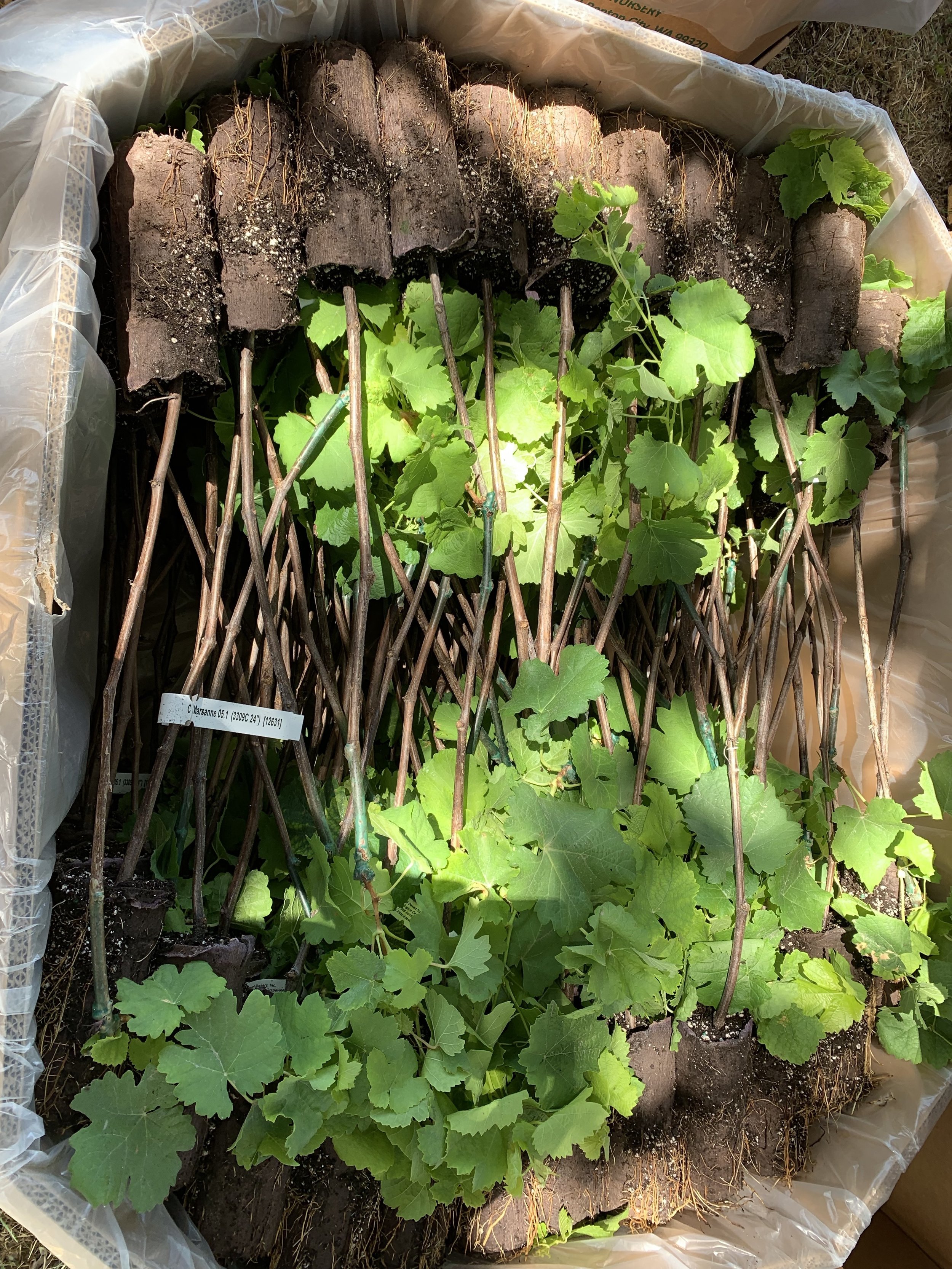
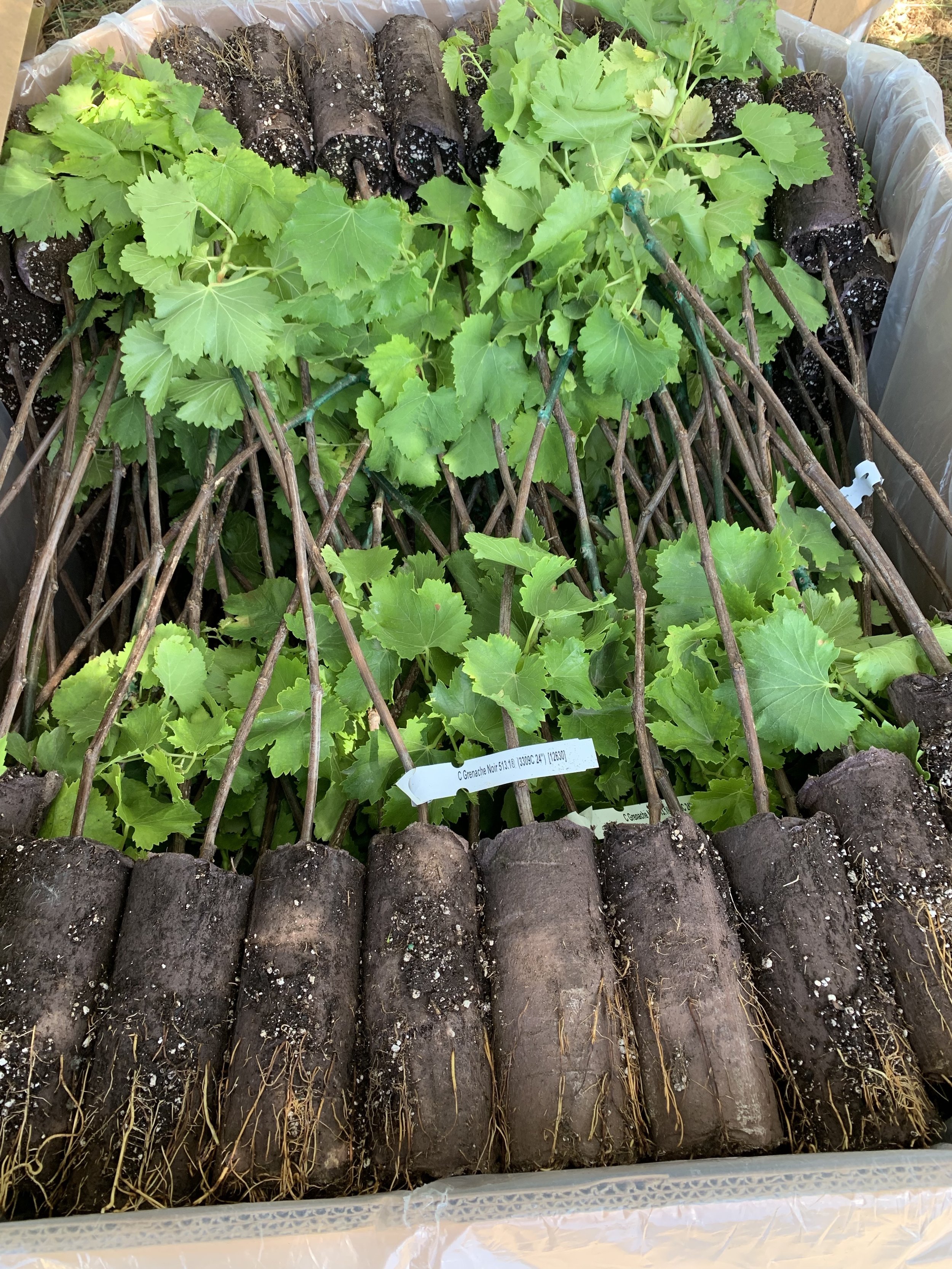
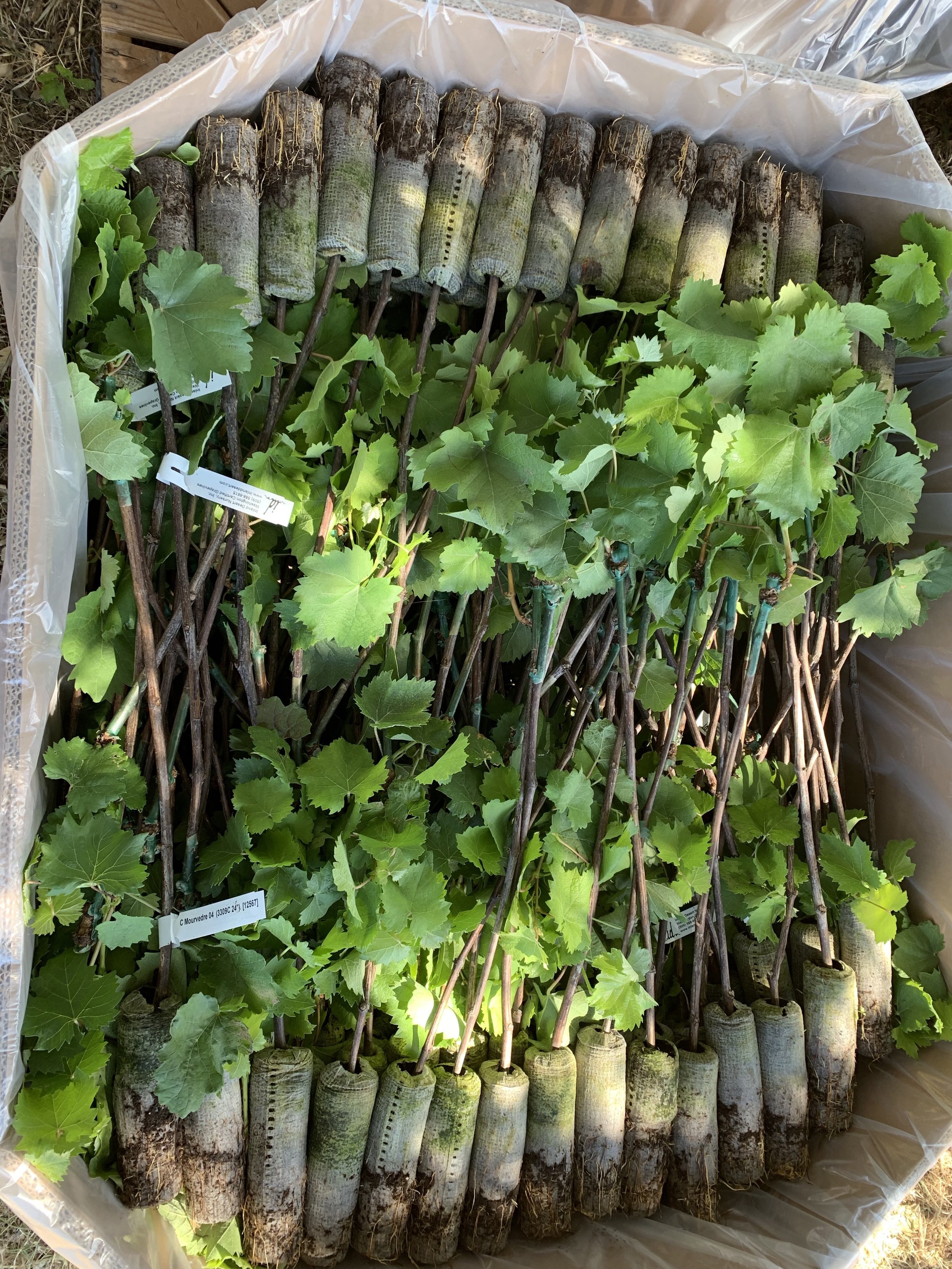
New vines arrived at Troon Vineyard yesterday from Inland Desert Nursery in Washington - mourvèdre, grenache noir and marsanne all neatly packed into shipping boxes. Next week more classic southern French varieties will arrive and within the next ten days, we’ll have planted over 14,000 vines to create ten new acres of vineyard.
Stacked in their shipping boxes they look like the beginning of a project, but it only looks that way. This project started a year and a half ago and the arrival of the vines themselves is closer to the end than the beginning of the project of planting a vineyard. The first step was extensive soil studies as Vineyard Soil Technologies dug more than seventy five-feet deep soil pits to create detailed soil profiles. Based on that data we selected ten acres as ideal for vineyard development. Combining the soil data and climate data with our experience we selected the varieties we felt would be best matched to each vineyard block to be developed. We then begin working with Inland Desert Nursery to obtain the clones of the varieties we chose to focus on. The varieties we were looking for are not the most popular so ordering from the nursery long in advance is required.
Planting does not begin with plants. First, there was the soil work and that filled most of the last year and a half. Once the blocks to be planted were identified the ground had to be prepared. That meant heavy equipment as a D8 ripped the ground to a depth of thirty-six inches. Prior to the ripping, we applied five tons per acre of organic compost along with other soil amendments that we discovered were required by our soil studies. This was followed by discing then yet another finishing discing. When the soil was prepared we seeded a specifically designed cover crop to add nutrition to the soil. As Biodynamic farmers, we also did our first application of Biodynamic Preparation 500.
Over the winter and spring, the cover crop prospered. This was then mowed, then disced into the soil as green manure. Then the vineyard begin to take form as we put in end posts, stakes for each vine (head-trained vines) and irrigation tubes for the soon to arrive young, and very thirsty vines. In addition, another application of Biodynamic preparation 500 was applied to both the blocks to be planted along with all existing vineyard blocks.
Only after all of this investment and work did we arrive at last Friday, when the first vines arrived. Their arrival was the culmination of all of this work, not the beginning. However, these vines mark the beginning of new wines that will come from the grapes they will yield. In that sense, they are truly a new beginning for Troon Vineyard.
As you see, the plan for planting these new acres at Troon was built upon scientific research, extensive viticultural experience, the principles of Biodynamic agriculture and on a vision to make wines with a unique character defined by our soils and the climate on the Kubli Bench in Oregon's Applegate Valley.
Over the next weeks, I will be documenting the process of planting these new vines at Troon Vineyard in words and images. I invite you to share that process with us as we build a foundation for a new generation of wines at Troon.
Taking the Parking Lot Back to Paradise

Brassica and sweet peas bloom as part of the cover crop regenerating soils at Troon Vineyard
Hey farmer farmer
Put away that D.D.T. now
Give me spots on my apples
But leave me the birds and the bees
Please
Don't it always seem to go
That you don't know what you've got
'Till it's gone
They paved paradise
And put up a parking lot
- Joni Mitchell, Big Yellow Taxi
I felt like I was walking on blacktop. Hard, hot and lifeless it looked like a place where a parking attendant would work, not a farmer. But this was a vineyard. Each vine looked like it was a weed growing out of cracks in the blacktop on some worn parking lot.
Living soil gives life. In this vineyard the soil was dead and the vines were dying. Yet, it was a beautiful site and the vines were giving some good wines even as they struggled to survive. They deserved better.
There seemed only one route back to health that could provide the opportunity to make the wines I believed we had the potential to produce. That path was biodynamics, which is the best existing framework for regenerative agriculture. To craft the wines we aspired to make, our soils, indeed our entire farm needed regeneration. It is never just the soil that needs regeneration, but also the spirit. At Troon, not only our soils were abused.
How was a vineyard transformed into a parking lot? Only through the abuses of industrial, thoughtless farming can soil be so decimated. Sick soils make sick plants and these poor vines were overcome with viruses and fungal diseases that stronger plants could have resisted. It became our mission to bring them back to health so they could live out their remaining years doing what Mother Nature intended them to do with their lives - ripen grapes.
Then there is intention, perhaps the key to regenerative agriculture. Previously their intent was to extract all they could from the land and extract they did. Today our mission is to give back more than we take. To be a good farmer you must work for the farmers who will farm the land in the future with the same fervor you work for yourself.
The path from parking lot to vineyard started with science. We did extensive soil studies with Vineyard Soil Technologies and worked with Biomemakers to establish a complete cross-section of our vineyard microbiome through genetic sequencing. To know where you need to go, you first have to know where you are.
Then came the proactive part - biodynamics. The essence of biodynamics is building healthy soils. The main tool in the biodynamic toolbox is compost. Over the last years we have been applying tons of biodynamic compost to our vineyards. In addition to the compost, now that chemicals were eradicated and weed control was returned to manual methods our soils began to change, the microbiome bloomed. Today you can walk into our vineyard and easily dig your hands into healthy arable soil.
That parking lot has been replaced by paradise - a vineyard.
Wine as a Spectator Sport
Yes, I was turned down by the Wine Spectator, they just don’t have the time or, apparently the funds, to taste one of our wines this year.
Hello Craig,
- Thank you for your email and interest in submitting. Given tasting budgets, the small case production and editorial constraints, we will not be able to include this wine in our tastings this year. You're welcome to contact us again next year, with your new vintage, and we can consider the wine again at that time.
After five years of abstinence, I thought I would give the Wine Spectator another go. It was against my better judgement. After all, this is a publication that is focused on green-washed industrial wines. Larger producers with slick PR departments and large advertising budgets are are good to go. A wine with small production is simply an irritation for them. What you have to remember about the Wine Spectator is they’re not in the wine business, they’re in the magazine business. I have to agree with them, a three hundred case production of a viognier, marsanne, roussanne blend from a biodynamic vineyard in Oregon’s Applegate Valley is not going to sell many magazines for them. The publisher sees wine, spirits, cigars and now cannabis as simply as resources to be mined. Certainly they employ talented writers who are serious about their craft. It reminds of that old saw about Playboy Magazine, “I just read it for the articles.” Yes there are many good articles, but points are the real centerfolds and what sells the magazine.
This is why I have always been such an avid supporter of wine bloggers. First they taste wines like they were meant to be tasted. They take time with them, experience how they evolve in the glass and taste them with food. Wine bloggers are not wine spectators as they are fully immersed in the joys that wine can bring to life and communicate that energy to their readers.
Yes I know the Wine Spectator will claim they cover small producers and statistically I’m sure that’s true, but it’s also true they only do so when they feel it can be of benefit to them. Wine bloggers share their joy of wine, the Wine Spectator extracts joy and turns it into profit.
Thanks to the Wine Spectator for at least turning my samples down with an actual reply. Don’t worry, I won’t bother you again.
More Biodynamic Fake News...

Harvest 2018 at Troon Vineyard in Oregon’s Applegate Valley.
Tired old canards. When will the media get on board with modern biodynamics? While the article Weighing Up the Value of Biodynamic Wine by Vicki Denig addresses valid concerns, once again the sources for the article are either misinformed or have an ax to grind. Here is a link to the original article:
https://www.wine-searcher.com/m/2019/04/weighing-up-the-value-of-biodynamic-wine?rss=Y
“Couple that with calendar-specific workdays and strict following of the lunar cycle, and even the smallest of vineyards would face significant time restraints and financial challenges. So when a sizeable estate decides to go biodynamic, is it actually achievable?”
“However, not all winemakers are convinced. In Crete, Giannis Stilianou, winemaker and owner of Stilianou Wines, explains that with larger properties, cultivating with biodynamic principles is nearly impossible, mainly because farmers are only permitted to execute vineyard work on a small amount of very specific days”
The Demeter standard for wines states, “Observation of the Biodynamic calendar is encouraged.” It does not demand only “calendar-specific work days or that “farmers are only permitted to execute vineyard work...on very specific days.” The statements above are false and following the biodynamic calendar is not required for Demeter Certification.
The work of all the biodynamic farmers I know is focused on regenerative agriculture. Their goal is to build the health of their soils and plants. In trying to follow the biodynamic calendar we are reaching for the very peak of quality. That extra edge that pushes our wines beyond just being delicious to becoming truly alive in the glass. If you can’t prune or pick on the ideal day due to weather and practical considerations you know that all of the other work you’ve done will still make exceptional wine. What we reach for by trying to do our work on certain days, by paying attention to the natural cycle of the Moon, is to go beyond simply delicious and make a wine that sings of the vineyard itself. A wine that is transparent and living.
“And for others, size isn't even the biggest issue. Stu Smith, partner and enologist at St. Helena-based Smith-Madrone Vineyards dug deep into the world of biodynamics – and still wasn't convinced. "I discovered that Rudolf Steiner had never been a farmer," he says, noting that Steiner went from student to agricultural theorist, without any experience in the field. Smith explains that when he'd challenge biodynamic farmers on their lack of trials and published results, their response was always that it's a belief system.”
Mr. Smith “discovered” that Rudolf Steiner had never been a farmer. Digging deep? An amazing discovery? I think not. Rudolf Steiner is famous for being a philosopher and founding the Waldorf schools, not for being a farmer, as a quick look at Wikipedia will show you. What we today call biodynamics was only outlined by Steiner in a series of lectures in 1924. He did not go from “student to agricultural theorist”, but gave the lectures at the end of his life at the request of a group of farmers. The modern practice of biodynamics has been built after his death on the experience and experiments of several generations of biodynamic farmers. None of the biodynamic wine growers I personally know consider biodynamic farming a “belief system”, but see it as a framework to build on with a goal of taking their farming to a new level. Contrary to what Mr. Smith may believe, Nicolas Joly is not your typical biodynamic winegrower.
“Smith also takes issue with what he deems to be close-mindedness amongst biodynamic farmers, from both large and small estates. "They are the only group out there that says 'our way is the only way, and everyone else is doing it wrong'. Organic and sustainable farmers don't do that, but biodynamic farmers do."
This, simply, is total bullshit.
“And when it comes down to it, Smith sees it all as a fast-track to making money. "There are so many wineries that need to find their place in the sun," he says, calling out the appeal of biodynamics to Millennial consumers. "In my opinion, it's a marketing ploy – do you see biodynamic carrots? Lettuce? Peaches? No. They're doing it in wine in America as a marketing concept so they sell their product easier and get a higher price for it."
Yes, Mr. Smith, you do see biodynamic carrots, lettuce, and peaches, just not enough of them. The reason you see few of these biodynamically certified fruits vegetables and wines is that practicing biodynamics is hard work and unlikely to reward with you with enough additional profit to justify the effort. You choose biodynamics because of a commitment to reach for something special. Demeter USA currently has certification protocols for Fruit and Vegetables; Nuts, Seeds and Kernels; Bread, Cakes and Pastries; Grain, Cereal, Tofu and Pasta; Herbs and Spices; Meat; Dairy; Oils and Fats; Sweetening Agents, Confectionary, Ice Cream, Chocolate; Cosmetics and Body Care; Textiles; Wine; Beer; Spirits; Cider and Fruit Wines; Infant Formula. It seems he is shopping in the wrong markets, perhaps he should give Google a try?
Then there is his “marketing ploy” statement, which any accountant for a biodynamic winery would get a big laugh over.
“Others think that many biodynamic practices are, frankly, bullshit.”
I'll tell you the real bullshit. It’s farming with chemicals that destroy the environment and cause cancer. It’s making boring industrial wine. If a little voodoo will save the planet, count me in. Voodoo is just what people call something they don’t understand.