Troon Vineyard an Wine Enthusiast American Winery of the Year

"Located in the Applegate Valley of Southern Oregon, Troon Vineyard has a long history dating back to 1972, yet recent years have seen it become one of the most forward-thinking wineries in the U.S., as it is one of just two to have become Regenerative Organic Certified through the Regenerative Organic Alliance. The recent certification follows a conversion to biodynamic farming that has revitalized the estate’s soils while also providing a template for other wineries both locally and around the world to reduce their environmental footprint."
There are almost twelve thousand wineries in the United States. We are humbled to have been selected from among so many passionate, dedicated winegrowers to be one of five wineries nominated as American Winery of the Year by The Wine Enthusiast Magazine’s annual Wine Star Awards. We are honored to be mentioned alongside exceptional stewards of the land Eyrie Vineyards and Wild Arc Farm.
Our work on this farm is important, but our true mission is to inspire other farms to adopt our regenerative agriculture and Biodynamic farming philosophies. We are proud of what we have accomplished on our one hundred acres, but our dream is to convert millions of acres and farmers to this vision of the future of agriculture. "Farm like the world depends on it" is the slogan of the Regenerative Organic Alliance. It does, and we do.
In addition to this exciting news, The Wine Enthusiast has selected Oregon's Rogue Valley, which includes our own Applegate Valley, as a nominee for Wine Region of the Year. The Rogue Valley is among the most exciting of the world’s emerging fine wine regions. Blessed with a diverse range of varieties, mesoclimates, and soil types, the Rogue Valley is uniquely prepared to face the challenges of climate change, while continuing to produce classically styled fine wines.
It is an incredible year for Southern Oregon as both our region and Troon Vineyard have been singled out for international accolades!
Finalists for American Winery of the Year
Far Niente Winery
Hope Family Wines
The Eyrie Vineyards
Troon Vineyard
Wild Arc Farm
Finalists for Wine Region of the Year
Abruzzo, Italy
Marlborough, New Zealand
Rogue Valley, Oregon
San Luis Obispo Coast, California
Uco Valley, Argentina
To see all categories of the Wine Star finalists, click here.

Life from Life - Jancis Robinson Writing Competition Finalist
Pollinator habitat at Troon Vineyard

I am honored that my essay on regenerative agriculture at Troon Vineyard has been selected as a finalist in the 2022 Jancis Robinson Wine Writing Competition!
The view was majestic from Troon Vineyard but the skies were silent. In the distance, Grayback Mountain presided over Oregon’s Applegate Valley as it has for millions of springs. Local legend holds that when the white outline of a “7” formed by snow in the crevices near the peak melts farmers are no longer threatened by spring frosts.
I was surrounded by the wild splendor of the Siskiyou Mountains of southwestern Oregon, but the skies over the vineyard I stood in were silent. Not a bird or butterfly skimmed through the air. As Rachel Carson wrote, this was a silent spring. Walking the rows it was hard to understand how a farm so ideal for life could be so lifeless. Such was my introduction to Troon Vineyard.
The Applegate Valley is beautiful and defined by the ancient peaks of the Siskiyou Mountains. It is a region not fully tamed as rugged mountains and national forests account for much of the AVA. Wildlife abounds. But this abundance did not cross the borders of our farm. There was nothing to invite or entice it in. Over the last years, we have extended an invitation.
Today, Troon Vineyard is teeming with life. We have regenerated life on our farm from the soil below to the skies above. And in the process regenerated ourselves too.
Back in 2017, the problems were easy to identify, but as is often the case, finding answers is more complex. It is much easier to destroy life than rebuild it. A framework was needed to build a new foundation. I turned to biodynamics for that structure.
I had been a biodynamics doubter, I’d even ridiculed it from time to time. But eventually came a tipping point. I would taste a wine that I loved, then discover it was biodynamic. Then it happened again, and again, and again, and again...and then finally I attained enlightenment. There was a liveliness in the biodynamic wines that I loved. Then the connection reveals itself to you — the life in biodynamic wines is coming from life itself.
The first explorations into biodynamics can be disconcerting to those that believe in science. My first step was to attempt, I repeat attempt, to read Rudolf Steiner. This is a step I do not recommend to those with two feet on the ground. It’s better to leap forward a few decades to the writings of Maria Thun, Ehrenfried Pheiffer, or particularly relating to wine, Monty Waldin, and the YouTube videos of Alan York.
Biodynamics respects what we don’t know. As we learn more about the natural systems of soils and plants, science is moving toward the concepts of biodynamics rather than away from them. Probiotics are one of the health trends today and store shelves are full of them. I have come to perceive biodynamics as a proactive probiotic treatment for your soil.
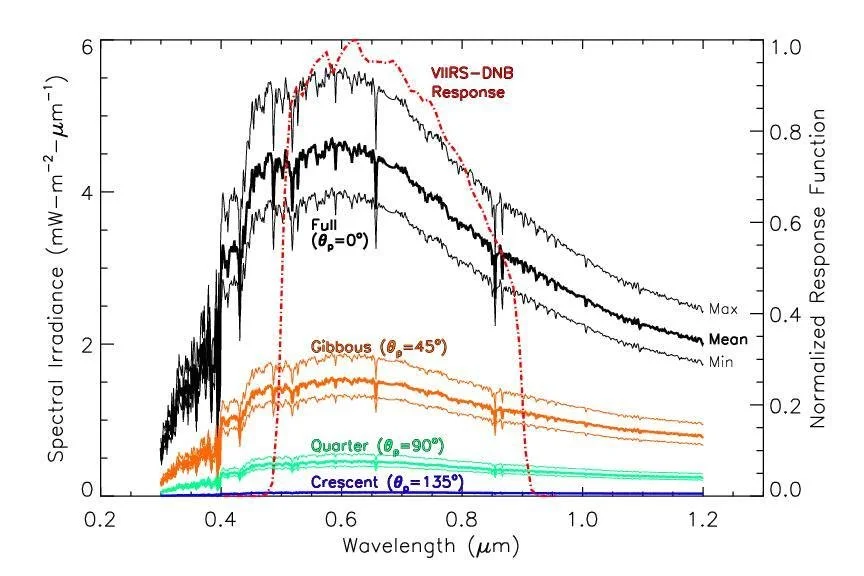
Then there is our search for the natural rhythms of nature. Farming by the Moon is often ridiculed by biodynamic deniers who scoff at the idea that the Moon’s gravity affects plants much as it does tides. Maybe they’re right to scoff? Recent research by Isabella Guerrini, at the University of Perugia points to the light of the Moon itself having an impact on plant growth cycles. An article in the New York Times last year announced the discovery that the Moon has a tail, like a comet, that envelops the Earth once a month like a timepiece in the sky. What does all this mean? I’m not sure — and neither are you. We need to be more humble and have better respect for nature’s mysteries. We need to respect what we don’t know.
Regeneration is a layered process, each year you add new layers to your practice. You don’t just flick a switch and you’re a regenerative farm. It takes many harvests to repair the damage done. You are replacing simple solutions — monoculture, chemicals, tillage — with complex solutions — biodiversity, birds, beneficials, no-till — because nature is a complex system. Using the sludge hammer approaches of conventional agriculture disrupts the beautiful complexity that nature has evolved. We’ve broken nature and, like gluing a broken vase back together, it is no simple task and there is no guarantee it will ever be as beautiful. However, the vase we are trying to repair is a family heirloom. It is worth the saving.
The layers began with compost. A lot of it as more than four hundred tons of fresh cow manure arrived from our organic neighbor Noble Dairy. An annual occurrence now. We had selected a site for the compost pad and it quickly filled up as the manure began to arrive. We supplemented that with organic hay from another next-door neighbor. We are fortunate to live in a good neighborhood. We bought biodynamic preparations from the Josephine Porter Institute and made our first applications. The next year we grew our own hay and started making our own biodynamic preparations. Each year we added layer upon layer of complexity and each year we made progress. Slowly but surely, Troon was coming back to life.
The entire farm is now a vibrant green as the spring rains awaken the vines for a new vintage. This includes the alleys and under-vine areas of the vineyard floor where a blend of more than two dozen plant varieties now cover the ground as we have transitioned to no-till agriculture, an essential element of regenerative agriculture. Tillage destroys the mycorrhizal system we have worked so hard to build. The life underground is as essential as the life above.
Biodiversity builds ever more biodiversity. Today our fifty acres of vineyard are intertwined with fifty acres of cider apple trees, other fruit trees, vegetables, hayfields, sheep, chickens, guard dogs, re-wilded honey bees, and now, wildlife, who have graciously accepted our invitation to visit Troon.
The science of agriculture is moving forward, as always, driven by industrial agriculture as that’s where the money is. Just as they diluted, destroyed, and monetized the terms sustainable and organic, now they are plotting to do the same to regenerative. The Regenerative Organic Alliance was formed to stop them. This new certification goes beyond organic or biodynamic certifications. USDA Organic tells you what you can’t do, Demeter Biodynamic® adds a framework to rebuild and regenerate the microbiology of your farm. The Regenerative Organic™ certification builds on the concepts of both but goes beyond as you actually have to show you are making things better. Regular soil testing is required to show that you are increasing organic matter and carbon sequestration — that you are regenerating your soils. Simple sustainability is not regenerative.
Regenerative agriculture is a quest to understand and connect with the natural systems that make your farm unique. When we try to impose our will on these natural systems a delicate balance is shattered. In the War of the Worlds, Earth is saved from the invading Martians by microbes. Conventional agriculture has attacked the natural systems of our farms and in the process destroyed our soils and much of the nutritional value of the food they produce rather than grow. Once again it will have to be the microbes that come to our rescue and rebuilding those natural systems is the goal of regenerative agriculture.
At Troon, we have regenerated our soils and farm and today life is abundant. The soil is full of fungi and the sky is full of birds. The orchards, gardens, and vines are lush, green, and happy. When we think of regenerative agriculture those are the things that come to mind, but humans are just as much a part of a farm. Regenerative agriculture rejuvenates every aspect of a farm. Along with the health of your soils, plants, and animals, the spirit of those who farm the land is rebuilt.
The slogan of the Regenerative Organic Alliance is, “farm like the world depends on it.” It does and we do. What is more important is that others do too. The Earth is a family heirloom worth saving. It will take all of us to put it back together.
Read the entire essay on JancisRobinson.com
The Beholder's Share

Ginervra dé Benci by Leonardo da Vinci
Recently I traveled to the wonderful Burnt Hill Solstice Festival in Maryland, which also took me to Washington D.C., and on Sunday, I carved out some time for myself. I used that time to visit the National Gallery of Art as there was a particular painting I wanted to see, the only Leonardo Da Vinci painting in the Americas, his portrait of Ginevra dé Benci.
I had recently finished the book Leonardo da Vinci by Walter Isaacson and did not want to miss the opportunity to see an actual work by the master as it had been many decades since I saw The Mona Lisa at The Louvre and The Last Supper in Milan. I reread the chapter about the Ginevra de’ Benci portrait and read everything else I could find online to ready myself for the experience. When I found the gallery room, I was transfixed by the work spending the better part of an hour with it. Everything I had done to prepare for the visit elevated my experience of the great painting. I was fully adding my beholder’s share to the art.
When we interact with creativity, it’s not only the creation but us that bring something to the table. This is called the beholder’s share.
The painter Marcel Duchamp said that an artist only does fifty percent of the work in creating art while the viewer, the beholder, provides the rest. This concept was popularized by art historians Ernst Gombrich and Ernst Kris as the beholder’s share. The beholder partners with the artist in bringing meaning to their work. Neuroscientist Anil Seth has incorporated this concept into his theories of consciousness. “Science and art have long recognized that perceptual experience depends on the involvement of the experiencer. The shared idea is that our perceptual experience – whether of the world, of ourselves, or of an artwork – depends on the active interpretation of sensory input, “ writes Seth.
When we interact with wine, it’s not only the winemaker but us that have the opportunity to make wine. There are wines that invite the beholder’s share, and there are those that seek to provide the entire experience on their own — your only job is to swallow.
While working in the Napa Valley, I saw a grape optical sorter at work for the first time and was filled with envy. Certainly, this would improve our wines, and I had to find access to one of these modern winemaking marvels. These machines removed everything but perfect fruit, which came out of the machine looking like the flawless blueberries you see in little boxes in the grocery store. What could make better wine?
The very next vintage, I found one and reserved our time for the upcoming harvest. The machine worked as advertised and cleaned out anything that was not perfect. It took out everything, including the soul of the wine. What was left produced lush, round, velvety wine that rolled down the gullet, neither requiring nor requesting any participation from the consumer — the beholder’s share has more risk than reward for these kinds of wines.
Having only perfect grapes is not how nature envisioned winemaking. In the industrial world of winemaking, there are the giants who mass-produce lower-priced wines without sorting grapes at all and then just correct shortcomings with additives and technology, and then there are the high-priced cult wines who sort ruthlessly yet still use additives. Oddly enough, they end up with similar styles of wines. Supple, easy wines with a ripe, round sweetness (either from dense fruit and alcohol or from actual residual sugar or both) and just enough acidity to still be considered wines.
There are a lot of pop stars who have become rich with music that requires no beholder’s share. They keep pumping out the formula with no thinking required or requested on the listener's part. It’s a much easier way to make money. I see these stars performing with so much going on around them — crowds of dancers and backup singers — and I understand they don’t want me to bring anything of myself to appreciate their performance. They’ll fill in all the blanks for me. Wineries use the same strategies.
You don’t have to be a wine expert to bring a beholder’s share to wine appreciation; you just have to pay attention. I’m not talking about a razor focus with the perfect glass, the perfect meal, or the perfect anything. It’s just bringing awareness, a few seconds of mindfulness when you behold a wine. That experience can range from simply quenching thirst to a life-changing experience. It’s you that makes a glass of wine come to life.
The idea of the beholder’s share is that the artist and the beholder combine to make an artwork meaningful. Your contribution is the part you get to keep. You get to keep it at long as you are conscious. That’s the gift you receive from the creator and the gift you give back to them. It’s that transaction that makes creativity transcendent.
The beholder’s share is what makes winemaking an art; without it, wine is simply beverage alcohol. When you take a second to devote your attention to a wine, you share in its creation with those that grew the grapes and made the wine. At Troon Vineyard, as everyone has become more immersed in biodynamic regenerative agriculture, we have realized that our beholder’s share is in understanding and honoring nature’s plan and expressing that in our wines. Your beholder’s share gives life to our expression of the life on our farm.
We’re all in this together.
Breaking News!

The winemaker dinner at the Burnt Hill Solstice Festival in Maryland
I’m a news junkie, although, honestly, the actual news is unbearable these days. However, I can still escape to the world of wine news as there is little to terrify me there — other than the climate disasters around the world. The Supreme Court threw some salt on that wound this week.
I start the day with a cup of coffee and a deep dive into my RSS reader, which I’ve curated over the many years I’ve been using RSS feeds to focus on all things wine. Wine growing, wine making, wine selling, you name it.
The big news all over the wine Internet this week was the acquisition of the Joseph Phelps Winery by LVMH. Phelps is one of those pioneer boutique wineries that helped make Napa’s name in the seventies but eventually bloated over the years to a reported production of 750,000 bottles.
Now, while that sounds like a lot of bottles in the wine business, many would still consider that a small winery. Still, that many bottles at that price range are quite a few bottles.
With Covid restrictions lifted, we are back on the road again bringing our Troon Vineyard wines to markets across the country. Once again, I have been hitting the wine shops to introduce them to our wines. When reading the news of the Phelps sale, it occurred to me I could not remember the last time I saw a bottle of Phelps wine on a shelf. It seems Troon and Phelps are running with different crowds.
As a small, about 60,000 bottles, biodynamic winery, our wines do not tend to be found in the big chain stores but in small wine shops, wine bars, and restaurants that follow the natural wine scene. These are buyers looking for wines that combine authenticity, personality, and creativity. I am confident that we express those traits in our wines.
There are two different wine markets. There’s the mass market, where 750,000 bottle wineries are small brands, and the natural wine market, where 60,000 bottle wineries are larger producers. It’s two different worlds, totally different businesses.
While reading all the headlines about the Phelps sale, I realized that this was not news I could use. These transactions have no effect on the wine world I live in. I still will not see Phelps wines in the shops that seek out our wines.
I recently returned from the Burnt Hill Solstice Festival, a celebration of natural wines and regenerative agriculture on the beautiful Burnt Hill Farm in Maryland. The event begins with a dinner on the farm for all the visiting winemakers in attendance. It’s an idyllic evening with great views, food, wine, and camaraderie. Everyone there sharing their wines has a shared vision. A news item like the Phelps sale would not be a topic of discussion. It’s just not something with any meaning for us.
Having spent time in both of these wine business worlds, I feel happy — and lucky — to have been at the Burnt Hill dinner with the rebels. Having seen the dark side, I have no desire to go back. May the force be with us.
Top Tier

A favorite demon in the wine trade today is the much-maligned three-tier system. Wholesalers are reviled and blamed for all winery distribution woes. Needless to say, three-tier distribution laws are a mess — fifty messes to be exact. This cesspool of regulations has been created by the beverage alcohol industry, with large wine, beer, and spirits producers matching national mega-distributors in their zeal to pump money into the pockets of state legislators, who are more than easily enticed into cooperation by their largesse. State liquor laws may pretend to protect consumers, but their main function is to protect the big distribution companies — who get what they pay for.
In years past, I had the misfortune to attend the annual convention of the Wine and Spirits Wholesalers of America (WSWA) and a sleazier event you are unlikely to attend. It was a concentrated incarnation of every stereotype of big, alcohol-driven conventions that you’ve ever heard. Here the mega-alcohol producers party with the mega-distributors. One thing I quickly learned is that the WSWA has nothing to do with the fine wine business. But it is a convention of those that make the rules of the three-tier system and they will do anything and pay politicians anything to protect their power and profits. It was not a coincidence that many of the attendees at WSWA dressed like cast members of The Godfather.
Fortunately, there is a hidden tier in the three-tier system and you won’t find them at WSWA. Under the radar of the WSWA and the mega-alcohol producers is a community of distributors who care as much about the wine they sell as we care about making it. They are the top tier and small wineries could not get their wines to market without them. These small to medium-sized distribution companies are populated with foodies and restaurant industry refugees — many with Court of Master Sommeliers and WSET certifications. Most of all they love wines with personality and individuality made with intentionality. While the big companies move boxes of beverage alcohol, these smaller companies sell not just wine, but the passion they share with the winemaker. They have a real story to tell — including their own.
Troon Vineyard is a small winery crafting limited production wines and our wines go in and out of stock and change with the character of each vintage. Our wines are more an irritation than a brand to big distributors. Fortunately, what is irritating to big distributors is inspiring to the smaller ones.
Despite all the aggravations of dealing with state laws one market at a time, the three-tier system would exist with or without the regulations. I will say it would be helpful if the regulations themselves were not so arbitrary and pointless wastes of time. The only way we, as a small winery, can connect with the restaurants and retailers who want to sell biodynamic wines is by working with a sales team that wants to do the same. We would work with these companies with or without the various state laws. We work with them as partners, not burdens imposed by state laws.
Troon Vineyard is a niche brand, selling to niche distributors that sell to a niche customer list. It’s a niche we share with these like-minded wine professionals. It’s a good niche to be in.
My Oregon Wine History Archive Interview
I was very honored to be interviewed for the Linfield University Oregon Wine Oral History project!
Troon Talk: Vintage 2021 with Winemaker Nate Wall
Settle back and listen while Troon Vineyard winemaker Nate Wall discussed vintage 2021 and winemaking at Troon Vineyard in Oregon’s A[[;egate Valley
The Wine in Black in White Podcast Interview
I was very honored to be interviewed by Thaddeus Buggs for the Wine in Black and White Podcast about our project here in Oregon's Applegate Valley at Troon Vineyard!
Podcast Interview: The Year of plenty Podcast

I was honored to be interviewed by Poldi Wieland on his every thoughtful podcast Year of Plenty
This episode is a conversation with Craig Camp who has been heavily involved in the wine industry for over 30 years. After learning about wine production in Italy, he has worked with many different vineyards, been on the board of directors for several winegrowing associations and was named on the list of “Wine’s Most Inspiring People of 2021” by the Wine Industry Network. Today, Craig runs Troon Vineyard. A holistic biodynamic vineyard in the beautiful AppleGate Valley region of Oregon.
Overview:
• How Craig got involved in the wine industry?
• What is viticulture & what makes a wine truly a wine?
• The story behind Craig’s biodynamic vineyard in Oregon?
• What is biodynamic farming and how can it be applied to wine making?
• How Craig makes wine compared to conventional vineyards
• Why healthy soil is important and how it is crucial to a biodynamic system?
• Interesting facts about the grape vine
• Things to be aware of when shopping for quality wine
"Holistic Wine Making with Biodynamic Viticulturist, Craig Camp"
Exploring

Above: spectral graph, from CIRA, at Colorado State University
In agriculture, as in most things, finding truth is not an exact science — it’s an exploration. There are few things more humbling than farming. While nature makes farmers humble, for those that don’t farm, the result seems to be quite the opposite. Social media tends to bring out the most aggressive behavior for those that don’t actually do what they are spouting opinions about. In the wine community, a favorite target for those that don’t do is biodynamics.
You don’t have to talk to too many biodynamic winegrowers to understand that they are not practicing some sort of belief system but are pursuing exploration in search of what works on their farm. There is no more critical cornerstone of biodynamic farming than the concept of the whole farm as a complete organism. The framework of biodynamics only provides a starting place in this exploration. Once the basics are in place — the evolution begins. A most biodynamic concept.
Are there winegrowers who go full-Steiner? Of course, there are. As in most human pursuits, the whys and hows are as diverse as the people involved. However, while some high-profile biodynamic winegrowers also buy into anthroposophy, in my experience, the majority are far more, shall we say, down to earth.
While posting on social media on our biodynamic practices at Troon Vineyard, it is a common experience to have someone launch an attack on the way we farm. Those that focus their ire on us are rarely farmers. This seems to be a sport preferred by those armed with deep agricultural knowledge from Wikipedia and Google. Part of the blame here falls on the biodynamic movement as we let the more flamboyant practitioners and practices grab the headlines. From my perspective, farming biodynamically is more about hard work than spirituality. Oddly enough, the most spiritual thing may be the hard work itself and the connection it builds between you and your farm.
What is spirituality on a farm? It is a connection to the complexities of nature and reverence for what we don’t know. There are a lot of ways for an individual to interpret those mysteries. For me, I admire those that are willing to explore the unknown more than those that claim to know everything.
As biodynamic farmers, we need to embrace science just as the early practitioners did. With few resources other than their passion, including a passion for science, Maria Thun, Ehrenfried Peiffer, and others did their best to apply scientific structure to their biodynamic practices and, in my opinion, deserve more credit than Steiner for the direction of modern biodynamics.
There is an enlightened form of biodynamics practiced today, which respects the past, but is fueled by the emerging science of regenerative agriculture. On our farm, we have extensive data showing better utilization of available soil nutrients, decreased populations of microorganisms associated with poor soil health, reduced levels of water stress, and dramatically improved YAN levels at harvest.
The thing is — if it wasn’t working we wouldn’t keep doing it.
To us, the planets seem very far away, but in the scale of the Universe, we are very close together. The Solar System is just that and to pretend that these relationships do not have any effect on the Earth is more than just a little arrogant. Not knowing is not the same thing as knowing. These relationships should spark our curiosity, not kill it.
As noted by Guido Masé in the article Can Moonlight Affect Plant Growth in Permaculture Principles, “All plants grow differently during different phases of the moon — this has been observed in scientific research since the 1970s and, more recently, documented on the microscopic level by observing changes in rootlet growth. But as to why — this question is still unresolved. Easy explanations of its effects can often be misdirection – the moon may seem to lay out a trail for us, but this trail often leads to places we’d never expect. But just as tidal forces served to shape early life on our planet, the more hidden effects we are just starting to understand may be essential to maintain healthy life on earth today.”
Next time someone tells me on social media that our farming is a load of shit, I will just agree with them as we use almost four hundred tons of it a year. I won’t bother to tell them how much healthier our soil is now, how the health of even our old, sick vines has dramatically rebounded, or how much our grape chemistry has improved. Some people have opinions and some people farm. As strange as it may seem, there are many people who don’t grow anything that want to tell us how to farm.
The thing is — the way we farm is working and we’re going to keep doing it.
Certifiable

Cynics often claim wineries get certifications as a marketing ploy. They’re right, but not in the way they think. We are selling something — an idea. That idea is regenerative agriculture. Those that think it’s a slick wine marketing concept need to have a conversation with our accountants.
That’s not to say that biodynamics and regenerative agriculture can’t be profitable, indeed they can be, should be, and better be. As they say, you can’t farm green if you’re in the red. However, you may need to be patient for the profit — it’s worth the wait.
There are many reasons to get organic certifications — all of them good for the planet. You need a framework, a foundation to get started on a complex project based on long-term goals. Rigorous certifications like Demeter Biodynamic® and Regenerative Organic Certified™ (ROC) give a farm an outline of how to move forward. The process sets goals and milestones that help define the work that needs to be done and how to do it. This is critical when you are held to a high standard that demands you progress and improve.
There is no endpoint in the process — you never reach agricultural nirvana. Even if you improve every year, you’re only taking small steps forward for the next generation. There is no finish line, this is a race where the leaders are the ones not moving backward. Continual, gradual improvement is the mission. Building an additional one-percent organic matter in our soil may not sound like a lot to you, but for us, it’s a cause for celebration.
The certification process is a time of introspection and planning. We thoroughly reviewed what we accomplished and discussed what worked and where we fell short. We then plan out strategies for the next season and beyond. By the time the inspector arrives, we are prepared in a way you can never be without a formal process and demanding standards that must be achieved. The challenge is always planning how you will improve and move forward. Each year we add additional layers to our practice.
Your first certification, while an achievement, is only the beginning. It means you have finally arrived at the starting line. Ultimately, you have to build on the outline that the certifications have developed and discover the ideal framework for your farm. While the overall concepts of regenerative agriculture are the same everywhere, you need to sculpt them for your farm — an art that takes years, even generations, to develop fully.
There’s a lot of greenwashing out there. Many “sustainable” certifications sound good on paper but still allow far too many poisons and shortcuts in the field and cellar. While many sustainable certifications are focused on the needs and problems of the producer, Demeter and ROC are concentrated on providing the consumer with a logo on a label that can reliably mean something to them. While I cannot doubt the best intentions of most involved in the many sustainable certifications, their programs fall short of what is needed to save our planet and have been co-opted by big agriculture. These greenwashed logos on labels dilute the meaning of all similar logos on wine labels and only confuse the consumer — which is often their intention. Why achieve a more demanding certification when you can slap a sustainable certificate on your brand without giving up Round-Up and so many other dangerous applications in your vineyard?
Every major grocery chain features organic vegetables, but those sections are dominated by big agriculture, and big organic ag is often not regenerative agriculture. This dilution of the term organic combined with corporate greenwashing of the term sustainable makes more meaningful certifications a necessity.
There are many uncertified, perfectly legitimate practitioners of regenerative agriculture who are just as dedicated to that vision as we are, but by not getting certified and putting those logos on their labels, they are not pushing the movement forward. Yes, they are improving their soils, and capturing carbon, and touching all the bases except one — evangelicalism. Our job is not to change just our farm, but to change all farms.
Putting your certifications on the label is a means of communication, and any brand messaging can be construed as marketing. But the Demeter and ROC logos are essential to communicate to consumers that are devoted to supporting producers who are committed to both the environment producing fruit, vegetables, and livestock that meets both their standards of quality and integrity. Connecting with those customers is an essential element for those that practice regenerative agriculture. With no margin, there is no mission. There are customers who share our values and want to support them. It is our job to connect with them and certification logos clearly carry our message and mission to them. Those consumers consider that a service, not a marketing hack.
Wine has advantages as we have labels to display logos and produce products that can sit on a shelf for extended periods, an advantage not open to many biodynamic farmers. Shipping perishables is challenging for small farmers. This puts winegrowers in a unique position to promote the idea of certifications beyond organic. Telling the story of how we farm is a responsibility, communicating to customers about why they should buy regeneratively farmed products is how we build demand for all ROC and Demeter products — and that’s a sure way to convince more farmers and retailers to change their ways.
Regenerative agriculture is not just about your farm — it’s about all farms.
The Unbroken Circle

Troon Vineyard harvest intern Matt Lau picking the first harvest from a new block of syrah.
Oddly enough, at Troon Vineyard, the end of the previous harvest coincides with the beginning of the new. As we picked our first grapes of the 2021 vintage last week, we also emptied and pressed off our amphorae wines from the 2020 vintage. Ten months after we put the freshly picked vermentino into our amphorae, we are completing our last step of vintage 2020 while we pick our first grapes of 2021. To me, this always feels like the previous vintage is reaching out and touching the next.
As a biodynamic winery, we aspire to understand nature’s rhythms and cycles. This requires our focused attention as humans seem to have lost the ability to naturally connect to those rhythms that the rest of Earth’s beings sense so well. Indeed, there is no more obvious example of those cycles than the seasons on a farm as we move from dormancy in winter to bud break and flowering in spring, veraison in the summer, and harvest in the fall.
But there are so many more cycles that occur that, while we don’t sense them, we can see, feel and taste their results. During these last months, the wines aging in amphorae have gone through a complex dance as the characteristics of these unique terracotta vessels circulated the wine and lees in their distinctive way. In our soils, beneath our vines, an incredibly complex population of mycorrhizal fungi, bacteria, protozoa, nematodes, and earthworms have gone through their complicated, intertwined cycles that only now we are starting to understand. Above ground, our diverse wildlife: myriad birds, mountain lions, snakes, coyotes, rabbits, bears, and seemingly infinite varieties of rodents and insects live their natural life cycles alongside ours. These cycles were unbroken for millennium until humans started to break them. Now, more than ever, we not only have to foster them but, once again, become part of them ourselves.
We also picked the last grapes from an older block to be replanted next spring. For those vines, that is the end of their life cycle. Something to be respected and, for us, pulling vines is always a bittersweet moment. I hope we have alleviated some of their struggles during their last seasons as our efforts dramatically improved their health in these last years. Next spring, we will plant new vines, and a new cycle of life will begin. This vintage, we are also picking our first fruit from vines we planted three years ago. They are now strong and vigorous and ready to go onto this next cycle in their lives.
During the same week, we buried our recently harvested stinging nettle, which after a year, will be transformed into Biodynamic Preparation 504. Just before we buried the new, we dug up last year’s stinging nettle, now rich, feathery BD 504, to be applied to our new compost piles this autumn. Another cycle was completed and started again.
Agriculture has a natural rhythm — unless we disrupt it. On a biodynamic farm like Troon Vineyard, we are surrounded by natural cycles, and it is our job to nurture those rhythms. Plants have developed incredibly effective natural systems over the millennia. Most of the problems with agriculture today deal with the devastating results caused by our disruption of those systems. It’s time to listen to nature instead of trying to tell it what to do.
At dawn this morning, we picked syrah for the first time from one of our new blocks planted in 2019. Hopefully, the beginning of a new unbroken circle.
Farming Energy

“Knowing what you don’t know is wisdom,” says Adam Grant in Think Again. Admitting to what you don’t know and can’t explain is a hard thing to do. It’s an even harder thing to embrace what works but that you can’t explain.
Not too long ago, I wrote an article titled The Pace of Knowing about a piece in The New York Times discussing the recent discovery that the Moon has a tail, much like a comet, that envelops the Earth every thirty days or so. My point was that there is much that is not understood in agricultural science.
Recently, a similar revelation came to my attention while reading The Ideal Soil, A Handbook for the New Agriculture by Michael Astera with Agricola. That concept is paramagnetism, which is now starting to gain attention in soil science. Paramagnetism refers to the soils ability to interact with the Earth’s magnetic and electrical field. This led me to read another book, Paramagnetism by Phillip Callahan, Ph.D., which documents his research into this field. Dr. Callahan comments, “As in the case of plants, water is diamagnetic. The atmosphere, because of the oxygen, is paramagnetic. Some of my preliminary experiments at night, during the full moon, indicate a paramagnetic/ diamagnetic, plant, moon, water and soil relationship in nature. We know that the moon, which is highly paramagnetic, has a very strong effect on tides, which are of diamagnetic water.”
Actually, there are two forces at work here, paramagnetism and diamagnetism:
“Paramagnetism is a form of magnetism whereby some materials are weakly attracted by an externally applied magnetic field, and form internal, induced magnetic fields in the direction of the applied magnetic field. In contrast with this behavior, diamagnetic materials are repelled by magnetic fields and form induced magnetic fields in the direction opposite to that of the applied magnetic field. 1 Paramagnetic materials include most chemical elements and some compounds; 2 they have a relative magnetic permeability slightly greater than 1 (i.e., a small positive magnetic susceptibility) and hence are attracted to magnetic fields. The magnetic moment induced by the applied field is linear in the field strength and rather weak” - Wikipedia
What does this information about the Moon and paramagnetism mean for agriculture? I don’t know. But I’ve always thought that’s where the power of biodynamics laid — biodynamics is a discipline that respects the unknown and it is in that respect that you find the wisdom that makes biodynamic agriculture so effective. While these discoveries may raise more questions than they answer — isn’t that the point?
What do we know? We know that commercial, chemical agriculture that ignores natural systems has been a disaster. These strategies have created a quicksand that is sucking in farmers and their soils in a destructive cycle that requires ever more chemical inputs that always lead to increased costs, lower profits, and more and more problems with pests. These are simple facts.
Considering agriculture feeds the planet, it is hard to understand why we know so little about how natural systems actually work. The explosion of research and discussion into mycorrhizal and other soil systems is relatively new and there is much more that needs to be learned. You can tell we’ve turned the corner as now the big agricultural chemical companies are rushing to patent biological plant and soil applications in their tradition of patenting seeds — they can smell the money. The thing is, we don’t need them, and they know it. The basics of biodynamics — composting and a range of fermented applications that are all full of biology — combined with connecting with the natural rhythms of nature are available to all farmers patent-free.
As research continues, it becomes more apparent that there is actual science to be found in the practices of biodynamics — that’s why it works. Is there a scientific basis for every biodynamic preparation and practice? Of course not, but we don’t know the ones that don’t work or those that only work in certain situations. Until we discover more about these practices, I feel perfectly comfortable and confident to work within the framework required to achieve the Demeter Biodynamic® Certification because they are working on our farm.
Respecting what you don’t know is the essence of biodynamic agriculture. Each year brings more discoveries in agricultural science that connect with biodynamic practices. This will eventually lead to more conflicts with Rudolf Steiner’s anthroposophical concepts, which, to say the least, do not meld well with modern science. Steiner clearly felt he had the answer to literally everything, which is not a course for wisdom. Steiner had some great insights in his lectures, but what we call biodynamics today was really founded by the research of Maria Thun, Ehrenfried Pheiffer, and others. Our goal needs to be to build on and continue their research — their science.
At Troon Vineyard, and at most biodynamic winegrowers I know, we are leaving behind the Steiner side for the science side of biodynamic agriculture. Our role is to facilitate the natural systems of the plants on our farm by working with the energy and life that created those systems.
We are farming energy.
Three Bubbles

A trio of bubbles. That's what we are now releasing at Troon Vineyard from the 2020 vintage. Each is distinct. An essential tenet of biodynamics is intentionality, and each of these méthode ancestrale wines was conceived with intention.
While each of these wines are different styles, they are all pétillant naturel wines. As with everything we do at Troon, it all starts with farming. The foundation of the intentional winemaker. You have to visualize what you want to accomplish and then farm the vines with that vision in mind.
We selected the blocks for these wines before bud break, and every choice made during the vintage was based on making sparkling wines. All of these wines were made from our older blocks, which suffer from the red blotch virus. This virus slows the ripening process, which not a bad thing when making sparkling wine. This enabled us to pick grapes with high acidity and lower sugar, but with rich flavors. All of these vines will soon be replaced as part of our replanting program, but everything we have learned in making wine from them will allow us to build and improve on our sparkling wines moving forward. In the future, what will they be made from? We'll let you know, but watch for sparkling wines made from grenache blanc, picpoul, and clairette blanche.

Within hours of harvesting the fruit for the Piquette! and Pét tanNat are whole-cluster pressed into stainless steel tanks, while the grape bunches for the FIZZante are loaded into a stainless steel tank for whole-cluster fermentation. After that, the process is more or less the same for all three wines. The wines are slowly fermented with native yeasts. Then comes the tricky part — all happening during the mêlée of harvest. The sugar levels are checked daily; when making pétillant naturel wines, you have to bottle at precisely the right moment when there is just enough sugar left in the wine to finish fermentation in the bottle and produce just the right amount of sparkle. As the wines are actively fermenting, when the moment is right, you have to drop everything and get the wines in the bottle — non-stop — so that the first bottle has the same amount of sugar as the last bottle. Then they finish fermentation in bottles over the winter.
While fun may have been the inspiration for these wines and is undoubtedly the reason to enjoy them, these light-hearted wines are a lot of work to make. Once the process begins, everything is in motion until the wines are bottled. Then these wines are all hand-bottled, a slow and physically demanding process. But when they are finished, and we open the first bottles, it is always a celebration — these are bubbles after all!
We call this charming, fruity, yet dry sparkling wine “frugal farmer fizz” as it’s crafted from the pomace of our white and rosé wines. Those frugal farmers wasted nothing and used the juice and skins left after pressing the wines they would sell to make wine for themselves and their workers. Our piquette’s mélange of varieties changes vintage-to-vintage, but our vision for the style of this unpretentious naturally bottle-fermented wine never varies. After pressing our estate white and rosé wines, there is still substantial juice left in skins as we press very gently. To that, we add a touch of water, then let it macerate overnight in the press. The next day, we press that juice into a stainless steel tank, where begins a native yeast fermentation. The resulting sparkling wine is a delight. Fresh and fizzy with bright fruit flavors. Our 2020 Piquette! is not disgorged and has no added sulfur.

Pét tanNat is a distinctive pét nat crafted exclusively from our Estate Tannat, this naturally bottle-fermented sparkling wine is made in the ultra-brut style — the driest of the dry. Richly flavored and complex with just that touch of rustic, authentic charm that defines pétillant natural. Tannat grown in our Applegate Valley vineyard has very low pH, which means high acidity — just what you want for sparkling wine. This was our second year making this wine, and we let it get a bit riper than last year as there was more than enough acidity, and we wanted a more richly flavored wine. When making the first vintage, we thought the wine would be pink, but as you see, the wine has the copper tinge of some blanc de noir Champagne. Unlike our other sparkling wines, we believe there is potential for development in the bottle over the next several years. Our 2020 Pét tanNat is disgorged and finished with a sulfur level below 15 ppm.
For many years one of my favorite food and wine pairings has been Lambrusco Secco and pizza. We were inspired by those vivacious red sparkling wines of central Italy when we created FIZZante. FIZZante combines explosive dark red fruit flavors with a lifting effervescence to produce an exceptionally refreshing naturally bottle-fermented dry sparkling wine. For this wine, we chose a block of sangiovese and montepulciano, and whole-cluster fermented them together. This was our last vintage from these varieties, as that block will be replanted this month. While you may think we chose these varieties because of their Italian heritage, that was not the case. We chose these varieties for their acidity and freshness. We will continue making this wine in the future, but the varieties could be carignan, counoise, and cinsault as our first plantings of those varieties come into production this year. Try FIZZante with your favorite pizza to create a new life-long obsession. Our 2020 FIZZante is disgorged and finished with a sulfur level below 15 ppm.
Talking About Biodynamics at Troon Vineyard
Biodynamic consultant Andrew Beedy and I had a great conversation about Biodynamic farming with Chris Sawyer on The Varietal Show!