Nature's Hide and Seek
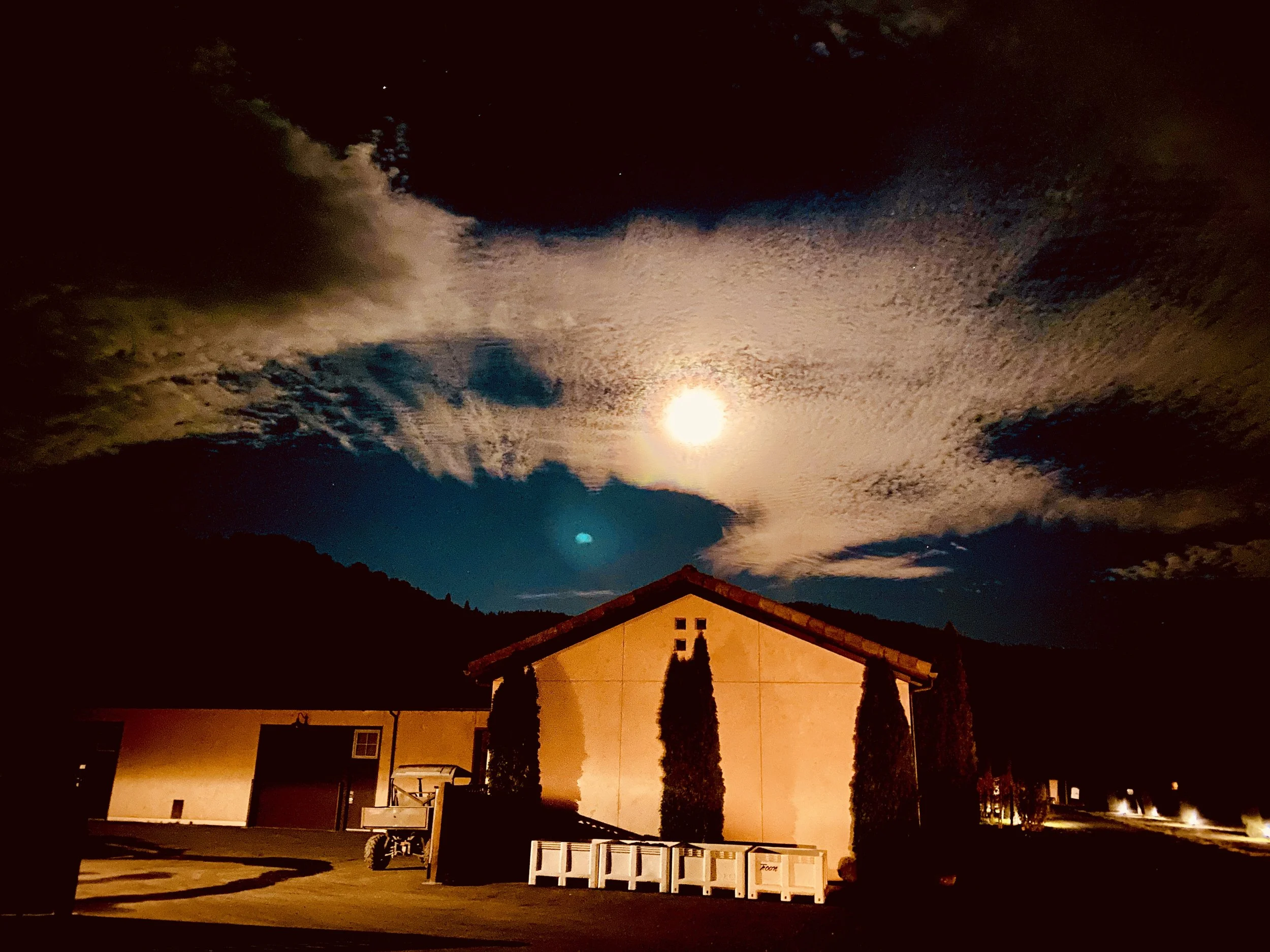
Harvest Night at Troon Vineyard
“The power of Biodynamics is the power of observation. Long before lab reports and soil panels, a farmer’s most reliable instrument was attention — to the moon, the constellations, the textures of their soils.”
In Ten Keys to Reality, Nobel Prize-winning physicist Frank Wilczek discusses the concept of complementarity. Complementarity, as described by Wilczek, underscores the intricate and interconnected nature of the quantum world, where seemingly contradictory properties can coexist and enrich our understanding of the universe. In the dance of quantum mechanics, we find that the more we try to pin down certain properties of particles, the more elusive others become. It’s as if reality is playing hide-and-seek with us, revealing itself in glimpses of complementary truths.
This, of course, made me think of wine.
There are a lot of people in the world confident they know all the answers; they are the same people who are wrong quite a bit of the time. Somehow, this does not deter them. They need to connect with complementarity.
A popular pastime for these people is trashing Biodynamics. They don’t realize that Nature is playing hide and seek with us. They deny the unknown, while Biodynamic farmers join in the game.
At Troon Vineyard & Farm, we are avid users of lab analysis and almost everything we grow is analyzed multiple times, both during the growing season and after harvest. These lab reports clearly lay out a myriad of results, many with colorful graphs denoting high, low, and normal ranges for your crop. The amount of data we assemble is amazing, and we track the trends year after year. This data is valuable and a great asset as we work to improve our farm’s health.
The rub comes when what is indicated as a remedy, as laid out by conventional agricultural experts, does not always work. This is when the game of hide and seek begins, and a biodynamic farmer has an edge in this game.
Our understanding of soil health is far from complete, and while science has made significant progress, Nature is still winning the game. There is one reality that we can be sure of – Nature always wins.
The focus of Biodynamics is on soil health and working with the natural systems that Nature has evolved. Conventional agriculture destroys the soil’s natural system and then tries to replace what is lost with chemicals. This forces plants to live in an environment foreign to them. The resulting struggle means they demand more and more chemicals. The plants become addicts and the farmers pushers.
The conventional people see Biodynamics as spiritual silliness. They have a reason to see Biodynamics in this light, as a segment of the Biodynamic community comes to the practice from a belief in Anthroposophy, a spiritual science created by Rudolf Steiner. But many farmers simply come to Biodynamics seeking a better way. Winegrowing is home to many of the latter types. You can be a Biodynamic farmer without following Anthroposophy. Spirituality is a personal experience, and any farmer who spends years working the land develops their own, individual spiritual connection to that land. Eventually, you connect to those energies that create life, the microbiome of the soil, and what i required to sustain it. You can make those connections without even knowing who Steiner was.
The power of Biodynamics is the power of observation. Long before lab reports and soil panels, a farmer’s most reliable instrument was attention — to the moon, the constellations, the textures of their soils. They noticed where and when things went right or wrong and passed what they learned down through countless generations, refined by people who had no choice but to notice. Today, we are privileged to blend that knowledge with the revelations of modern science. The proof shows up in our soils — in the dramatic increase of organic matter we’ve measured year after year. I believe this is the superpower of Biodynamics. We just need to be as open to the powers of observation as the farmers who went before us.
Nature still has much to teach us. We just need to learn how to learn again.