Planting New Vineyards at Troon - Hands

It was before 6 a.m., but there were already a lot of holes. Dawn had not broken, but a dim light was just starting to flow over the mountains. Hundreds of holes had already been dug. Around thirty people moved their spades rhythmically, almost silently, as they dug twelve-inch holes, one after another. This is how you plant, or should I say, how they plant a vineyard.
Last week at Troon Vineyard in Oregon’s Applegate Valley, we planted about a third of the vines we need to plant this month. That was over four thousand holes, dug by hand in less than two day’s work. But digging the hole was only the beginning. Once the holes are dug, they must each receive, by hand, a shovel full of Biodynamic compost mixed with Azomite and Calphos and then a vine needs to be dropped in each hole. On each vine, the biodegradable root cover had to be removed by hand due to the requirements of our organic certification. Then, on their knees, with their hands, each hole is filled and the vine is in its new home.
One day these vines will give birth to wines served in some of the best restaurants in the world. But it is these people in the pre-dawn hours with their spades and on their hands and knees that brought these vines to live in this vineyard.
Winery tours and articles like to feature barrels, tanks, and machines, but it is the hands of the people that craft them that make wines of place come to life. From the moment the vines are planted, to when they are tended in the vineyards, to the cellar work that turns grapes into wine, the best wines are handmade wines.
Hands, not things make memorable wines. Hands hold the spades that dug the holes to plant them, hands shovel the compost to help them grow, hands prune and position the shoots as they grow, hands pick the grapes, hands sort the fruit that arrives at the winery and hands hold the glasses when it’s time to savor the hand labor that put the wine in those glasses. Making and enjoying wine is a hands-on experience.
The thousands of holes dug by dozens of hands will start to produce wine in three years. Many hands will touch each of these vines as they grow over the next years. Your delight and pleasure in the wine they will one day produce will be the result of the work those hands. Hand to hand to hand and, finally, to the glass in your hand.
Wines of place, with terroir, touch you because of the many touches that have brought the wine to you.

Planting grenache noir at Troon Vineyard

Placing new vines one-by-one in the freshly dug holes. Each of the wrappers on the roots also had to be removed.
Planting New Vineyards at Troon - Getting to Know You

Troon assistant winemaker Cary Willeford applies Biodynamic Preparation 508 to newly arrived vines
Standing there looking at the now real Troon Vineyard block 9, newly planted with mourvèdre, was an emotional experience. So much planning, work and investment transformed from an idea into a vineyard. There in front of me, I could finally feel the wine that would come from these vines. Putting a plant in the ground that hopefully will be producing wines long after I’m gone is a very different experience than planting a crop that will be replaced after one season. But it was the day before that we got to know each of these vines.
The process of preparing these vines for their new home begins the day before planting. Troon winemaker Nate Wall and assistant winemaker Cary Willeford and I spent the day preparing and applying a series of Biodynamic Preparations to the new plants. First was Biodynamic Barrel Compost, which we dynamized for twenty minutes by hand before applying to the roots of each plant to give their microbiome a head start. Meanwhile, we had been preparing a tea of Biodynamic Preparation 508 (equisetum or horsetail). Which was also dynamized by hand then sprayed on the leaves and graft junctions. This preparation helps the plant ward off fungal diseases like powdery mildew. The time, care and intention that went into this process I believe are integral to what makes Biodynamics such a powerful agricultural system. The culture we built by providing care and attention to each plant changes our relationship to them and to each other.
Biodynamics achieves many goals. Your soils are healthier, your plants are healthier, your fruit tastes better, your wine is better and, obviously, its better for the environment. It is a lot of work, but it is also a lot of fun. You feel good about what you’re doing everyone feels pride in a shared worthwhile endeavor.
Yesterday afternoon all of our existing vineyards were also treated with Biodynamic Barrel Compost, we did not want them to feel left out. After all, plants do talk to each other you know.

Troon assistant winemaker Cary Willeford and winemaker Nate Wall apply Biodynamic Barrel Compost to the roots of the new vines.
Harvest 2018 Photo Album - Troon Vineyard in Oregon's Applegate Valley
Mother Nature was very kind to us in 2018. Rain and cool weather are things you expect during harvest in Oregon, but not this year! All during harvest we were given warm, dry weather under beautiful blue skies. This perfect weather meant we could harvest each variety at the ideal moment. There was no pressure from the weather so our pace was almost leisurely compared to a normal vintage. It was a harvest to remember as will the wines!

Picking tinta roriz, this is our last vintage of this variety as these vines will be pulled and replanted next year.

Picking starts at dawn with the vines still in the shade of the Siskiyou Mountains, which are already brightly illuminated.
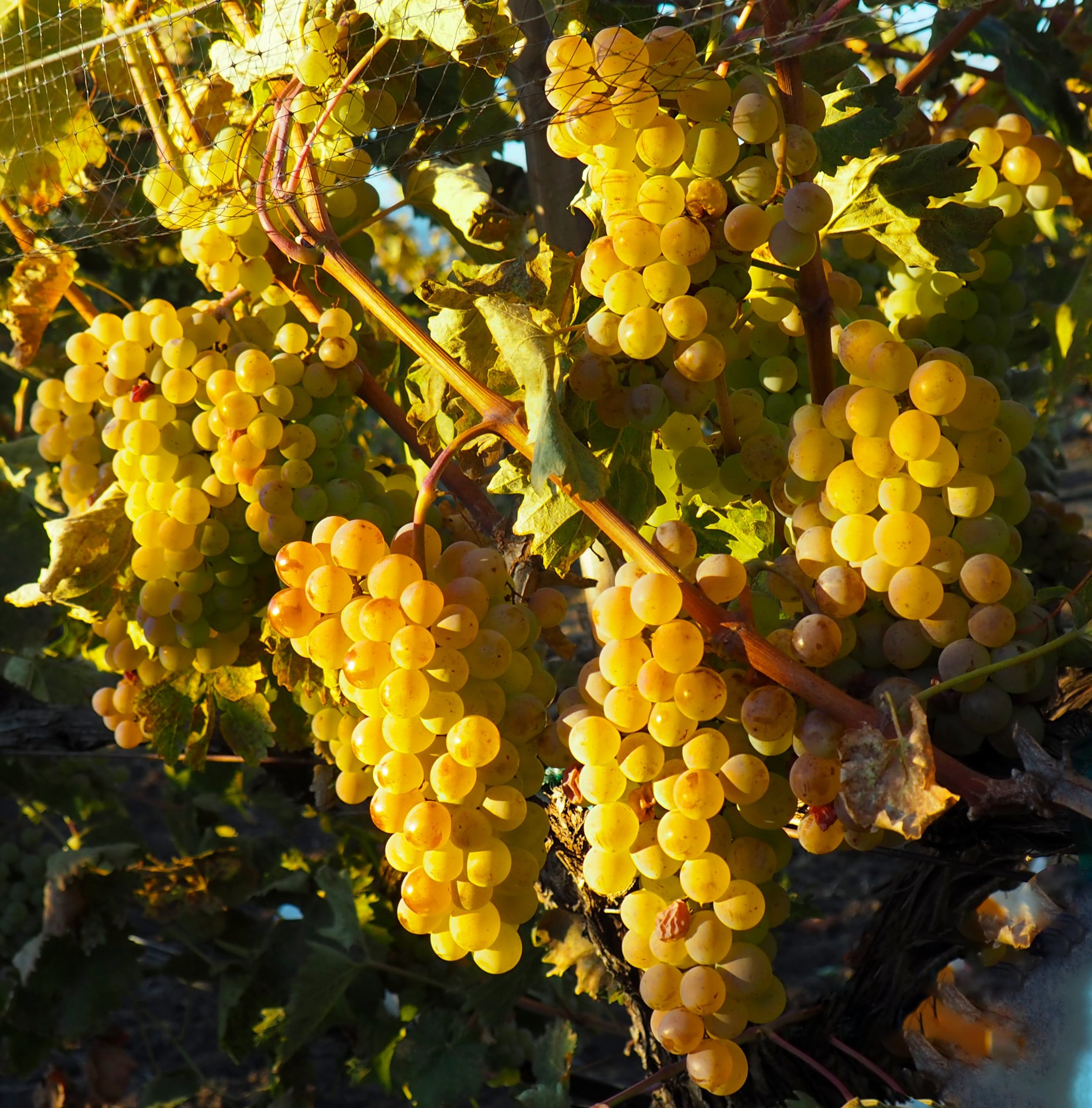
Some picure-perfect vermentino.

Banele and Jesus picking malbec as dawn breaks.
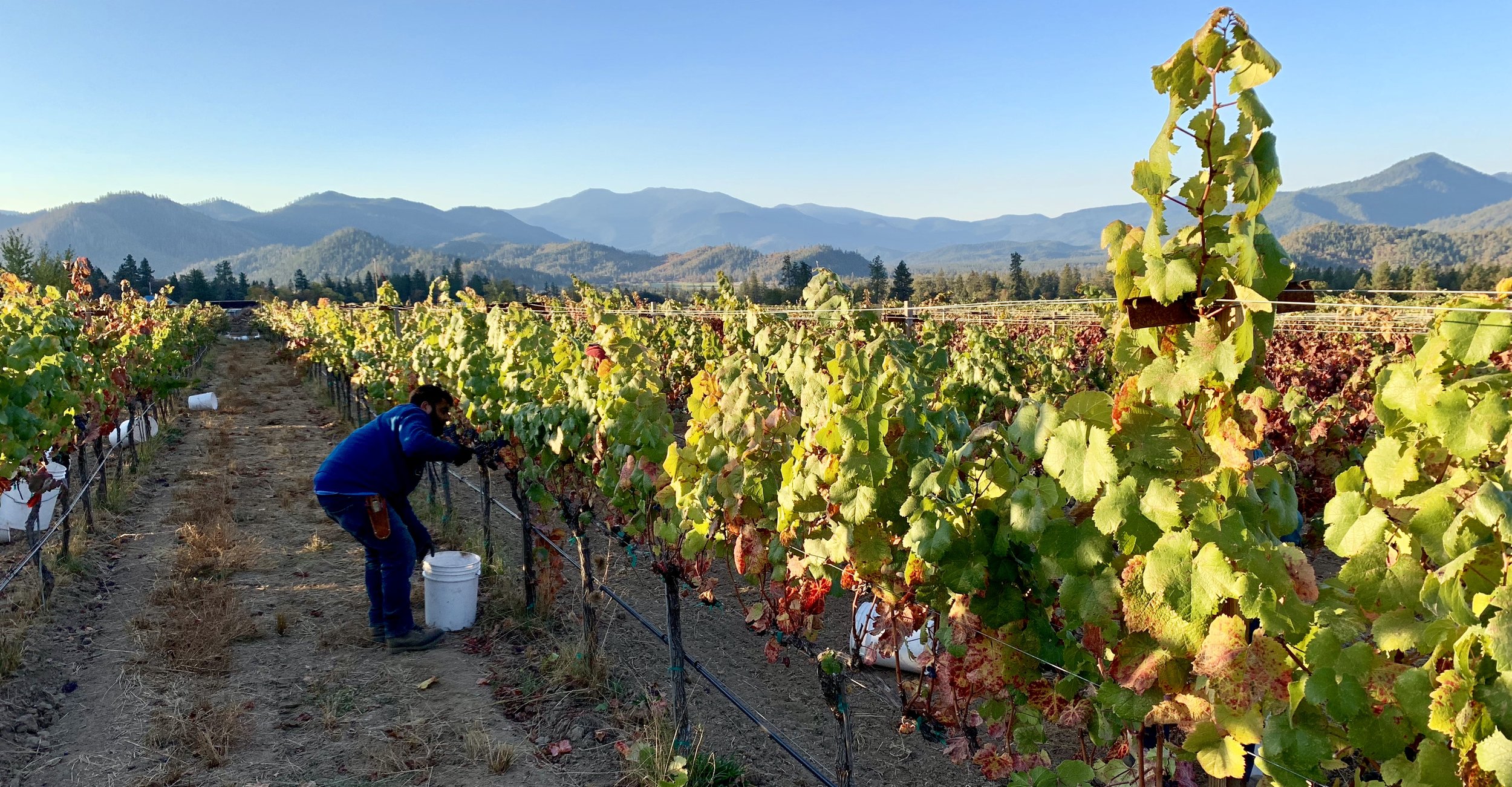
The Applegate Valley during harvest.

In a biodynamic vineyard, the leaves are fully turned color and falling off when it is time to pick the fruit. This is the natural cycle of a vine.

Vineyard manager Adan Cortes bundled up against the morning cold as he harvests vermentino.

Associate winemaker and biodynamic team leader Nate Wall fills cow horns to make biodynamic preparation 500. They will buried until next spring. Making BD 500 is something you do during harvest in the fall.

Banele, our harvest intern from South Africa, places the filled cow horns in pit to be buried until next spring. The BD 500 they will produce will be sprayed on our vineyards.

Grape pomace, fresh from the press, is added to our compost pile. All the leftovers from harvest are added to our biodynamic compost piles and returned to the vineyard.
Life Feels Good

Adding pomace to a new compost pile at Troon Vineyard in Oregon’s Applegate Valley.
It’s just after dawn, and we’re spreading fresh cow manure with pitchforks. Our biodynamic consultant, Andrew Beedy, looks at me and jokes, “see why people use chemical fertilizers?”
Andrew is, of course, correct. It would be so much easier to buy drums of fertilizers and spray away. However, as I stand on this pile of cow dung, I am firmly convinced we’ll get the last laugh.
At Troon Vineyard when we talk about compost, we’re not talking about a few buckets of manure to fill some cow horns to make BP 500. When it comes to composting, we’re talking some serious shit as we need to generate over 200 tons of finished biodynamic compost every year.
The raw materials are simple: fresh organic cow manure, organic hay and the organic/biodynamic pomace from our own fruit. Combine these basic ingredients and let nature take its course and you end up with a magical substance. Not that there’s any magic involved as bacteria do the lions share of the work. At a biodynamic winery, you are surrounded by ferments. Right now we are fermenting wine, compost and some buried cow horns to produce BP 500. Some of the smallest things in nature are doing all the heavy lifting at Troon Vineyard.
The transformation is quite amazing. First, the manure arrives from the organic dairy next store. Dump truck after dump truck arrives along with the flies that crave their cargo. Then our crew goes to work. Starting with a layer of hay, followed by a layer of manure, followed by another layer of hay and so on. Most of the work is by hand as when the front loader dumps a bucket of manure you spread it out with shovels and pitchforks. The bales of hay are broken up and spread by hand. During the harvest season, layers of pomace are alternated with the hay and manure. We build the piles into windrows about 130 feet long and five feet high. Then come the biodynamic preparations 502 yarrow, 503 chamomile, 504 stinging nettle, 505 oak bark, 506 dandelion, and 507 valerian. The first five are applied to specific parts of the pile while the 507 is sprayed onto the entire pile. Over the next six months, the pile will be turned several times, which means all the preparations are well mixed into the pile by the time composting is finished. Just a few weeks after the manure is delivered the flies that come with it disappear as the pile quickly transforms from something that draws flies into something that attracts earthworms. Now we’re talking.
While much is made of the very photogenic burying of the cow horns to make BD 500, and 500 is indeed essential and a foundation of biodynamics, you can’t avoid the fact that out of nine biodynamic preparations six are added to the compost pile. People may debate biodynamics, but no one who knows anything about agriculture questions the value of compost. However, biodynamic compost takes things to the next level. Study after study confirms that biodynamically treated compost is higher in every key nutritional value than standard compost. Every year we will be producing enough of this elixir to apply several tons per acre. Combined with our applications of BD 500 we expect to find dramatic improvements to the microbiome of our vineyard, which will lead directly to improvements in our wines. There is nothing you can do to your vineyard that is more important than this type of composting.
After six months, the raw manure, hay, and pomace transform. What started as smelly fly food becomes rich, dark humus. The smell and flies slowly disappear and in the end you end up with something that looks and smells more-or-less like high-end, organic potting soil - two hundred tons of potting soil.
Composting is such a great experience as you can readily see the results of your efforts. What goes in is very different from what comes out. There is a real sense of accomplishment, and investment in the future of your soils, vines, and wines.
Next spring we’ll be applying BD 500 and compost - both created on our farm. While we have farmed 100% biodynamically this year, we had to purchase the BD preparations and organic compost while we went through the long process of making our own. As excited as we were in our practice of biodynamics this year, applying our own preparations and compost will be a real milestone.
There’s life everywhere. In the compost, in the BD 500, in the vines, in the wines and in us. Life feels good.

Vineyard manager Adan Cortes, with Andrew Beedy’s son Levon along for the ride, sprays BD 507 Valerian onto a compost pile.
A New Culture at Troon (and poop jokes)


Assistant Winemaker Nate Wall fills horns.
It seems everyone either ridicules or worships the cow horns and the processes of biodynamics. Then there’s biodynamic cycles of the moon that are mistakenly confused with astrology - no, not related. You can’t blame the press for focusing on these aspects of biodynamics as they make for great photos and headlines. However, as wine writer Monty Walden recently noted, “Biodynamics is not farming by the moon.”
Biodynamics is farming by the earth.
At Troon Vineyard we recently completed one of the milestones for any biodynamic farmer. We buried our first cow horns on the estate to produce our own biodynamic preparation 500. The images of burying the cow horns may have become cliché, but for those of us who participated, it felt like a right-of-passage as we joined other biodynamic farmers around the world in what feels like a celebration to those involved. It is hard to imagine, but stuffing cow horns with fresh manure is a meaningful experience. After the horn’s ingredients ferment in our soils over the winter, we’ll take the newly created BD 500 and apply it to our vineyard soils to help build the natural microbiome that plants require to take their nutrition naturally from the soils. By letting the soil and the plants do the work we will end up with fruit that carries the energy and personality of our vineyard into our wines. Farming by the earth is the essence of terroir.
Biodynamics changes the soils, the vines, but equally importantly it changes the people who practice this discipline. Biodynamics is a structure and gives you a framework, which at the beginning you work within, but as you grow as a farmer you also go beyond. While everyone loves to focus on cow horns and moon cycles, and these are important aspects of biodynamics, these famous elements of this discipline are not the biggest changes at an estate that transforms into biodynamic agriculture. Perhaps the biggest changes happen to the people who take up this mission. Biodynamics not only transforms your soils, but your culture as a winery.
A big part of that change is that farming biodynamically is fun. You feel empowered by what you are doing and each day is a new adventure. Even though it’s much harder work than conventional farming, the risks and the efforts reward you with not only better grapes, but a better you. Filling our horns was a group effort and laced with happy banter and camaraderie. Poop jokes were as abundant as the actual poop at this celebration. Everyone including the horns were full of it. Conventional farming makes sterile soils and wines. There is nothing sterile about the world of biodynamics.
We’ll be stuffing horns again next fall. If you don't mind dirty hands and some rather unsophisticated humor come join our celebration!
In biodynamic agriculture, we bury cow horns filled with fresh cow manure each fall. These ferment over the winter and next season will be applied to our soils to help build the microbiome. of our vineyard. In this video, Banele (harvest intern from South Africa), Lindsay (harvest intern from Ireland) assistant winemaker Nate Wall and biodynamic consultant Andrew Beedy fill our horns at Troon Vineyard.
Courage of Our Convictions
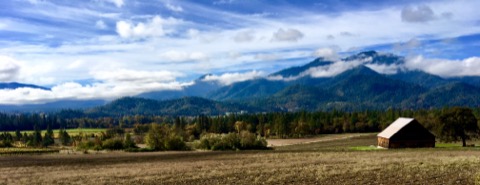
The Applegate Valley in Southern Oregon
A winemaker in Bordeaux has a universe of five. In Burgundy a winemaker has one, maybe two varieties that demand their focus. In Beaujolais they live by gamay. In Barolo nebbiolo defines the reputation of a winemaker. In Napa, if you make great cabernet sauvignon no one will much notice what else you do.
In the established wine regions of the world, a winemaker’s universe of options is preordained. In no way does this diminish their skills and accomplishments, but it does allow them to focus. To be able to focus is to be efficient and efficiency leads to consistency, which is an essential aspect of mass market success. Yet market success does not often fire the imagination or inspire innovation.
They say the pioneers take all the arrows. Welcome to the world of winemaking in one of the world’s emerging fine wine regions. I’m in the Applegate Valley of Southern Oregon, but I believe that winemakers in emerging regions around the world get hit by the same arrows. Winemaking in an emerging wine region requires the courage of your convictions. Planting a new vineyard in a new region is a true leap of faith, but as they say, the greater the risk the greater the reward.
But we don’t work in a vacuum. Years of knowledge and science have accumulated from the work of winemakers and viticulturists before us so we don’t have to push blindly forward. There are pioneers in every new region that took a lot of the arrows for all of us. Admittedly, many of these people that first planted vineyards in new regions were learning only by trial and error, but from their failures and successes, we can build a foundation for an exciting new wine region.
One such exciting new region is on the Kubli Bench of the Applegate Valley. Applegate Valley is not new as it was established as an AVA in 2000, but there is a growing energy here and we are on the tipping point. The Applegate Valley is now on the edge of breaking out. The varieties that will fuel that breakout are coming from the shores of the Mediterranean and the rugged hills of Southwest France, not from Bordeaux, Burgundy or Napa. The Rhône will have a voice, but the future of the Kubli Bench will be in the tradition of Bandol, Languedoc-Roussillon, Cahors and Madiran. These regions are now, after centuries of winemaking, escaping the shadows of their famous French cousins because of an exciting revolution in winemaking and winegrowing in those regions. We will be joining them in this winemaking revolution.
We are now making plans to either graft or replant many sections of our existing vineyards with the varieties that belong here. We’ll be planting more tannat, malbec, marsanne, roussanne and mourvèdre for sure (we already have significant acreage of syrah and vermentino), but varieties like picpoul, petit manseng, carignan, grenache (red and white) and cinsault will also find a home on the Kubli Bench. Because of everything that we’ve learned and the excellent quality of the wines we’ve already made I do not feel planting varieties like these is a leap of faith. We have the courage of our convictions.
I like making wines that people drink rather than collect. Wines that are delicious, richly flavored, and affordable that bring pleasure to people lives are as rewarding to make as they are to drink. There is no bottle more exciting than the wine that is open on your table. The Applegate Valley is a perfect place to make these kinds of wines.
I have to admit. Making wines like this is fun.
Feeling Connected

The Troon Vineyard crew picking the grapes they grew. This is Vermentino bound for Troon Black Label Vermentino after a year in barrel.
There's not much to it. You pick the grapes, crush them by foot, de-stem if needed and dump them in a fermenter. The fermenter, a one-ton macro-bin sits under the old oak tree behind the winery. After a few days the fermentation begins. Just like that.
It seems so simple, so natural as we use no yeast, sulfur or acid additions as was the norm at wineries in my past. These interventions are not required by Mother Nature. Then it's hands-on punch downs every day and soon your hands are stained burgundy red. There is something different about this kind of winemaking. You are mentally and physically part of the wine. This is not a process, it's a philosophy, a way of life. You and the wine are connected.
At Troon the same crew, the same people, tend the vines, harvest the grapes and make the wines. No sorting table is needed at harvest because the pickers are the same people that farmed each vine throughout the vintage. They only pick the perfect bunches, because these grapes are their grapes. They are harvesting a full year of work with each bunch cut from the vine.
After years in the Napa Valley I was shocked at the deliberate pace of the pickers during harvest here at Troon in the Applegate Valley. In Napa the picking crews are well-oiled machines and picking is at super-human speeds, which makes the pickers seem more mechanical than human as they surgically remove fruit from vine. Here in Oregon the picking pace is slower, but not any less work. Yet by dialing back the speed of picking the harvest seems to be the work of people, not machines. A picker that knows each row and vine treats the fruits of their year long labors with the respect that only sweat equity can understand. Their work needs no second guessing on a sorting table.
The simple elegance of the process and the personal hands-on experience of growing and making wine this way cannot help but make you feel more connected. You are connected to the land, the vines, the wines, the people who make them and to the people who will drink them. Feeling this connection is the most rewarding feeling I've ever had in thirty-five years in the wine business.
Wine should be a connection. It should connect the drinker with the land and people that brought the vineyard to life in a bottle of wine. This harvest I'm feeling very connected.
Double-click to edit...
Oregon Applegate Valley 2016 Harvest
Perfectly ripe Troon Vineyard Estate Vermentino ready to be harvested tomorrow morning.

Double-click to edit...

Double-click to edit...
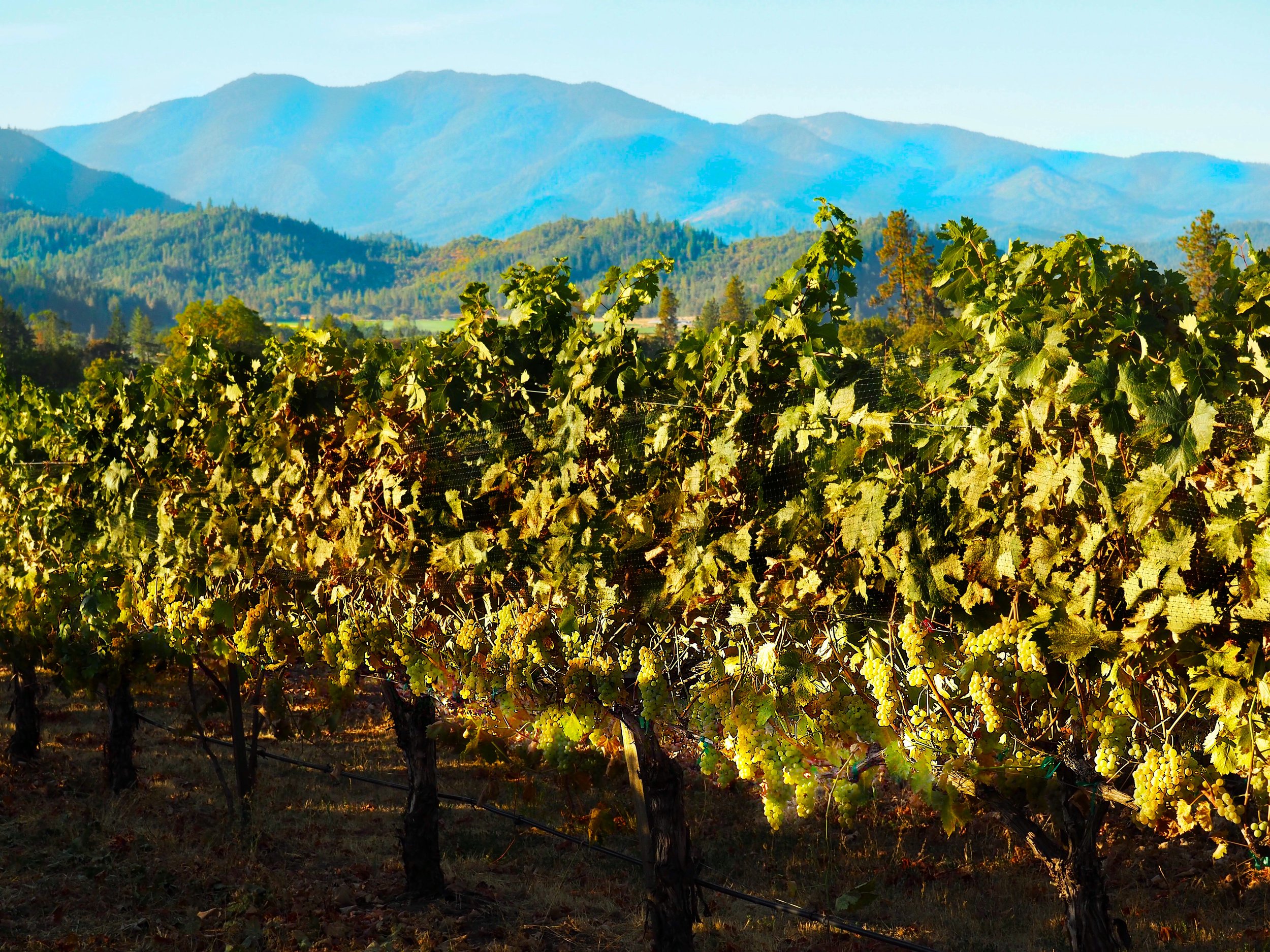
Troon Estate Vermentino framed by the Siskiyou Mountains
Double-click to edit...
Back To The Garden

Saffron Fields Vineyard Yamhill Carlton AVA Willmatte Valley Oregon
"And we've got to get ourselves back to the garden," wrote Joni Mitchell, but I always hear the urgency of Crosby, Stills and Nash when I think of these words.
Today I arrived back in Oregon for the Oregon Wine Symposium right on the heels of finishing Premiere Napa Valley. It's most decidedly the yin and yang of wine experiences.
Behind me is a week of massive parties, dinners and nude dancing girls painted in gold followed by an auction that raised $5 million all dedicated to promoting the Napa Valley as the greatest wine region in the world. It is an amazing event and a major accomplishment. The Napa Valley wine community deserves great respect for a stunning marketing success. However, I never feel at home there even after seven years. It just does not mirror my values and what I want to achieve with my wines. The Napa Valley is a bigger is better, in all things, environment slowly squeezing out all but the ultra-wealthy and corporations.
Arriving in Portland today brought me a lightness of spirit and, best of all, a feeling of reconnecting to what I love most about wine. A connection to nature and slowing life down.
So for a few days I will slow things down and think about terroir, indigenous yeasts, biodynamics and what winemaking in Oregon means compared to the Napa Valley. I think my blood pressure dropped ten points as soon as I stepped off the plane at PDX.
It seems I've "got myself back to the garden."
Double-click to edit...