Miscellaneous Mendocino

The wines of Mendocino continue their exciting development. You cannot help but be excited by the energy and creativity of the winemakers there. Here are some excellent wines from less than popular varieties that are all delicious and highly recommended.
2007 Bells Echo Syrah - Firm, earthy butcher shop aromas and flavors over rich black fruit. A real beauty.
2007 Monte Volpe Pinot Grigio - Brilliant, bright and fresh with none of the annoying residual sugar that mars so many Oregon and California wines misusing the Italian name for this variety. It’s great to find an American grigio you can actually drink with fried calamari. Winemaker Greg Graziano makes this wine, St. Gregory and the Enotria below and it seems everything he touches is just great to drink - with a fair price to boot.
2005 Enotria Barbera - Explosively fruity and zesty. Oddly like real Italian barbera, which is rare from American examples of this variety.
2007 Lazy Creek Gewurztraminer - Wow, a real dry gewurztraminer. A true rarity these days when most Alsatian examples are almost dessert wines and most Americans are simply and sweet. This gewurz with guts is a wonderful find.
2007 Lioco Indica, Old Vine Carignan Blend - Lovers of brash, forward earthy Southern French wines take note, you’ll love this balanced bruiser. Sausages on the grill anyone?
2008 McDowell Grenache Rose - A perennial favorite, McDowell keeps pumping out this very good rose vintage after vintage. Would it be better dryer? For sure, but it’s still dry enough to be really enjoyable for summer picnics and parties.
Fourty Eight Years Old
Not me, a wine. As old as it was, I was still older. I wish I was in as good of shape.
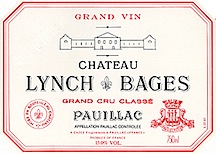
Old wine is a hit and miss thing. One bottle can be great and the next shot. Buying old wines is an even bigger crap shoot. This was a hit. The bottle of 1961 Chateau Lynch Bages, Pauillac was simply perfect. They don’t mak’em like that anymore - literally. You can help but think of the old saw, “If it ain’t broke don’t fix it” when you taste wines such as this and wonder if the bigger badder wines of today could possibly taste this good at forty eight. I hope so, but secretly doubt it.
This beautiful bottle was supplied by my friend Donald Patz, of Patz & Hall fame, and a more perfect example of what old wine can become you’ll not find. The color was a gorgeous ruby becoming garnet. The addictive nose was exotically spiced, but still layered with seductive sweet, dark fruit that expanded into a growing complexity that could only remind me of listening to Kind of Blue on Bose headphones. The flavors and finish were all kissing Audrey Hepburn in Breakfast at Tiffany’s. As you see I am older than the wine.
Greatness like this was no accident. They knew what they were doing. It has to make you wonder if we really know what we’re doing to have stopped making wines such as this.
Marvelous Mendocino
 Lots of places on the West Coast think of themselves as pinot prima donna, but there is a very real possibility that the least pretentious of all will claim the throne. Sideways loved the Central Coast. Oregon assumes (a little to quickly) the crown is theirs. Yet it seems time after time the most exciting pinots I’ve been tasting are from Mendocino’s rugged Anderson Valley.
Yesterday’s Taste of Mendocino was packed with enthusiastic tasters and expressive pinots. What's most exciting is, strangely enough, what these Mendocino pinot noirs lack. They are moderate in alcohol, missing a big price tag and offer more pleasure than attitude. They are brilliantly light in color, fragrantly lacy, exotically delicate and long on the palate. Pinot noir from Anderson Valley tastes like pinot noir - a claim many pinots from Oregon and the rest of California cannot claim. You'll not confuse a Anderson Valley pinot noir with a syrah.
We can only hope their increasing fame does not lead these growers down the path taken by so many Oregon producers who have given up the elegance that their cool climate can bestow on their wines in the headlong pursuit of points over purity of variety.
Some highly recommended Mendocino pinot noir wines from the tasting:
- 2007 Anthill Farms, Comptche Ridge Vineyard
- 2006 Saint Gregory (winemaker Greg Graziano competes for best pinot anywhere under $20)
- 2006 Handley Anderson Valley
- 2006 Husch Anderson Valley
- 2007 Jim Ball Vineyards, Booneville
- 2006 Jim Ball Vineyards, Signature
- 2006 Lazy Creek
- 2006 Navarro, Methode l'Ancienne
- 2006 Patz and Hall, Alder Springs Vineyard
- 2007 Phillips Hill, Oppenlander Vineyard
- 2007 Phillips Hill, Toulouse Vineyard
- 2007 Phillips Hill, Corby Vineyard
- 2007 Radio-Coteau, Savoy Vineyard

Powered by ScribeFire.
Bully Borsao
 Borsao is a bully. It just beats the crap out of not only American wines selling for under ten bucks, but all to many in the $20 range too. We Californians have to stop letting these Spanish bullies push us around. Perhaps when we're less concerned with appearances than what's in the bottle we'll find our courage.
Just south of Navarra and west of Barcelona, Bodegas Borsao is in the Northwest of the province of Zaragoza, There they make a delicious red wine, Borsao Campo de Borja, which I picked up for seven bucks. This blend of 75% garnacha (grenache) and tempranillo is simply delicious. Yes, simple may be the operative word here, but there's just enough complexity to push this well balanced wine well beyond the pack in its price range. This is an outstanding everyday wine that admirably pairs with pizza or pork chops on a Wednesday night or will more than please your guests at that big party next weekend.
Yet again, a wine they have to put in a boat and transport thousands of miles trashes the local competition.

Solo Dieci
 Is there any website to hate more passionately in the online wine business than the confusing and irritating Bonny Doon site? Once upon a time it was cute, but no more now that it’s corporate manipulation instead of the genuine weirdness of Randall Grahm. Is there anything more embarrassing than corporate suits trying to act cool? Well, maybe they’re trying to make up for that with their wine. I can’t speak for the other Ca’ de Solo wines, but their 2007 Sangiovese selling for only ten bucks (solo dieci) at Whole Foods is a damn good everyday wine. Does it taste like sangiovese? Not a bit. However, it’s a good honest everyday red wine that goes well with carry out pizza or burgers.
It’s a shame that a good, solid everyday wine like this needs so much hoopla to surround it. Wine like this is all about gulps and good, simple food. Trying so hard to be cool for a ten buck wine is a bit embarrassing. They should just be proud for what they are.
Randall was always ahead of the game, but the corporate types that have replaced him don’t have a clue.

Powered by ScribeFire.
Snob Buster
 I looked down on it with disdain. It was below me. I'd wallowed in that mud before. Why waste the time?
For some reason it always grabbed my attention. I walked by time and time again with the self righteous boredom of a commuter passing the same pan handler every day. Yet there was something about it that caught my eye. Finally, with a sneer I picked up the bottle. An $8 California zinfandel? I knew what that meant - overripe, sweet purple glop. A perfect example of low budget spoofulation. A glutton for punishment, I picked up the bottle using wine blog fodder as an excuse.
I took a sip. Then another. Could I be having a bad palate day? I took a gulp, then another. I liked it. What was up with that?
The next morning I snickered at myself. What could I have been thinking? Yet my next trip to the store that floor stacking was calling, almost challenging me again. I gave in and bought another bottle. The second tasting not only confirmed my first feelings about this wine, I even liked it better.
First of all it really tastes like zinfandel with a lovely briary, raspberry fruit that tastes like wine, not jam. Then there is the refreshingly medium body at an easy 13% alcohol and zesty touch of acidity that livens up the finish. This is a very nice wine and a nice wine it all it is and I think that's great. The world's full of great wines these days, but a charming bottle of zinfandel for under ten bucks is really hard to come by.
The wine? The 2007 Green Bridge Paso Robles Organically Grown Zinfandel is a real steal ($7.99 Whole Foods). Compared to the bland and/or jammy-sweet cabernet and merlot being sold in this price range it's a miracle. Green Bridge delivers real wine instead of industrial purple plonk. It's varietal in character, balanced and perfect for everyday meals, while offering more than enough character for occasions that demand good wine that won't break the bank. It's too bad more zinfandel like this is not produced. After all, can you think of a better wine to be America's everyday go to wine? How in the world did merlot steal that job away?
Often I like simple easy meals. That doesn't mean that I don't expect the food to be flavorful and fresh. The same goes for the wines I like to drink with those meals. It's great to finally find such a wine so close to home.

Is the (2nd) Fiasco Over?
 Wine trade legend had it that the word fiasco entered the English language when the Italians flooded the American market with mediocre wines after the war and destroyed their reputation for decades. The fiasco was the the name of the straw wrapped around those bottles of cheap Chianti, which became the symbol of Italian wine in the United States. Cheap, innocuous or worse -the straw covered bottles were omnipresent on tables covered with red checked table cloths and provided romantic light, covered with candle wax, in dorm rooms in the 60’s and 70’s.
Of course, Italian wines long ago recovered from that debacle and are sold at prices on par with the the worlds finest. However, there was a second Italian wine fiasco. The first was them sending bad wine here, the second was our fault. We imported Italian varieties and proceeded to make some very boring wine from them. In the eighties there were a lot of high profile efforts to make expensive wines from Italian varieties in California and the category was even given a name: Cal-Ital. There was a lot of hoopla, but the wines were mediocre and expensive – not a good combination. Even today all too many American sangiovese and barbera wines look ridiculous when compared to Italian wines (or other American wines) selling for half the price. Those that deigned to attempt nebbiolo fell far shorter than ridiculous. What could the possible reason be to buy these American wines at $40, $50 or more when you could buy better Italian ones at $20. What made these Americans even worse is that they had no varietal character. They could have been made from zinfandel, merlot or cabernet, but were not as good as the wines made from those varieties. Why buy an expensive sangiovese when a zin or cab that tasted better cost less? As you might expect, the Cal-Itals soon went out of fashion.
Is this second fiasco over? It may well be as some exciting wines from Italian varieties are finally being made up and down the west coast. They are distinctly New World, as they should be, while maintaining true varietal character. Cabernet from Bordeaux and Napa may not taste the same, but the family resemblance is unmistakable. Finally you can now say the some thing about a few wines produced from varieties like barbera, sangiovese and even nebbiolo. While most of the better examples seem to be coming from Washington there are a few Californians producing some exciting wines too.
 I can think of no more stunning example of this new trend than the 2004 Palmina Nebbiolo, Stolpman Vineyard, Santa Ynez Valley. This is a gorgeous wine that is true both to its variety and its vineyard. First of all it is perfectly pale, with a radiant garnet color. Dark purple nebbiolo, like pinot noir, is not to be trusted. On the nose it is powerful, yet elegant and laced with all the classic tar and roses you could want. However, it also shows its pride in its American birth with a round, warm spiced fruit forward personality. The firm classic tannins, that are a hallmark of fine nebbiolo, are very present suggesting that those that age this lovely wine will be well rewarded.
The second Italian wine fiasco is coming to a very happy ending.
Cheating On Your Wife
 I had lied to my wife. Every guy in the room had. This was not the kind of thing you could safely share with a spouse. We gathered in the room with an exaggerated good-old-boy bachelor party kind of conviviality. The level of anticipation was high, perhaps too high. It was still afternoon and it felt a bit strange to be doing this in the light of day.
Everyone finally arrived and one-by-one we passed our wad of cash to the host with a sense of excitement and a tinge of guilt for the pleasures to come. After all, wasn't this money supposed to be going into the college fund or buying that new dresser? This was more money than I could easily afford on my rookie reporter's salary at the newspaper and I could only hope my wife would never find out. Our host took the cash and disappeared into another room. A second later, radiating sensuality, they swept into the room and were even more beautiful than we had hoped for in our dreams the night before. There were eight of them, one more exotic than the next. Each was wrapped in a skin tight sheath of aluminum foil just begging to be torn off and marked with a letter so each of us could choose their favorite. An electric energy coursed through me as I unpacked the toys I had brought for the festivities: eight glasses and a notebook. Once again I thought of my wife and how ticked off she we going to be if she found out I had spent our hard earned money on, of all things, wine.
This group of liars was cheating on their wives with our mistress - wine. She was stealing our money and time with our spouses, but we could not resist her charms. We had long passed the flirting stage and this was to be our most amorous liaison yet as we were going to taste Grand Cru Burgundy. None of us had ever spent that much money on wine before. We were at the stage where we had learned more about wine from books than with our tongues and were easily influenced by reputation and label. More than once I had convinced myself to like a wine because someone famous said I should. With this innocence and ignorance we began tasting the eight bottles of Burgundy that our host had tightly wrapped in gleaming aluminum foil as we were doing a “blind” tasting. However, this was not really “blind” as we knew that each wine was an expensive and famous Burgundy. We were prepared to be seduced. Each of the tasters had eight glasses and the table was a crowed forest of stemware. After each of the wines had been poured silence settled on the once boisterous group. Each of us focused our entire concentration each wine as we sipped, swirled, spat and furiously took notes. For the next hour the only sound was the occasional moan or sigh when our mistress hit just the right spot.
I can still remember some of my notes now, which went something like this:
A. Light color, weedy earthy aromas...
B. Light color, earthy, dried leather and cheese...
C. Light color, vegital, smoked bacon. plastic...
So it went for the next hour. When everyone finished it was time to compare notes and come up with a group rationalization for why these wines were not the other-worldly experience we had anticipated. They were strange and not very satisfying. We soon came to the conclusion that problem could not be these famous wines, but that it must be us. Our palates were not well honed enough to understand the complexities of these great and famous wines. Those odd aromas and flavors must be that magical ingredient terroir that the French use to describe the unique personalities of each vineyard that make each single-vineyard wine distinct. Those leather, cheese and bacon smells had to be terroir. Now it was our duty to keep learning and tasting until we could come to understand and appreciate them.
As I look back on this event over thirty years ago, I have learned to understand and appreciate the true glories of Burgundy, none of which could be described as weedy, cheesy or sweaty. I have also learned that those wines that made me feel inadequate in that tasting three decades ago would have better been poured down the drain. Those wines were faulted - full of brett and VA. We were just too young and too intimated by the names and prices of those wines to know the difference. Fortunately I soon learned the difference between terroir and wine faults. Wine faults are a major concern of mine as time and time again I run into wines that are loaded with faults that go undetected in many large tastings. All to often I lift a glass to my nose from an almost empty bottle to find it severely faulted with TCA (corkiness), brett or a range of other faults. At the recent Wine Bloggers Conference there was a lot of debate about ethics, but none about knowledge and tasting technique. If wine bloggers want to be taken seriously, it's far more important that they can spot brett and other faults than if they take samples from producers for free or not.
These memories were jogged by a bottle of 2004 Thomas Dundee Hills Pinot Noir that I pulled from my cellar to share with my good friend, winemaker Donald Patz. Always looking to bring something that he probably hasn't tasted (no easy task) I grabbed a bottle of this hard to get Oregon cult wine. Upon pulling the cork we were treated to a perfect example of brett. Needless to say, it was a great disappointment and we left the bottle, still mostly full, on the table when we left the restaurant. Thirty years ago we may have forced ourselves to accept such wines, but today there are no excuses. Winemakers have the finest laboratories available to them and far more knowledge than the winemakers of the past. Brett needs to be recognized and recognized for what it is - a fault that obliterates varietal character and terroir - which are the two most important things for me in a wine.
Not long after that tasting of three decades ago I entered the wine business. We were importing the Italian wines of Neil Empson and doing tasting event after tasting event. Neil and I would open hundreds of bottles over several days. Every time Neil found a corky bottle, which was often in those days, he'd shove the wine and the cork under my nose. Soon I got it and ever since have been hyper-aware of that musty TCA smell. We should all do what Neil did and every time we find a faulted bottle we need to shove it under someone’s nose. While winemakers have no business making faulted wines, we (especially wine writers) have no business missing those faults.
Trading Down at Joe’s
 I gave it my best shot. For the last several weeks I’ve been working through the wines at Trader Joe’s hoping upon hope to find a deal. Yet wine after wine was hopelessly thin, bland industrial plonk or out-and-out faulted. Didn’t anybody ever teach whoever is tasting these wines what brett is all about? Trader Joe’s offers few deals on wine. A “deal” should mean good wine at a low price not crappy wine at a low price. In fact, the $5 wines at Trader Joe’s are overpriced. Without a doubt the best way to find a real wine bargain is to establish a relationship with a local wine merchant that cares about wine and you. That means finding a specialist – someone whose livelihood depends on wine. In other words good luck finding a real deal at Trader Joe’s. You’ll find a lot of cheap wine, some with well known names, but few good values.
 Yet among all the industrial and/or faulted plonk at Trader Joe’s I discovered a gem. As a lover of Côtes du Rhône, Dolcetto and Barbera as everyday wines I have searched and searched for American equivalents, but with few successes. What’s doubly amazing is that I found such a good wine in a temple of wine mediocrity (or worse) like Trader Joe’s. The 2005 Castoro Cellars Reserve Syrah, Paso Robles is one of the best deals in American wine I’ve ever tasted. Juicy, fresh and just plain delicious with clear varietal personality and all for well under $15 (actual price hidden to protect the innocent). I’m headed back tomorrow to grab a couple of cases because a better everyday American wine I’ve yet to taste. Not a great wine, but a damn good one to have with a burger on Tuesday night or a Friday night pizza, which, as we usually forget in the the United States, is what wine is all about. A good glass of wine elevates a simple meal and our spirits. That’s why they made Bacchus a god. The Castoro Syrah is a very good glass of wine and a great value. Castoro Cellars is to be admired for producing wines that should be easy to make in California, but that most producers seem incapable of achieving.
Trader Joe’s has a few great deals, like the Castoro Cellars Syrah, but the vast majority of their wines are bad deals. To be a bargain, a wine should have to taste good. At Joe’s you’re trading price for quality, which is not a fair trade.
Bocksbeutal Screwed?
 A screwcap on a Bocksbeutal? The prophylactic properties of the screwcap take on a whole new meaning in this case as the wine is never impregnated by a uncovered cork. It may in a funny bottle with a funny top (complete with double entendre), but the 2005 Randersackerer Marsberg, Riesling Spatlese Trocken, Spielberg Gutsabfullung Franken, Wiengut Schmitt’s Kinder is a wonderful wine. Besides being a current contestant for long wine name of the year, its linear focus, punchy minerality and long laser-like finish reminded me why riesling is my favorite white variety. The emergence of excellent dry (trocken) wines like this from regions of Germany that were (rightfully) ignored years ago offers a delightful replacement for the now sweet and overly alcoholic wines of Alsace. While those Alsatian wines are wonderful with cheeses, dry German rieslings like this are much better with dinner.
Another stand out dry riesling comes from Austria, the 2006 Offenberg Spitz Riesling Smaragd, Wachau Wiengut Johann Donabaum, which sharpens your palate like a honing steel. Gloriously fragrant and spiced with a hard edge of acidity that focuses everything into a long, lingering whole. It’s hard to imagine two more pleasurable wines to have with dinner.
Getting back to the Bocksbeutal, it’s great to see more and more producers practicing safe bottling.
Sweet Alsace
 The Dungeness Crab season along the Oregon and Northern California coast is something I look forward to every year. They’re so succulent that dipping them in butter is redundant.
With this lusciousness in mind, I selected the 2004 Audrey et Christian Binner Pinot Gris for what I knew were going to be some great crabs. The crabs exceeded even my highest expectations and were perhaps the best I ever tasted (I think I say that every year), but the wine only reminded me why I buy so few Alsatian wines these days. The Binner was out-and-out sweet and was cloying with the crab. Cloying was not the flavor match I was going for – rich and concentrated yes, but cloying no. While the Binner would be outstanding with a cheese course, it was terrible with crab.
Alsatian wines used to be one of my go-to wines. They were always balanced with a firm, complex minerality No more, you’re more likely to find ripe apricot than firm mineral in the wines and the various varieties have started to lose their individuality and meld into one unctuous sameness.
The thing that bothers me most about the sweetening of Alsace is they don’t give you a hint on the label except for their ultra-rich dessert wines Vendage Tardive and Sélection de Grains Nobles. But for everything else, if they’re going to continue making wines like this (as they surely will considering the high points they get) they should start doing like the Germans do and tell us on the label how sweet they are.
The Binner is a wonderful wine and my remaining two bottles will be finding themselves bonding with some Munster instead of clashing with some crab. It would be a perfect wine if they only put a little more information on the label.
Stellar Cellars

I was a guest, which is by far the best way to attend tastings like this, although as this was a dinner, it might be better to call it a drinking. Be assured I didn’t spit once. It never crossed my mind. One thing drinking old wines confirms is they don’t make’em like they used to. For better or worse, they’re different – more delicate and less alcoholic. It was a great evening with outstanding food, wine and company. What else is great wine for? Many thanks to Dr. Mike Dragutsky for inviting me to join in. Below are the wines with some short comments.
1990 Cristal Brut, Magnum – A reminder of how great Cristal used to be. Toasty, creamy, long and very complex. Cristal today is a mere shadow of this wine.
1985 Kistler Chardonnay, Carneros – Rich and powerful, but a bit passed its prime.
1995 Puligny Montrachet, Enseigners, Verget, Magnum – Unfortunately showing quite a bit of oxidation already, but still quite exciting with a firm mineral backbone and great length. Drink up soon.
2005 Sea Smoke Pinot Noir, Ten, Santa Rita Hills – A powerhouse pinot with a lot of new oak.
1988 Bonnes Mares, Comte de Vogue – Not showing well at first, this bottle ended up by my place so I got to go back to it several times. By the end of the evening it opened into a graceful beauty with layers and layers of length and personality.
1997 Chateau Pichon Lalande, Pauillac, Magnum and 1997 Chateau Lynch Bages, Pauillac – I’ll comment on these two lovely, elegant and totally mature wines together as they dramatically illustrated how much better wines age in magnum. The Pichon Lalande was much fresher with brighter fruit and depth. These wines show how pretty wines can be from lighter years.
1989 Chateau Pichon Baron, Pauillac – Still velvety and rich with an expansive bouquet and a long seductive finish. Twenty years old is a great place for classic Bordeaux from excellent vintages.
1988 Chatau Guraud Larose, St. Julien – Silky, delicate and perfumed. Really lovely with an almost caressing texture. Drink up now while it’s so pretty.
1961 Chateau Bouscaut, Graves (Pessac-Leognan now) – Just a beautiful old wine that is still showing a touch of fruit freshness amid all the coffee, porcini and spice. With that nice touch of that earthy minerality that defines Graves. Long and graceful.
1988 Petrus, Pomerol – Wine of the night. An elegant, graceful wonder. Svelte and incredibly long and complex. A wonderful wine.
1979 Chateau Lafite Rothschild, Pauillac – The definition of elegance. A perfectly proportioned wine. Subtly complex and endlessly interesting. As usual, a perfect Bordeaux.
1977 Taylor, Oporto – Will this wine ever mature? Still young, fruity, dark, sweet and powerful. Just plain great Port that will age forever.
Cheezy
 As a unabashed lover of good pizza, I have often ranted about how hard it is to find a decent pizza in the United States. It’s much easier than it used to be, but it’s still tough. It’s odd that while pizza and Chinese restaurants may be the easiest to find, that it’s also harder to find good Chinese food and pizza than anything else.
What ruins most American pizzas is that we put much too much crap on the top. I guess that’s to be expected in a country where, as Bill Maher noted a few weeks ago, our favorite hamburger topping is another hamburger. We destroy pizza by putting two much cheese on it, which turns it into a mushy, stringy chewy glop. Oddly enough they usually put really bad cheese on pizza. It confuses me how adding more of something bad would make people think it was better.
We have the same problem with our wines, which we also bury under too much “cheese”. The cheese in this case is over-ripe, over-extracted and over-oaked. These things have the same impact on a wine that too much cheese has on a pizza. The once crisp crust is turned into mush.
I was reminded how bad most pizza is as, having moved this week, I was still without my pots and pans so I grabbed a carry-out pizza at Whole Foods. This was not a great pizza by any means, but it was a very good pizza and better than 99% of the pizza sold in this country. That the pizza at a grocery store is better than a pizzeria, whose specialty is pizza, is inexcusable. The crust was wonderfully crisp even though I took it home to eat. A bottle of wine I grabbed to go with it was also wonderfully crisp and unburdened by any “cheese”. The Barbera Oltrepo Pavese from Cantine Pirovino is less than ten bucks and is mercifully non-vintaged, as more wines in this price range should be. It is young, fresh and bright with a wonderful bite of acidity that was just as crisp as the crust. I really enjoy simple, pretty wines such as this with simple, but delicious weekday fare. As with cheese, more is not always better.
The Thin White Line
 They said it couldn’t be done. Yet it is being done. California is emerging from the excesses of the previous decades (who isn’t) and presenting a leaner, meaner attitude in their wines. By lean and mean I mean acidity and a glorious lack of residual sugar. Perhaps Pilates is good for all types of fat.
Just today I had two crisp, mineraly and very dry white wines from California and they were as good examples of the genre as you’ll find anywhere.
Facing down a half dozen pristine oysters the 2006 Brander Sauvignon Blanc Natural from Santa Ynez was master of its domaine. It was clean and fresh as you could want, yet the Brander was not that simple cat pee punch produced in New Zealand as on top of that zest was a lovely touch of honeydew melon and ripe pears. Brander Natural is a rare example of a new world sauvignon blanc that can actually challenge Sancerre or Pouilly Fume for both guts and glory.
More difficult to find, but well worth the search is the 2007 Pey- Marin, The Shell Mound, Riesling from chilly Marin County. Here’s a high strung dry riesling that is not a bad copy of Alsace, but an interesting wine in its own right. Like the Brander, on top of all the structure and bite is a deliciously ripe fruitiness that belongs only to California. At only 11.8% alcohol it hits some of those high notes you thought only German riesling could hit.
There used to be a line that could not be crossed in California without wines being branded as thin. Thankfully those days seem to be gone as producers like Pey Marin and Brander produce lean, mean fighting machines such as these.