More Taste, Less Filling

My flight was delayed and I was facing a three hour wait at DFW so I decided I might as well eat. Picking out the most promising restaurant I could find, I sat down at the bar and ordered the simplest thing on the menu, which is always my defensive eating strategy in such places. I was in no hurry so stretched out my dining experience as long as possible. During those forty five minutes or so the guy next to me downed four Coor’s Lights. With nothing else to do, but watch my barmates, I noticed they were all drinking light beers. On top of that they they were all drinking a lot of them and not a glass was in use. Lots and lots of long neck lights were being downed while the draft lines went undisturbed.

Coming from Oregon I’m used to anybody and everybody drinking craft brews. Besides the fact that there seems to be as many brew pubs as gas stations in Oregon, you even find a line-up of craft brews on tap on the dumpy-ist country tavern. Here taste in beer tends to run to IPA’s with such bitter hop intensity that Coor’s Light has more in common with Perrier than our local brews. Living in such a place makes you forget what most Americans want in their food and drink.

What they want is little or no flavor or extremes of flavor. In some ways the Oregonian adulation of beers with so many hops that you can taste nothing else is just the mirror image of the Coor’s light drinker who likes it because it has almost no flavor at all. This is why we have such extremes of flavor in our culture and why you have people washing down blistering hot Tex-Mex and Asian foods with flavorless beer. Look what we do to Sushi, that most delicate of foods, as we insist to douse it in wasabi and soy sauce, which only insures we can’t taste if the fish is fresh or not. Sushi insiders know if you want the chef to give you the best fish you have to show him you’re not going to ruin it.

This is a huge dilemma for winemakers. Are we faced with making only innocuous industrial wines or supercharged spoofulated wines to stay in business? Fortunately no, as wines with complexity, balance and elegance can never be mass produced and there will always be a niche market for such wines. However, such producers have to accept that most Americans will never understand their wines as their palates just are not attuned to delicate, complex flavors.

On this same trip I was lucky to eat at the excellent Parkside Restaurant in Austin Texas where chef Shawn Cirkiel features one of the best selections of the freshest oysters you’ll find anywhere. The people next to me asked many questions about the oysters. They’d been to some great restaurants including Gary Danko and The French Laundry and were clearly into food. When their pristine oysters arrived they requested Tabasco and proceeded to obliterate each and every nuance of the assorted oysters in front of them. For wine the Tabasco is too much new oak, over-ripe grapes, dry ice and all the other over-manipulations of modern, spoofulated winemaking.

Today taste in America means more is better. Light beer is popular because you can drink more of it. Burning hot food is popular because anybody can taste it. Huge portions must be a great deal, right? It’s no wonder that wines with the most (most flavor or most advertising) are the most popular at all points on the price spectrum.

Alcohol Is Not The Demon

raisins There have been major rants and counter-rants (their words not mine) lately about high alcohol wines by Alder Yarrow at Vinography and Thor Iverson at oenoLogic, there's lots of good thinking, interesting reading and great debate in these two posts. However, I think they miss the major point on this issue.

Nobody who has tasted a lot of wine can deny that they've tasted many wines with high alcohol that worked. Wines that despite their potent alcohol were balanced, interesting to drink, complex and great with food. There is also the reality that not all varieties are created equal when it comes to gracefully carrying high alcohol levels. For example the elegant pinot noir is often overwhelmed by alcohol levels that zinfandel and syrah lightly carry.

The issue should not be the alcohol level of the wine, but if the wine tastes balanced and still reflects the 3 V's of great wine: variety, vineyard and vintage. It is here that higher alcohol wines often fail, but the reason is not the alcohol level itself.

The faults often blamed on high alcohol come not from alcohol itself, but the fact that the grapes were harvested super-ripe, which is just another word for overripe. These overripe grapes, which are the fashion as one of the routes to pointy wines, obliterate the three V's as varietal character disappears as does the personalities of vineyard and vintage. A byproduct of these overripe grapes is high alcohol, which is created by combining exaggerated sugar levels with super-efficient cultured yeasts that can keep eating sugar and excreting more alcohol no matter the alcohol level in the fermenter. In the old days all the yeasts would have died, but today's macho yeasts can handle 16%+ with no problem. The result of all this is a wine with huge fruit flavors of indeterminate origin, 4.0 pH, 15% alcohol and 90+ points. Of course, it has only a generic personality as it could come from anywhere as can easily be seen in wines from Spain, Australia and California that are totally interchangeable and indistinguishable. After all, what is an appropriate alcohol level for a stateless wine with no varietal character?

The first issue should be if the wine has any personality at all before we get to the alcohol level. Once that issue has been resolved we can think about wether the alcohol level is appropriate.  Appropriate alcohol levels also should vary by vintage and a winemaker that makes natural wines will have alcohol levels that change year-to-year. My experience is that even in hotter vintages that produce higher alcohol levels well made wines will achieve a balance that works, although it may take some time to attain equilibrium. No, wines from a hot vintage may not be the best a producer makes, but they can be excellent wines. The key issue for the winemaker is to harvest ripe, but not overripe grapes each year if they wish to produce distinctive wines. Ripe grapes produce wines with alcohol levels that will find a natural balance in the wine of that year, but wines from overripe grapes produce not only out of balance alcohol levels, but cannot achieve any kind of natural balance as every aspect of the wine becomes distorted and exaggerated.

It's overripe grapes, not demon alcohol, that are the villains in this debate.


Technorati Tags: ,,,

Gracious Gary

While Gary Vaynerchuk of Wine Library TV may seem a bit frenetic on stage/screen, his personal responses to recent criticisms have not been and are to be commended. His responses to criticism here and on PinotBlogger have been polite, thoughtful and even humble. His reaction to criticism has been just the opposite of Robert Parker’s tirades. This type of real communication can only make wine criticism and the information available to consumers more diverse and inclusive.

I have criticized Gary for giving wine points (no big deal as I criticize  all critics for that) and a generalization, but I repeat a point that I have made many times that Gary is to be complimented for his passion and ability to bring wine to new consumers in a way that entertains rather than intimidates.  Let’s all hope that this conversation not only continues, but grows.

Technorati Tags: ,,

Wine Notes

Recent tastes I’ve enjoyed, all under $20 except for the Barolo, which is about $40:

  • Isola de Nuraghi IGT, Perdera Argiolas, 2004 - Produced 90% from the monica variety, this is a wonderful bargain in a wine that actually has a distinctive character. No great wine here mind you, but a very interesting drink.  With just enough earthiness to keep it interesting and enough bright fruit to make it charming. A nice wine with hearty home cooking.
  • Barolo, La Morra, Mauro Molino, 2003 - Modern Barolo that manages to still taste like nebbiolo. Not my favorite style, but still a well crafted wine. Like most modern Baroli, it is approachable now, but should evolve into a better wine with more age. What I like about this wine is that it is still clearly nebbiolo in character as they did not try to erase all the edges of the wine.
  • Barbera d’Alba, La Morra, Mauro Molino, 2005 - Big, juicy modern Barbera that puts a velvety coating on your tongue then slices it with a acid stiletto. I’ve never had a real problem with the modern style of Barbera as the natural brilliant acidity, bright fruit and low tannins of Barbera marry well with oak. Loads of charm here, although California palates may find the acidity shocking, but by Piemonte standards it’s tame. What’s important is there is a lot of pleasure right up front in the wine and there is more than enough acidity to be great with food.
  • Nebbiolo, Langhe, Castello di Verduno, 2006 - This wine is nothing short of an outstanding bargain that you should grab cases of as soon as you can. It is a pure, classic Piemontese nebbiolo with all the tar and roses you could want. Not at all ready to drink (although I can’t resist it) and those with enough patience will be rewarded with a lovely wine. No it is not Barolo, but it’s darn close and better than many more expensive wines that (mis)use the name Barolo. Nebbiolo aficionados will love the biting tannins and the unique angularity that is possessed by nebbiolo alone. With another 3 to 5 years this should be a beauty.
  • Nero d’Avola, Siciia IGT, Rossojbleo, Az. Agr, Gulfi, 2006 - Big, ripe and fruity. A great pizza and burger wine. This is the type of wine you want to have a case around of in the summer to serve with all those grilled meats. Lots of pleasure with no thinking required, Yummm…
  • Montepulciano d’Abruzzo, Farnese, 2005 - A very nice everyday wine. Well balanced, lots of fruit with more than a passing hint of complexity. Nothing fancy, just good wine. An excellent party wine. Sausages anyone?
  • Côtes du Ventoux, La Vieille Ferme, 2006 - Is there a better wine value out there for your house wine? At $10 and under a bottle this is a winner that’s always easy to find. On top of that its got a screwcap so there are never corked bottles to pour down the drain. Best served lightly chilled in large gulps.
  • Bourgogne Rouge, Cuvée Sylvie, Domaine Sylvie Esmonin, Gevery Chambertin, 2005 - I’ve written about this wine often, but every time I open a bottle I want to write about it again. The only thing I can say is this wine is alive, which for me is the highest compliment you it give a wine. It is just so bright and lively it can’t help but seduce you.  A great pinot noir bargain.
  •  

    Opinionated About

    opinionatedabout Those that were around the main wine and food forums four or five years ago will remember the tenacious argumentative spirit of Steve Plotnicki. If you weren’t on those boards in the past you probably won’t remember Steve because he was tossed off all of those forums by the moderators years ago. The intense energy and passion that drove Steve into those endless arguments about food and wine led to his banishment from those forums, but also led him to found his own.

    That new project became Opinionated About, which anyone who has had an interaction with Steve knows, he is with a brutal passion. One of the first products of Steve’s banishment from the more heavily moderated forums was his own blog and forum, which he appropriately named OA or Opinionated About. The one thing about Steve is that he is only interested in dining as a perfect experience and so his blog for some time has been a virtual window into the best restaurants of Europe and the United States for those of us without his budget or time.

    Now this abrasive, but focused passion for fine dining has created a new restaurant guide, The Opinionated About Fine Dining Survey, which can only be described as the exact opposite of Zagat as the reviewers are screened by the irascible Plotnicki, in contrast to the American Idol format used by Zagat and with the same artistic results. The result is a listing of the best-of-the-best restaurants in Europe and the United States. The restaurants in this guide are where to eat if seeking perfect food and wine is your only goal and money is no object. There are no best buys here, just all out hedonistic pleasure. I think the result of his effort is something completely new, a guide for those seeking perfection to those seeking to attain it. One thing is for certain, if you are lucky enough to dine at any of these restaurants it will be something memorable. As a first edition, it is clear that this guide is not all inclusive or prefect in it’s ratings, but who cares at this level. At only $6.95 a copy the guide will cost you less than the valet parking at most of these restaurants. By the way, I am one of the reviewers anonymously sending in my opinions for this guide

    I will be sure to have a copy with me each time I travel as, unlike any other guide, I know it lead me to a restaurant that is as passionate about food and wine as I am.

    Technorati Tags:

    Pinot Grigio Sucks? That's Vayrrogant

    While watching a video feed from a Twitter buddy and fellow blogger, I was once again exposed to the snap judgements of Gary Vaynerchuk of Wine Library TV. The jarring and uniformed nature of his words shocked me as he ranted to the group in front of him, “pinot grigio sucks”. Can such flippant comments reflect someone who really cares about wines and the people that make them? I can assure you that winemakers like Jermann, Felluga, Borgo San Daniele and so many others, including many producers in Alsace and Oregon, don’t think gris/grigio sucks and, in fact, make lovely wines from this variety.

    There are several reasons I take issue with Gary’s attitude. First is probably my age, as a 50+ year old person I could be missing something in his style that is appreciated by younger wine drinkers. On this level I’ll give the benefit of the doubt back to Gary. On the second point I’m not so prepared to give ground. This kind of off-the-cuff statement only insults and degrades the work of winemakers, people he professes to admire and reveals a lack of knowledge and experience.

    It is interesting that Vaynerchuk made his “pinot grigio sucks” statement in a disingenuous attempt to pump up his take on greco di tufo, a variety that like pinot grigio, produces mostly forgettable wines. The difference of course is that while pinot grigio has a huge market that draws oceans of industrial grigio to the United States, greco di tufo is unknown to Americans so only the better wines reach our shores. Something tells me that Vaynerchuk has spent little, if any, time in Northeastern Italy, where many producers are crafting wonderful wines from pinot grigio. The same goes for Campania, where a lot of ordinary greco di tufo goes down the throats of uncritical tourists. Perhaps if he had actually visited the vineyards and cellars he would have an deeper understanding of these varieties and the people that make wine from them.

    If you are going to make a living on the work of others you should at least respect what they do.

    Technorati Tags:

    Elegant Infanticide

    95 yquem The confident, tuxedoed waiter bends over and intimately intones, “Wouldn’t you like something a little sweet with your foie gras.” All to often, in America’s finest restaurants, the glass that arrives contains Château d’Yquem, the most famous of all dessert wines. I can’t count the times this has happened to me over the decades and, yes, I consider myself lucky to say that. As petty as it may seem, I have a problem with it.

    The problem is that there are two Château d’Yquem wines. One is the wine that promises to become d’Yquem and the other is the d”Yquem, which is something that only arrives with time.  The first is an excellent dessert wine, the second is a legend. Anyone who has tasted this wine at its zenith understands that d’Yquem does not become d’Yquem until, at a minimum, it passes its twentieth birthday. Before that this great wine offers only potential greatness, not greatness itself. Yet bottle after bottle of this outrageously expensive miracle are poured out in restaurants in the name of elegant infanticide. These restaurants and their sommeliers should know better than this, but do it anyway seemingly struck by the d’Yquem label, more like groupies following the lastest star in People Magazine than serious wine aficionados. To drink young d’Yquem is an intellectual exercise at best and a terrible waste of potentially sublime wine at the worst.

    Besides being a horrible waste of one of the world’s greatest sweet wines, it is also a disservice to their customers as there are many wonderful. perfectly ready to drink sweet wines that are more exciting to drink than immature Chateau d’Yquem. It seems to me that a competent sommelier should never be star-struck and serve a wine based only on its name with no regard to whether the wine is ready to drink or not: especially at this price level.

    The poor d’Yquem that died a early death a few nights ago was a 1995 Château d’Yquem, an incredible wine that is nowhere near ready to drink. While still tight and a bit pungent, you cannot miss the greatness simmering underneath that will require at least another decade to release itself and perhaps ten years after that to achieve its pinnacle. With current retail prices for this wine at around $200. it should not be hard to encourage you to sit on your investment so you really get what you paid for. Everyone should rise up to protect this great wine and defend it against the next sommelier that wants to serve it before it actually becomes d’Yquem.


    Wine Camp on Wine Cast

    I was happy to join hosts Tim Elliot of Wine Cast and Jeff Lefevere of Good Grape  along with fellow panelists Ryan from Catavino, Jeff Stai a.k.a. El Jefe from Twisted Oak, Kaz & Randy from Wine Biz Radio and Jill from domaine547.com on an current episode of Wine Cast. You can hear the show by following the link below:


    http://winecast.net/2008/04/01/unfiltered-8-awba-twitter-amazon-more/ 


    A Treasure Hunt in Manhattan

    barbettadining Like a treasure map in an old movie it was tattered and frayed and the rest of the place was well past its glory days. Everyone seemed from another time and the bustling world outside had somehow left them all behind.

    That's how I felt as I sat down to dinner in Manhattan's venerable Barbetta Restaurant, which passed its 100th birthday in 2006. The once regal dining room now seems a bit frumpy and worn. Like a Grand Dame trying to still play the femme fatale in her old age, Barbetta's age is not disguised by all the makeup. However, hidden under the stodgy and slightly tattered surroundings are some real treasures. First is the food, which is well executed traditional Piemontese cuisine. The food is well made country cooking, which however good, seems out of place with all the tuxedoed waiters and formal service. What's important here is that the cooking is solid because the main reason to eat here is the treasure map that is presented when you arrive at your table: the wine list.

    If you love the wonders of Barolo and Barbaresco this wine list will almost bring you to tears. The thick, if slightly worn tome, is filled with page after page of deep verticals from the finest producers of the Langhe zone. This is simply a stunning collection of Baroli and Barbaresci that exceeds many (if not all) of the restaurants around Alba itself. On top of this, the prices are not only fair, but outright bargains considering that you are dining on Restaurant Row in Mid-Town Manhattan. The only downside of this list is that it comes with a bored, grouchy sommelier whose main claim to the job seems to be that he was born somewhere in Piemonte. However, the quality of the wine list alone will overwhelm all of Barbetta's negatives for nebbiolo lovers.

    My wine selection for the evening was the stunning, classic 1995 Marcarini Barolo Brunate, which was priced under $100, an almost unbelievable value at any restaurant in the United States, is an amazing value by Manhattan standards. While there was a full range of the great vintages from 1996 on, I chose this 1995 over the more famous years as I knew it would be more ready to drink. I have been fortunate to enjoy the 95 Brunate many times over the years and it has never disappointed and is now finally reaching maturity. The aromas are fleetingly intense with a delicate lacework of fragrances that engage both the mind and body, this is nebbiolo at its hauntingly powerful best. Lean and grippingly brilliant on the palate with layer after layer of complex dark fruit, black truffle, burnt orange spices and lilting wild flowers riding on the firm, but not bitter tannins. Wines like this are more experiences than a drink.

    Barbetta is a veritable treasure chest for nebbiolo aficionados.


    Technorati Tags: ,,,

    The Rise and Fall of The Wine Advocate

    I’m beginning to think it’s time to let the anti-Parker tirades fade into the past, just as his dominating influence is starting to do. It is clear that Parkerism has reached its zenith and is on the decline. In fact, this recent spate of Parker bashing books are coming a little too late as the natural rise and fall pattern of something like The Wine Advocate was already in place and I think these books are having little impact and seem more like piling on than muckraking. I can think of few less productive uses of my time these days than reading a book about Robert Parker’s sins. The Wine Advocate that everyone rails against no longer exists as Parker has brought in a whole staff of writers all of whom have their own convictions, palates and style. Things have changed not only at The Wine Advocate, but in the wine world as a whole, where the so called “Parkerization” of wine style is also something that is clearly going out of fashion. While it won’t disappear overnight, you can’t miss the growing interest in smaller production wines that express distinct personalities. It is also clear that there is a strong and growing consumer movement building for wines with more moderate alcohol levels. I think its time to let Parker and his Wine Advocate ride off into the sunset on its own and move our focus back to wine instead of personality. Concerning these realities, I think we can even spend some time considering all the good things that Robert Parker has done for the wine industry and consumers during his reign.

    While it’s time for all of us to mellow out about Parker and his now declining influence, I think it’s also time for Parker himself to mellow out and assume the well deserved role of elder statesman rather than continuing the vitriolic outbursts on his forum, one of which had this result: Parker fined for defamation - decanter.com - the route to all good wine. Such outbursts do far more to hurt his image than any book has done.

    Anyone who is upset about the the current direction of winemaking and wants to change things would better use their time reading about wine rather than reading about Parker. Robert Parker is, as they say, history.


    Scott Paul Selections: Pure Pinot

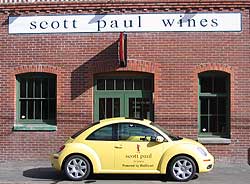
    scott%20paul.jpgPeople tell me it’s too confusing to buy European wines because of the myriad of place names. No place is worse than Burgundy when it comes to putting forth a seemingly impenetrable wave of place names and producers. When I hear this complaint I always suggest that people pay attention to the back label instead of the front. On the back label is the name of the importer who selected and shipped the wine. The name of the importer is a sure-fire indicator of the quality of the wine in the bottle. There are many names that, when I see them on the label, inspire me to try the wine. People like Rebecca Wasserman, Robert Chadderdon, Kermit Lynch, Terry Theise, Rudy Wiest and Joe Dressner (Louis/Dressner) have guided me towards outstanding wines from all of Europe’s important regions for years.

    Now it appears there is another name to add to the list. Scott Paul Wright of Scott Paul Selections has been quietly assembling an outstanding portfolio of Burgundy estates that produce classic, purely styled pinot noir and chardonnay wines. A tasting of Wright’s selections will explain the concept of terroir to any doubter. Those familiar with Oregon wines will also recognize the Scott Paul name from his excellent winery based in Carlton Oregon where he strives to make elegant pinot noir inspired by his love of Burgundy. If you wonder why Scott didn’t call his winery Scott Wright instead of Scott Paul, you might remember there’s another outstanding winery and a winemaker named Ken in Carlton already using the Wright name.

    I have been tasting with pleasure his selections over the last two years and just attended a compelling tasting of some of his current releases.

    • Chablis Grande Vignes, Frédéric Gueguen, 2006 - Classic Chablis with a firm, tight minerality and a long, clean stony finish. While 06’s are considered more forward than normal for Chablis due to the warm vintage this wine will benefit from a few more years of bottle age. A real bargain. ($23)
    • Puligny Montrachet, Philippe Chavy, 2005 - Blended from four lieu dits vineyards of medium, but mature age. Thankfully the Domaine uses only 20 to 30% new oak so the complexity of the chardonnay grown in these fine vineyards can show through. Still lean and immature, this excellent Puligny displays all the best attributes of this commune. Clean, firm and mineral laden throughout, this will be an very good wine in about five years. ($48)
    • Meursault Charmes, 1er Cru, Hospices de Beaune, Cuvée Bahèzre de Lanlay,  2005 - Purchased at the Hospices de Beaune auction by Wright, this is a big, oaky (100% new) viscous chardonnay that will be well-liked by those more experienced with California Chardonnay rather than Burgundy. Despite all the oak, it is still a very good wine, but I don’t see it as something to cellar. ($55)
    • Chambolle Musigny, Les Sentiers, 1er Cru,  A. & H. Sigaut, 2005 - All the luxurious, delicious, supple pinot character that you expect from the Chambolle Musigny commune, which Wright unabashedly declares as his first love in Burgundy. The color is perfect pinot, rich and dark, but still completely translucent. The bouquet is perfumed and silky reaching your nose long before the glass is even close to it.  While ripe and substantial on the palate, it is still lively and zesty with a wonderful undercurrent of acidity elevating and enlivening the sweet fruit and textures. The finish is long and satisfyingly laced with smoothly textured tannins that promise many years of development. Certainly a wine that should be allowed to see at least its tenth birthday. An outstanding pinot noir. ($72)
    • Pommard, Réyane & Pascal Bouley, 2004 (tasted with dinner after the tasting and then with lunch the following day) Yet another 04 Burgundy requiring more time. At first a bit off from what I thought was a bit of reduction so I put the bottle away for the next day. At Easter lunch the following day the wine was lovely, but delicate. This, like most 04’s are Burgundy for Burgundy lovers. Those used to the more obvious charms of New World pinot will find them perhaps too delicate, but those seeking complexity instead of power will be pleased. Let another five years pass to give this wine a chance to open. If you are going to drink now an hour or two in a decanter will improve your experience. ($48)
    • Pommard, Platièries, Thierry Violot-Guillemard, 2005 - Perfectly lovely light ruby color that is quite translucent. Richly smoky with a dark, brooding black fruit character that is not prepared to show itself yet. Very structured and tannic at this point, as you would expect from a Pommard, this is a wine that not only requires, but demands significant aging to show its considerable potential. Somewhere around 2015 this should be an excellent wine. ($54)
    • Mazoyères Chambertin, Grand Cru, Taupenot-Merme, 2005 - As good as the other wines were, here you reach a new level. This is a wine that will show any Burgundy critic the error of their ways. Simply a stunning interplay of power and elegance, this is an extraordinary pinot noir. The complexity and terroir exhibited by this wine will keep New World pinot noir winemakers up at night wondering if they can ever achieve such wine. All baby fat and young tannin at this point, you can feel the rumbling greatness that will rise in this wine with time. The aromas and flavors are velvety and exotic with touches of smoky oak and bittersweet chocolate. This is another wine that should not be opened before 2015. ($110)
    • Romanée St. Vivant, Grand Cru, J.J. Confuron, 2004 - Following a flashy 05 Grand Cru is not an easy position for a 2004, even one as good as this wine. The 04’s seem closed and lean now as they have yet to awaken from the “dumb” stage all natural Burgundy passes through on its journey to maturity. This and the natural lean character of the 04 vintage make this a wine easy to underestimate and I think that would be a mistake. While lacking the power of the Mazoyères Chambertin I think it does not lack in complexity or character. Despite its tightness, the flowery fruit is spiced with a touch of bittersweet orange zest. This is another wine that demands rather than suggests aging. The price should be enough to get most consumers to treat it with such needed respect. This is not a wine for Burgundy novices, but experienced collectors will love it. ($225)


    Debating Points: Spoofulation

    debate I find George Will particularly irritating. The conservative columnist and television commentator is just too smart and well-spoken. All too often in face-to-face debates he shreds the argument of the liberal commentator across the table from him with his swifter wit and broader knowledge. It ticks me off no end.

    In the debate about so called “natural” winemaking we have the same situation. Clark Smith, winemaker, super-consultant and king of spoofulated wines as the owner of Vinovation, is becoming as irritating to me as Will and for the same reasons. Smith, who makes his own wines besides consulting and “correcting” wines for hundreds of wineries, just has too much knowledge and experience for it to be a fair fight when it comes to debating winemaking ethics with people who have never made wines themselves. All to often these people are known as wine writers. It does surprise me how many writers who have don’t have enology degrees and whose experience working harvests is more akin to adventure vacations than real winemaking come to consider themselves winemaking experts. After all, does a trip to a dude ranch make you a cowboy?

    Smith uses his superior knowledge and experience to effectively dismantle the “natural” winemaking debating team’s positions (which I mostly agree with) as he did in a recent article published on Appellation America’s website called Spoofulated or Artisanal, which is well worth reading. Spoofulated, for those unfamiliar with the term that debuted on the Wine Therapy Forum and became part of wine lingo, refers to manipulated wines, which are often made in a style that appeals to Robert Parker and The Wine Spectator. It is a word used as an insult by those seeking a more terroir-driven winemaking experience as spoofulated wines all-to-often taste more-or-less the same.

    Is spoofulation always evil? I don’t think so. Commercial wines, which are produced for consumers not seeking nuance or complexity, but just a “winey” tasting beverage are better wines than ever due to these techniques. For all to long these inexpensive wines produced in huge quantities were thin and faulted. However, now those seeking nothing more can easily buy clean, fruity wines that neither require nor invite thought or contemplation. It is a fact of the market that the vast majority of consumers are perfectly satisfied with such wines and want nothing more. Clark Smith and his methods are a positive boon to such consumers.

    It’s when wines pretend  to more lofty goals that Clark Smith and I part company. I’ll draw an arbitrary line at the $10 a bottle point. That’s starting to get expensive and I think the consumer has a right to expect that wines with different labels will actually be different wines. The main problem with spoofulated wines is that they all taste the same. The differences get manipulated out as the wine is more-and-more manipulated. The fact that there are so many expensive New World wines that exhibit the bright simple ripe flavors of the commercial wines mentioned above is a real problem that is starting to destroy the reputation of places like the Napa Valley. Consumers that are willing to spend a significant amount of money for these wines are starting to realize how boring they are.

    On the other end of the argument are writers who are “natural” wine fundamentalists who seem to believe the high point in winemaking knowledge was achieved by the Romans and any technique or knowledge achieved after Nero are unnatural manipulations that destroy a wines terroir. Of course such extremists only display their limited winemaking knowledge and a lack of sophistication as they (instead of the wines) are manipulated by winemakers who tell them only what they want to hear. While there are many winemakers who believe in and practice minimalist, natural winemaking, there are few to none willing to let several tons of fruit in a fermenter with problems become garbage without taking actions that don’t always meet these ideals. These are stories that journalists are unlikely to hear or understand if they did. Contrary to some writers opinions, winemakers sometimes actually have to make wine.

    Spoofulators like Clark Smith and biodynamic guru Nicolas Joly actually have more in common than partisans on either side of the debate understand. Both are passionate, brilliant winemakers who are driven to pursue their vision of what makes a wine great. To make a truly great wine you need to ignore the ranting of journalists and the whims of consumers and make the wine you believe in. This is something that winemakers like Smith and Joly share.

    As always, those that oversimplify issues are usually blinded to the finer points of the debate. 


    Marriott Blues

    I admit I really out of it when it comes to California wines. I just don't drink them as there are so few I enjoy. There are also California wines I love like: Calera, Alma Rosa, Edmunds St. John, Iron Horse, Corison and Spottswoode to name just a few. However as the number of wineries I really enjoy are indeed few, I don't pull many corks from bottles of California wine.

    Forced into a hotel restaurant dinner due to the late hour of my arrival, I decided to try to be open minded and give The Golden State another shot and ordered a glass of 2005 Clos du Bois Sonoma Cabernet Sauvignon, which my host for the evening, Marriott, was offering for $15 a glass and $50 a bottle. I mean, at that price it must be pretty good, right?

    The first sip was smooth enough, although there was little varietal character. My taste buds now awakened, the second sip revealed much more. This wine tasted, for lack of a better word: cheap. It was like the awful under $10 California Cabernet stacked up at your local grocery store. My righteous indignation meter was off the charts. How could Clos du Bois dare foist such a mediocre wine on consumers at such a price!

    Upon returning to my room I checked wine-searcher.com to find the retail price of this rip-off only to find this wine sells for around $13 a bottle. That means Marriott is paying about $7 a bottle (or less). What we have here is rip-off build up. First of all, this weak effort by Clos du Bois would be overpriced at $4 a bottle, but, perhaps, the Marriott has even more to be ashamed of as, instead of offering their guests a decent glass of wine for $15, they offer only wines they can cut a deal on.

    How does this happen? Well Clos du Bois is owned by Constellation Brands, which describes itself as " a leading international producer and marketer of beverage alcohol brands" (that's inspiring) and "the largest by volume wine producer in the world" (doesn't that excite your taste buds). Besides wine this massive company sells beer and spirits. Conglomerates like this come in and set up all sorts of cross-brand deals with national chains like Marriott and often incentives that, shall we say, don't meet the letter of the law have been known to change hands. However (ahem), I'm sure this did not happen in this case.

    Brands like Clos du Bois are industrial wines at their worst. They are bad wines and bad values that exist and sell only because of the marketing muscle and money behind them. They also exist because national chains like Marriott are too lazy or too cheap to put in place decent wine programs.

    You can be sure you'll find the folks from Constellation and Marriott partying down together in Vegas as this year's WSWA convention. After all, what better place is there to cut a deal than in Vegas.