Best 100 Wine Blogs
Very flattered to be named among the 100 Best Wine Blogs by Feedspot!
Very flattered to be named among the 100 Best Wine Blogs by Feedspot!


Winemaking is often referred to in the trade as production. That's just the right word for it as the vast majority of the world's wine is a product. An industrial product - beverage alcohol as they call it.
Big wineries are stuck with reproducing a replica of the same wine every year as that's what the mass market wants. They are the equivalent of national restaurant chains whose customers want a dish to be exactly the same no matter what city they are in. Small wineries can make wines that reflect vineyard, vintage and variety, which means that they will be different every year. Obviously this is not always good, but in the hands of a skilled winemaker is always interesting. The choice is between consistency or individuality.
Large production winemakers are very technically skilled. It is not easy to make thousands, if not millions, of cases of wine that, vintage in and vintage out, is indistinguishable to their customers. Consistency is to be valued more than anything once you have a winning formula. When producing beverage alcohol be that wine, vodka, gin or whatever the last thing you want is for anyone to be able to discern any difference from batch to batch. To be able to accomplish this takes amazing technical skill and can't be done by just anybody. These winemakers are true professionals.
On the other end of the spectrum are the small artisan winemakers. Their craft more resembles a fine woodworker making one-of-a-kind pieces of furniture. While these pieces may not be perfect, as they let the natural grain of the wood define the character of the piece, they have more natural beauty and individuality than furniture turned out in a factory. It's because of their individuality that these artisan products sell at higher prices than those rolling off of the assembly line.
Artisan winemaking is expressed in the same way. When you taste a vintage you are tasting something that can never be repeated. Each vintage for an artisan winery is a unique expression of what Mother Nature has created. Each is an experience and an expression never to be repeated. But that's the beauty of it isn't it?
However, faults are still faults. While production wines become boring due to their palate dulling consistency, all too often consumers shy away from artisan wines due to the jarring faults apparent in too many of them. Winemaking faults are not terroir. Small wineries have something to learn from the technical proficiency of their big brothers. A fine woodworker possesses amazing technical proficiency with the tools and raw materials of his trade. The same should be true of artisan winemakers.
If your goal as an artisan winemaker is to treasure terroir and Mother Nature you need to be committed acquiring the technical skills necessary to make natural wines. It is a great challenge to make wines using indigenous yeasts and forsaking the chemicals and technology employed by the big wineries to make their standardized products. The risks are high and there is more pressure than ever on the winemaker's skills as there is no "magic pill" to be used if things go wrong - and go wrong they will.
A fine wood craftsman will consign a piece she is working on to the junk pile behind her workshop if she makes a mistake beyond repair. Too many artisan winemakers bottle up their mistakes and sell them citing their natural winemaking practices as reason enough to buy them as if the word natural itself is justification to forgive all.
The artisan winemaker is revered in Europe. Some of our greatest importers have made a career out of bringing their wines to American consumers. The lists of these importers are filled with amazing values from such producers. It's easy to find wonderful, naturally made wines from Europe in the under $30 price category. Rarely do I find winemaking faults in these wines. The same is not true for such wines produced in the New World. Not only are they more expensive, but they are often not as well made.
Young American sommeliers seeking naturally produced wines are often criticized for their Euro-centric wine lists. However, I can empathize with their position. When the customer doesn't like a wine it's the sommelier that's face-to-face with them, not the winemaker. They need reliable wines at affordable price points to meet today's more casual, bistro-style of dining.
We need to stop selling the winemaking and start selling the wine inside the bottle. I want to be inspired by the wine, not the winemaking.

It was so clean. The color was not just healthy, but a brilliant, radiant garnet. I was struck by its purity.
I'd spent most of the last several weeks drinking wines from west coast wine rebels. These are winemakers that distain convention and I admire their dedication to making natural wines. These winemakers see the over-oaked, over extracted wines of most New World winemakers as brutish bores. I agree with them.
Yet there is something to be said for purity, brilliance and, yes, simple personal wine hygiene. By hygiene I don't mean making wines sterile, boring carbon copies of the accepted commercial norm of industrial wine beverages. Certainly there is no need for any more of those. What I value is purity.
The wine mentioned above was a 2013 Domaine Bernard Baudry Chinon imported by Kermit Lynch. This is a wine stunning in its clarity and focus. After the wines from trendy California producers that I'd been drinking I was immediately struck by its brilliant, clean color. There was no browning, no haziness, just a perfectly clear and beautiful garnet wine.
What is important to note here is that Baudry is also a winemaker in the natural winemaking vein. This is a Kermit Lynch selection and Baudry uses natural yeasts and does not fine or filter. So why are his wines so brilliant and pure while so many wines from our winemakers following the same winemaking concepts are cloudy and brown? Beyond appearance there was the rest of the wine - a lively, complex clear expression of cabernet franc. A charming wine full of clarity of purpose and personality.
The winemaking techniques used to make a wine are not in themselves a justification for liking a wine. The commitment of the winemaker to natural techniques is a heavy burden to bear as it is not easy to make wines in this way. However, as much as that commitment is to be respected it does not free the producer from making wines that purely speak of the vineyards and varieties that they sprang from. Wines full of faults including excessive brett, V.A., protein hazes (and others) and oxidation hide terroir and varietal character every bit as effectively as the bag of tricks used by companies like Enologix. In both cases it is the winemaking not the vineyard that defines the wine.
We always seem to be caught up on extremes. On one end of the spectrum are the 100 point wine fanatics easily suckered in by the manipulations of Enologix and others. On the other are the natural wine terrorists who value doing nothing to a wine more than they value how it actually tastes. As usual the sweet spot is in-between these two extremes. That’s where wines like the Baudry Chinon come in as it’s a wine made naturally, but also professionally with great competence and care. It is a pure expression of that variety and that vineyard in that vintage. For me, nothing is more exciting in a wine.
I don’t like to drink spoofulated wines, but I also don’t enjoy muddy, faulted wines, which are the exact opposites. Spoofulated has long described manipulated wines, perhaps we need a new term for under-manipulated wines. Any ideas?

It really irritates me. Standing in line at the coffee bar when all I want is an espresso. In front of me there is long line of people ordering incomprehensibly complex drinks, of which the least important component is coffee. I think there should be an express line for those of us ordering a simple expresso. It's a bitter fact that we espresso lovers have to live with. Because Americans don't like bitter we have to wait in line while they bury their shots of espresso under anything and everything that will hide the actual flavor of coffee.
In Italy bitter flavors are embraced by the culture. They love bitter herbs and salads and bitter drinks. The prelude and conclusion of many a meal is a bitter beverage. Start with Campari and end with Fernet Branca. In between there you'll probably find some radicchio or arugula among the long list of bitter flavors loved by Italians. There is another thing always on the Italian table that often has bitterness too - their wine.
I notice that bitter element in my favorite Italian wines and it's that character that makes them such an extraordinary match with food. That little touch of bitterness in Barolo or Brunello is magic at the table. It also adds another layer of complexity beyond simple fruit flavors left on their own. I find this character in my favorite red wines, and many of the whites, from anywhere in the world.
Just as we Americans have gone to extraordinary lengths to hide any hint of bitterness in our coffee we've done the same things with our wines. Overripe, over-extracted fruit bombs with excessive alcohol, new oak and significant residual sugar are wines with no edge, no bitterness. Round and jammy wines with no acidity, no tannin and not even a hint of bitterness satisfy palates that bury a shot of espresso under milk, chocolate and whipped cream. We've turned our coffees and our wines into desserts.
Bitterness is what brought me to southern Oregon. Not personal bitterness, but the fact that I tasted it in the wines grown in this region. Not as hot as California and not as cool as the Willamette Valley, southern Oregon seems to be just the right place to grow wines that are richly flavored, but that still possess a little tartness from natural acidity and that have that wonderful streak of bitterness to hold up and enliven the natural sweet fruit flavors in the wines grown here.
Once I finally get my espresso, I'm glad I was patient enough to wait in line while they were making milkshakes masquerading as coffees for those in front of me. The same goes for the Applegate Valley, I'm glad I was patient enough find my way here. The best things in life always have an edge to them. Things that are round, soft and easy are rarely of lasting value. You need just the right amount of bitterness in life to keep things interesting. Minds and palates that are unchallenged quickly become bored.
There is nothing boring about making wine in the Applegate Valley.
In the United States we tend to think of wines being driven by a single variety. That there is somehow something purer about being made from one type of vine. The varietal vigilantes are always asking, “is this 100%?” Due to the heavy emphasis on varietal labeling they don’t realize is that historically wines made from a single variety were the exception, not the rule.
Some of the greatest names in the world of wine: Bordeaux, Châteauneuf du Pape, Côte Rôtie, Chianti, Rioja, Porto and Champagne are, and have always been blends of varieties. There are classic marriages like: cabernet sauvignon, cabernet franc and merlot; marsanne and roussanne, syrah and viognier that have defined their wine regions. Without a doubt there are great mono-variety wines like Burgundy and Barolo, but many a classic wine region discovered over the centuries that blending produced not only the best wines for them, but a more consistently good wine vintage-to-vintage.
I believe that the Applegate Valley is one of those regions where blending creates the most complete and complex wines. In almost all of our wines at Troon Vineyard you’ll find more than one variety in the blend. We think deeply in making these choices looking for varieties that together create wines with greater nuance and personality than they could on their own. My goal in blending is to make the wines come alive and to craft wines that could only come from the Applegate Valley as making a wine of place is at the center of everything for me.
Blending is one thing, but I believe you need to go farther and actually co-ferment the varieties that you believe make will make your best blends. When you blend finished wines you can make wonderful wines, but when you can ferment the different varieties together they meld in a new an magical way that simple blending cannot reproduced. When fermenting together Mother Nature’s natural chemistry is amplified and a whole new wine emerges from the fermenter. When co-ferments are combined with natural yeasts and natural malolactic fermentations a unique purity of place and variety is expressed in your wine.
One of the better examples of this magic is our Troon Vineyard Longue Carabine, conceived by winemaker Steve Hall, which is created by blending several different co-fermented lots. The characteristics of each variety in the 2014 blend (38.5% vermentino, 33% viognier, 33% marsanne, 1.5% roussanne) shows their distinctive highlights in the expansive aromatics and rich texture. Longue Carabine is a one-of-a-kind wine totally unique to the Applegate Valley, Troon Vineyard and Oregon.
Being able to create wines like this is one of the inspirations that led me from Napa to the Applegate Valley in southern Oregon. The freedom to constantly experiment and push your wines forward is truly exciting - and truly fun!
2014 Troon Blue Label Longue Carabine, Applegate Valley
Troon Vineyard, Applegate Valley, southern Oregon
Everyone loves the Napa Valley. As soon as you mention you live there people are jealous. Why would anyone leave? On top of it I live in Yountville, a culinary Mecca. How could you leave?
I’m leaving the Napa Valley and here are the reasons:
I am not running away from the Napa Valley, which is a beautiful place, but I am very truly running towards something.
I fell in love with wine in the 1970s and turned it into my life’s work. It was a very long time ago in a world that bears little relationship to the wine world today. Working with wine as something serious was new. There were very few people doing it and we were all friends even though we were competitors. I am running toward that feeling again. Once more I want to feel that energy and intensity. I want to feel the electricity that only comes from being on the edge looking down into the unknown. I want to make a difference and I have decided to make a difference in the Applegate Valley of southern Oregon.
I got into wine with a passion and I intend to end my life in wine with that same passion. Over the last few years I realized I could not reach that passion in the Napa Valley. Now, moving forward you will be more likely to find me up to the waist crushing grapes or out in the vineyard worrying about frost or other endless concerns than in an office in front of a computer. What you will find is someone more fully engaged with grapes, nature and making wines in a natural way. You will find someone doing what they believe in.
Instead of being able to eat at the French Laundry in Yountville, I will be able to grow fruit and to make wine in the spirit of what Thomas Keller demands from those who would sell produce to The French Laundry. I believe it will be a greater achievement to grow fruit of such quality than to just make a reservation and eat at The French Laundry itself. To simply eat or drink is like watching TV, a passive experience, but to grow something is to be part of life. For this reason I may be leaving the Napa Valley, but it is not to get away, but to run towards this goal. I want to make wine from fruit that is so compelling that Thomas Keller will feel that he must have it on his wine list. In the Applegate Valley I believe I can reach for this goal. I don’t know if I can achieve it, but I believe the soils and weather there can carry me towards this dream.
So I am going to swing for the fences and leave the security of the Napa Valley for an adventure in the Applegate Valley of southern Oregon. In a breathtakingly beautiful place in a remote valley surrounded by the massive peaks of the Siskiyou Mountains I am going to devote my life to making wines that will mean something. Wines that will grab your attention and make your palate sit up and take notice. Wines that will make you ask where they came from and what is it about this wine that makes it so exciting. Wines that mean something.
From now on you’ll find me at Troon Vineyard just outside of Grants Pass in the Applegate Valley in southern Oregon. Planted in Zinfandel in 1972 by Dick Troon, the mantle of ownership is now with his friend Larry Martin. We are going to take this historic property into the future as one of the Northwest’s premier estates.
So I am leaving forward. From the Napa Valley into a brave new world. I feel a wonderful lightness in my soul and excitement for the future. Once again I feel about wine like I did three decades ago. What a wonderful gift.
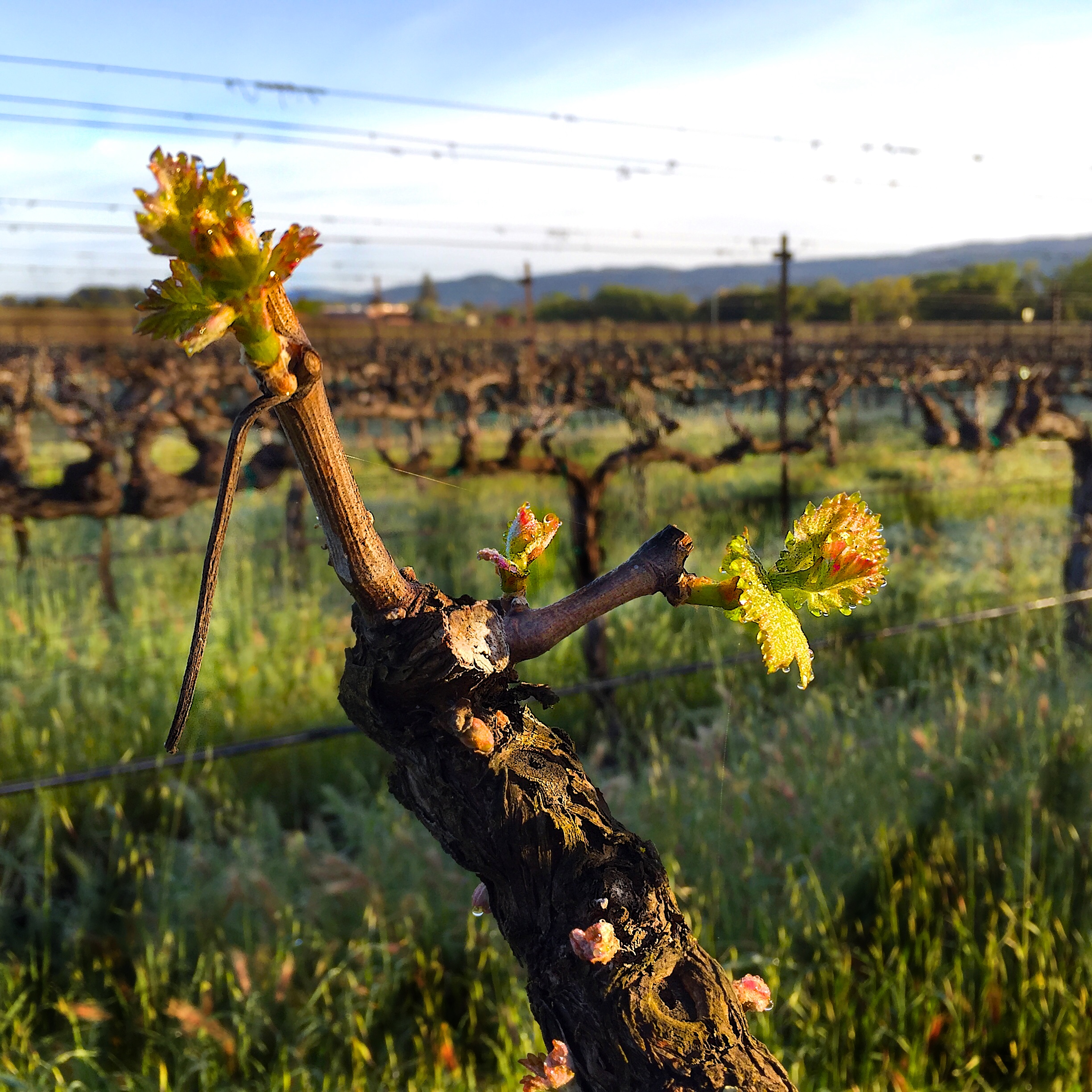
Cabernet Sauvignon bud break in the "cooler" Yountville AVA on 3/26/16
The Napa Valley is well into bud break for cabernet, yes late breaking cabernet, early varieties like chardonnay and pinot burst weeks ago. Even in the north Willamette Valley bud break is on with chardonnay. There is a new "normal" now when it comes to bud break on the west coast. In the Napa Valley, this year is a bit later than last year, even though it’s weeks ahead of years past hardly anyone notices as it just doesn’t seem so late anymore.
It's a good thing this climate change is a hoax, otherwise California might really have something to worry about. After all, harvesting cabernet before the end of September is much more convenient for the winery crew as they can trick and treat with their kids unlike earlier generations of winemakers who were just too busy at the end of October.
Anyone who grows things knows for a fact that the climate is changing. Perhaps if we actually do something about it now, in the future, winemakers will be missing Halloween with their kids once again. That's too bad for the kids, but very good for our planet and for our wines.

I'm a geek when it comes to technology. On top of that I'm an Apple geek. As my desire is to use my Apple products to the max I listen to many podcasts on Apple products. I've learned a lot from the many hours I've spent listening to these podcasts.
I've learned to be more efficient and to use the software and hardware available to me the way it was meant to be used. Investing this time has made me a power user. I've learned another thing too, the hard way. While I'm a technology geek, the hosts of these podcasts are technology addicts. When they use hardware and software they are looking more intensely for what is wrong with it than what’s right about it. They inevitably get bored with any piece of software and constantly need to fiddle with new products just because they are new. If you follow their impassioned comments podcast to podcast you'd be changing your software weekly.
I’m just as much a geek when it comes to wine and the wine addicts as compared to the wine geeks work the same way. Too often newness alone is considered exciting and, all too often, a blind eye is turned to winemaking faults. They get bored with Bordeaux, Napa Cabernet and Oregon Pinot because they simply need to fiddle constantly to entertain themselves. When you have to write a new article every week shiny new toys are always more interesting than the old ones.
More and more I find myself settling down with my technology and my wines and focusing on understanding more deeply what they have to offer. I’m finding it more rewarding to dig deep into what each has to offer me and truly come to know all they have to teach me. With software the more I work with it the more I learn about the real power written in the code. With a wine, the more often I revisit it the more nuance I find. I am finding this approach deeply rewarding.
All things considered, I think I’m becoming a bigger geek than ever.

He had a gun. The neighborhood was like a war zone. He handed me a brown paper bag with twenty grand in $20 bills. Outside there where dozens of street people huddled in the nooks of the building, most of them savoring pints of MD 20/20. Leaving that run down building with a bag of money was more than a little intimidating in a neighborhood where they would probably kill you for five bucks.
I made to to my car and hightailed it out of there. I had made my first big score. The twenty thousand dollars in the brown paper bag was my first payoff. I had just collected on a big gamble. This was my first payment for the 1982 Bordeaux futures. There would be more than a few of the brown paper bags of money from the man with the gun over the next few months.
This is a true story and what selling wine was like in the Chicago of the early 1980s. Such were the logistics of the red-hot 1982 Bordeaux futures campaign. I had finally made it in the fine wine business. However, the gun and the brown paper bags full of cash were not exactly what I had envisioned as I poured over Edmund Penning-Rowsell’s The Wines of Bordeaux and dreamed of the glories of the Premier Grand Crus.
Now I'm in the Napa Valley three decades later. While the neighborhood has changed I'm still scratching for bags of money and wouldn't mind a few right now. The economics of winemaking in the Napa Valley requires the biggest bags of money. Oddly enough, those bags of cash given me by the man with the gun seem somehow cleaner than the cash bags required to play in the Napa Valley these days. The buyers that filled those cash bags in 1983 actually got their moneys worth, either in great wine or in huge returns on cases sold on today’s auction market. Dollars invested in the Napa Valley today are highly unlikely to repay such an investment in either financial or spiritual terms.
In 1983, the man had the gun to protect himself from the criminals outside. These days its getting harder to see who has to be protected from who. The wine industry seems at a cross road, with big money wineries on one side and consumers on the other. But there is a world of wine where consumers and winemakers are on the same side.
The "natural" wine movement may be controversial and not all the wines may live up to the hype, but you can't deny you feel more soul in these wines than in the high end cult wines of the world.
I'll take the music of Aretha Franklin over Celine Dion anyday. It's just got more soul. I feel the same way about wine.

I'm a unabashed fan of Luca Currado and his wines at Vietti. I had the pleasure of spending hours tasting through his cellar with him when I lived in Italy. He is a thoughtful and talented winemaker making extraordinary wines. Do not miss the current interview with Luca on I'll Drink to That with Levy Dalton, the consistantly excellent wine podcast. You can find it here.
In Italy, swearing is an artform as compared to English, where it is usually simply vulgar. In Italian swearing decorates the language adding life, spice and personality. In this interview, Luca leads us on a educational tour of this Italian artform. It's a delight!
The Vietti family story is very compelling and this interview touches on the entire modern history of winemaking in Piemonte, beautifully told by the colorful and delightful Luca Currado.

She was nasty; complaining and putting us down. No matter, it's only your life's work; better get a thicker skin. But then I thought better of it, when someone's full of it you should stand up for yourself.
Of course I'm talking about a Yelp review. I can't really complain as, after over 122 reviews, Cornerstone Cellars has a four and half star rating. Honestly you can't do any better than that. Indeed it's an accomplishment of which I am extremely proud.
At a winery tasting room, odds are pretty good that that outlier one star review was by someone who had too much to drink and was refused anything more to drink. Nothing pisses off a drunk more than cutting them off.
So I have decided to stick up for myself and, contrary to Yelp's recommendation, take on the that rare dissatisfied customer. Now, obviously if you're getting bad review after bad review you'd better do some soul searching, but in our case nothing could be further from reality.
For Cornerstone Cellars, out of the last twenty-five Yelp reviews eighteen have five stars and four have four stars or better. Take a look here and be sure to read the one star review. Perhaps they were not feeling so great when they woke up the next day and wrote them.
Yelp is powerful and for us, for the most part, a great thing. The only real issue I have with Yelp is that they don't take into account that usually the people that write bad reviews for winery tasting rooms are the ones that have indulged in a bit too much fruit of the vine. They need to find away to take that into account and banish such wine induced rants.
In Sideways Miles drank and dialed, the equivalent of drinking and Yelping. We do not recommend either.

Wine can indeed be a study in contrasts as emphasized by an article read and a podcast listened to on the same day this week.
The first, an article in the Napa Valley Register, contained these quotes about a wine in the Premier Napa Valley Auction, “Through the study of phenols, the wine is broken down into its key chemical components to determine the optimal levels of extraction while the grape skins are in contact with the freshly pressed grape juice. The science of phenols is used as a predictor of wine quality… (this wine) represented the highest recorded phenolic reading to date at 4,600 iron-reactive phenolics in parts per million. This high reading translates to a more complex wine featuring higher quality attributes, including taste, mouthfeel and body.”
Just a few hours later I was listening to the I’ll Drink to That! with Levi Dalton podcast interview with Jacques Lardière, formerly winemaker of Maison Louis Jadot in Burgundy and who is now making wine in Oregon at Jadot’s Résonance Oregon winery. First of all, if you are serious about wine, listening to Dalton’s interviews are a must. Secondly, if you’ve never listened to the podcast before, do not start with the Lardière interview as, as Dalton notes in his introduction, this interview needs to be listened to a few times before it sinks in. I assure you a few listens are well worth the effort.
The contrast between the article and the podcast could not have been more obvious. Lardière spoke of “vibrations” and wine as a spiritual component of the earth itself. The Napa wine was in a contest to achieve the highest rate ever of iron-reactive phenolics. If it’s hard to believe they’re making the same product it’s because they aren’t.
In his interview, Lardière refers to, “formatted wines.” Formatting is a technical term that makes me think of technology, not nature and wine. Formatting is important for your hard drive on your computer. But, personally, I’d prefer to think of the vibrations the wine and I exchange rather than the emotions I had last time I reformatted my hard drive.

Saffron Fields Vineyard Yamhill Carlton AVA Willmatte Valley Oregon
"And we've got to get ourselves back to the garden," wrote Joni Mitchell, but I always hear the urgency of Crosby, Stills and Nash when I think of these words.
Today I arrived back in Oregon for the Oregon Wine Symposium right on the heels of finishing Premiere Napa Valley. It's most decidedly the yin and yang of wine experiences.
Behind me is a week of massive parties, dinners and nude dancing girls painted in gold followed by an auction that raised $5 million all dedicated to promoting the Napa Valley as the greatest wine region in the world. It is an amazing event and a major accomplishment. The Napa Valley wine community deserves great respect for a stunning marketing success. However, I never feel at home there even after seven years. It just does not mirror my values and what I want to achieve with my wines. The Napa Valley is a bigger is better, in all things, environment slowly squeezing out all but the ultra-wealthy and corporations.
Arriving in Portland today brought me a lightness of spirit and, best of all, a feeling of reconnecting to what I love most about wine. A connection to nature and slowing life down.
So for a few days I will slow things down and think about terroir, indigenous yeasts, biodynamics and what winemaking in Oregon means compared to the Napa Valley. I think my blood pressure dropped ten points as soon as I stepped off the plane at PDX.
It seems I've "got myself back to the garden."
Oregon winemaker Tony Rynders rushing to get pinot noir into the winery before the storm hits during the 2013 vintage.
Recently I’ve been tasting some of the upcoming pinot noir releases from Oregon’s 2013 vintage. As you might suspect from the vintage reports, the quality can vary a bit due to the significant rain storm that hit towards the end of harvest. Fortunately both the winemaking and vineyard skills in the Willamette Valley have advanced dramatically and most of the wines are very good and many are excellent.
The question is then, why are the ones that are excellent significantly better than other wines grown in the same vintage conditions? For me the answer is clear. It is the ability of the winemaker to think and work on the fly. Such skills are earned over years of work, not at enology school. The intuition of when to pull the trigger on a pick at the last possible second and the skills to look at the condition of the fruit as it comes in and know just what to do are talents learned on the battlefield, not the classroom. Some winemakers have the ability to adjust to conditions and to make great wines in vintages of widely differing conditions, while most others struggle if taken out of their comfort zone.
In my over thirty years in the wine business one of the very best winemakers I have had the pleasure to work with is Tony Rynders. Vintage after vintage he seems to ignore the whims of Mother Nature and make outstanding wines no matter what she throws at him. There is a lot of justifiable buzz in the wine press about the 2012, 2014 and 2015 Oregon vintages, but I often find the somewhat less heralded years (read less extracted) more to my taste.
In 2013 the best of both worlds came together when the skills of a winemaker like Tony Rynders took what nature gave in 2013 and made some of the most elegant, balanced pinot noir wines that you could want. The 2013 vintage of Rynders’ Tendril Wine Cellars wines are soon to be released and I urge you to get in line and on the mailing list for these ultra-limited production wines. Many of the wines are produced in quantities of fifty cases or less so they will not be around very long.
Wineries like Tendril Wine Cellars are making Oregon’s Willamette Valley one of the most exciting wine growing regions in the world.
A recent wait staff training at Ruth's Chris in San Francisco gave my batteries a needed recharge. It reminded me who the critics are that I should be concerned about as a winemaker - the people that drink them.
The wait staff loved my wines and they rekindled my love for them too. They tasted alive and fresh and were just what I hoped they would be.
Last weekend brought another recharge as I presented my upcoming 2013 vintage Napa Valley releases to our distributor in southern California. They loved them for their balance and refinement. That’s what I love them for too.
It’s not that wine criticism has no place, the issue is that some critics actually love a style of wines that most normal wine drinkers don’t prefer. Sugary, bloated and alcoholic should describe neither wines or critics.
My continued support and enthusiasm for wine commentary on wine blogs is that it comes from real people drinking real wine the way it is actually consumed in the real world. The average consumer is far more likely to get wines that match words on a wine blog than from a critic tasting hundreds of wines, in a matter of hours, on their own. That's like saying you have a better idea of what a tiger is all about by seeing one in a zoo rather than in the wild. It's odd that an activity that is pointless generates almost all the point ratings given to wines.
Winemakers have to try to remember that wine is about not about critics. It’s about people enjoying food and each other.
Hopefully we are on the edge of a pointless era for wine as it's time that the point of wine is not points. Points are for games.
Purity and delicacy are wine descriptors that do not appear often in reviews of top scoring wines. Terms like powerful, opulent and dense are the genre of pointy wines.
Poor Beaujolais seems destined to miss the mark for ratings defined by such descriptors. Youthful, fresh, lively, fruity, zesty and, the phrase that always damns a wine for the point obsessed, a "food wine", means low 90s at best.
Big points are the black holes of the wine universe. In the heart of the black hole the wines are dense and no light can escape from them, only points seem able to escape. Before all the lightness of wine is sucked away, down into the black hole itself, is the point of singularity where lightness can still exist. That's where wines like Beaujolais become relative.
If young Beaujolais finds relativity a problem, where can old Beaujolais find its place in the universe? It turns out Einstein was wrong when it comes to Beaujolais, Einstein's formula E=MC2 does not compute in this case where less mass creates more energy.
Recently I did a double take when I got a club shipment from Kermit Lynch. Côte de Brouilly? No surprise there. But wait! The vintage was not 2014, but 2006. The 2006 Côte de Brouilly Domaine de la Voûte des Crozes is indeed a singularity. It's a lacy, high strung ballerina of a wine. It was pure pleasure to let her dance through my dinner.
Black holes warp space time just as the 100 point scale warps wine time. Lightness is a concept that suffers in a universe dominated by black holes. They have indeed warped the wine universe.
I prefer to experience wines at the point of singularity.
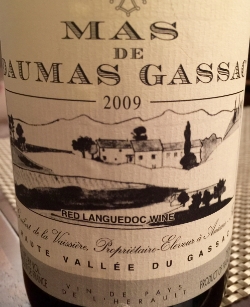
This wine makes me mad. It really ticks me off. It's balanced, elegant, complex, interesting and outrageously good to drink. What really gets me is that it's from a warm climate, downright Mediterranean, with hot sunny days - just like the the Napa Valley. This leads to the question, what the hell is wrong with the Napa Valley and why can't we make wines like this?
Yes there are those few that do, but they are lone voices. We all know Corison, Dunn, Stony Hill and a few other regal producers who get nods from the more enlightened media. Yet when it come to points it's excess that still wins the day.
The wine that angered me so much? The 2009 Mas de Daumas Gassac a stunning wine from a place famous for its sunshine.
What's your excuse Napa Valley? Just because you can doesn't mean you should.


Cabernet Sauvignon Yountville Napa Valley
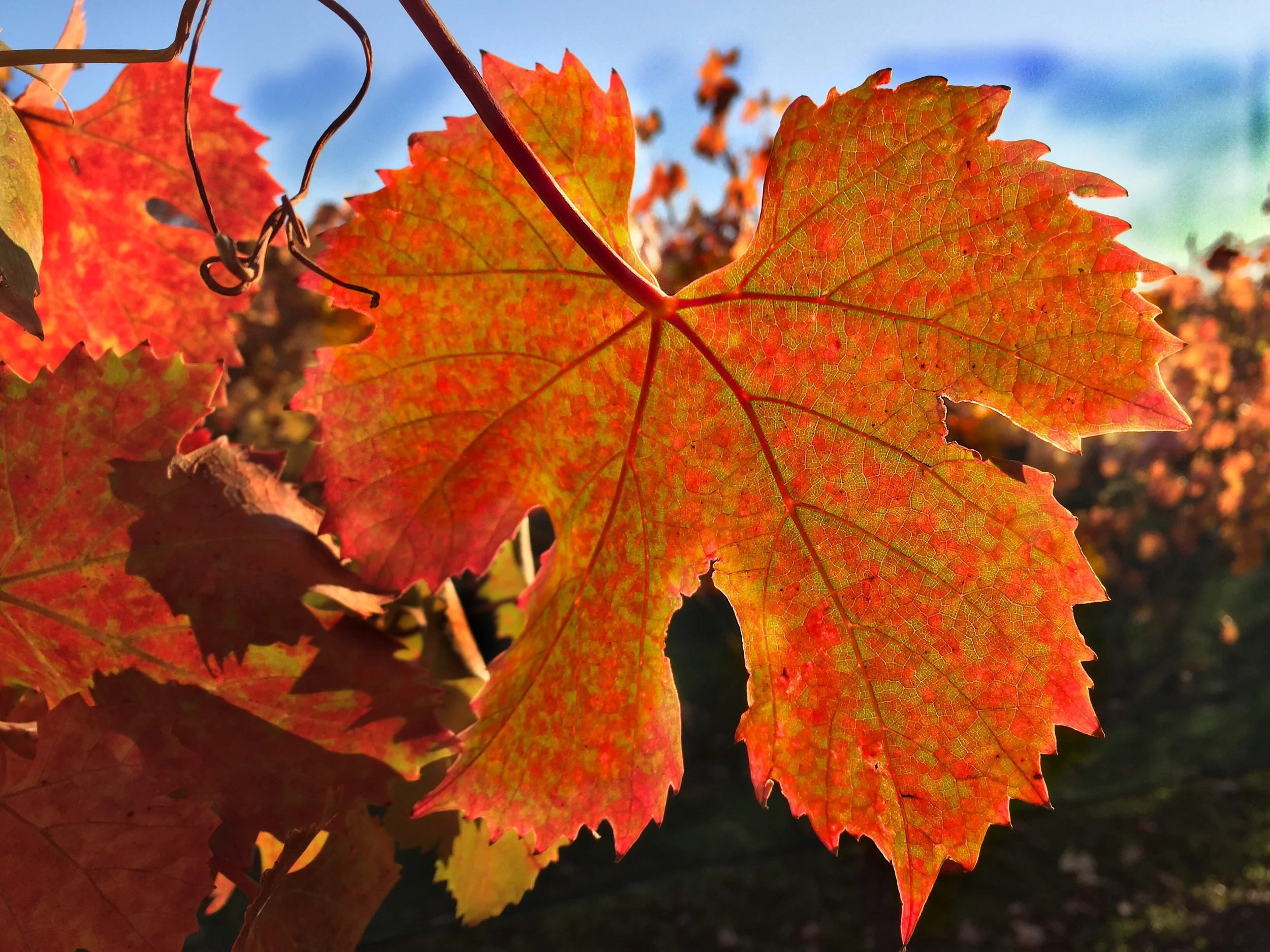
Cabernet Sauvignon leaf on Thanksgiving Day in Yountville Napa Valley

Napa Valley Cabernet Sauvignon vineyard just before Thanksgiving Yountville AVA