Rationally Natural

A very happy tempranillo indigenous yeast fermentation 

A very happy tempranillo indigenous yeast fermentation 

Natural wine and biodynamics seems to promote irrational flame wars on the Internet. I have faith in science and personally have trouble buying some of the more voodoo practices myself. On the other hand I can’t argue with the results. Many of the wines I find the most compelling are made using natural winemaking concepts and from vineyards farmed biodynamically. My goal is to become rationally natural.

The intensity of these debates is hard to comprehend after you’ve fermented two hundred tons of fruit without a bag of yeast in sight. My vision of becoming rationally natural is simple: only do what you have to and when you have to do something don’t use bad stuff. Simply minimize or eliminate inputs everywhere.

There is something emotionally rewarding about simply putting grapes into a fermenter and removing the lid a few days later to find fermentation starting without a bit of help from you. It makes you feel more connected to the wine. However, this is not magic, it’s science. When winemakers use cultured yeast strains they knock-off all the indigenous yeast with a dose of sulfur. Then they add their selection of Saccharomyces cerevisiae and it’s off to the races. When our grapes go into a fermenter no sulfur is added so the indigenous yeasts start a less direct process. At the beginning of our fermentations many types of yeasts are present to compete with each other for food. One of the reasons yeast cells produce alcohol is to kill off the competition - not the best system as eventually they kill themselves off. As the fermentation continues the weaker strains of yeasts are killed off until at the end only Saccharomyces cerevisiae, the bad boys of the wine yeast world, are there to take the wine to dryness just like those using cultured yeasts. The difference is that with many types of yeast having been part of the fermentation each adds a nuance, no matter how small, that adds layers of complexity to the wine.

I find wines fermented with indigenous yeasts to have more complex aromatics and a different feel on the palate. Texture in wine is very important to me and I believe much of what consumers refer to as taste is actually the texture of the wine. Building texture is a priority in winemaking for me and I feel fermentation with naturally occurring yeasts enhance the mouthfeel of a wine making it more lively and fresh. Often I find wines fermented with cultured yeast to be more one-dimensional, more focused on basic, straightforward dark fruity flavors. However, certainly this is not always the case as there are hundreds of outstanding wines made with selected yeast cultures.

Obviously what yeast you use for fermentation is only one part of what makes winemaking natural. Personally I’m not big on certifications. I like the idea of taking the best of each and weaving your own relationship to the land and your wine. There is something to be learned from biodynamics, organics, the ideas of Masanobu Fukuoka in the One Straw Revolution and many others. Studying all of these concepts and finding the practices that match your vineyard and region is the best solution for me. The only goal should be what will help me make the best wine possible. Just choosing one discipline does not well represent the complexities of nature.

Being rationally natural is simple: only do what you have to and when you have to do something don’t use bad stuff. That makes sense to me both scientifically, emotionally and rationally.

Trumpism

A dark cloud fills my consciousness this morning. The unthinkable has happened. I am sad for my country. I am sad because I probably will not feel the same about it again. My innocent good faith in Americans as inherently good is broken. The majority chose fear instead of hope. I hope that my hope returns sooner rather than later or never.

However, now I see I was part of the problem. I believed that Hillary Clinton deserved the presidency due to her great experience and obvious competence. I discounted the huge crowds turning out for Bernie Sanders. I turned my head as the Democratic National Committee screwed him out of any chance for the nomination. If that had happened to Obama in 2008 I would have been up-in-arms mad. I now must look at myself more clearly and question why I accepted their manipulations. I believed in the things that Bernie was saying so why did I not fight for him? My rationalization was that Hillary would know how to get things done and in the process missed the real anger that was reflected in the huge crowds turning out for Bernie and, yes, for Trump.

We should have known that the energy around Bernie was real. He was tapping into the same anger that fueled Trump’s win. I sincerely believe, now and too late, that Bernie would have won last night. I was wrong about him and people like me helped give Trump the White House. Hillary Clinton was obviously too flawed as a candidate to win the presidency. We should have understood this and that’s our fault. Trump did not win, he was handed the office by a Democratic Party that insisted on nominating someone with baggage so heavy she could not even overtake someone as repulsive as Trump.

Those of us who believe in hope, equality and tolerance have a lot of work to do. The first step is to clean up our own house - the Democratic Party. We can never let this happen again. The Party must listen to the people and the Democratic National Committee needs new leadership. Next we must focus on the Congressional elections in 2018 and get a majority in at least the Senate. I firmly believe that Trump will be so disruptive that he will be a one-term president. We need to start searching for our 2020 Bernie Sanders right now and this time we need to listen to the people.

It will take me a few weeks to get over this darkness and regret that I did not understand what we had in Bernie, but after that I intend to get to work trying to repair this self-inflicted damage we have done to our country.

As crushed as I am I cannot imagine the sadness of so many women throughout our country who believed their time had come. We all must find a way to shake this off as soon as possible and get to work. The next elections will be here before we know it.

Punched Down

Punching down Troon Tempranillo in the rain under our old oak tree.

Punching down Troon Tempranillo in the rain under our old oak tree.

There are thirty one-ton fermenters spread out before me under the oak tree behind the winery. They all need punch downs and I'm the only one there to do them. It’s raining and at this moment there is nothing romantic about winemaking, fortunately I know that once these wines are in the bottle there will be more than enough romance to make me face this line up of fermenters tomorrow, and the day after tomorrow…

Now it's night and most of me hurts and I'm exhausted, but tomorrow I will be up and ready to go as I know that my life with these wines will make the effort more than worthwhile.

But why is there just me a 63 year old available for punch downs this morning? Welcome to the Applegate Valley where there's not an intern in sight. Welcome to winemaking on the frontier. The Applegate Valley is an exciting, but emerging fine wine region and the niceties of established regions like the Willamette Valley or Napa Valley just don’t exist.

As tiring and challenging as it is, the lack of accoutrements is also liberating. You are forced into choices that make you rediscover how natural the winemaking process truly is and that so many of the interventions used almost without thought in more established regions are unnecessary.

You soon come to understand that these interventions are not only unnecessary, but detrimental as they strip wines of real character leaving pretty, fruity wines with indistinguishable personalities. When I first saw an optical sorter in the Napa Valley I was blown away. Out of one end came perfect grapes, looking exactly like blueberries, and on the side it discharged everything deemed less than perfect. My initial excitement slowly dissolved as I tasted the wines in barrel then bottle. What I thought was perfect fruit yielded wines that were one-dimensional. Those perfect grape blueberries ended up making a wine that tasted a lot like it actually came from blueberries. The strange thing about those perfect grapes is that they only look perfect. If they were truly perfect winemakers would not be forced to add acids, water and use enzymes and other additions to put back in what the optical sorter took out.

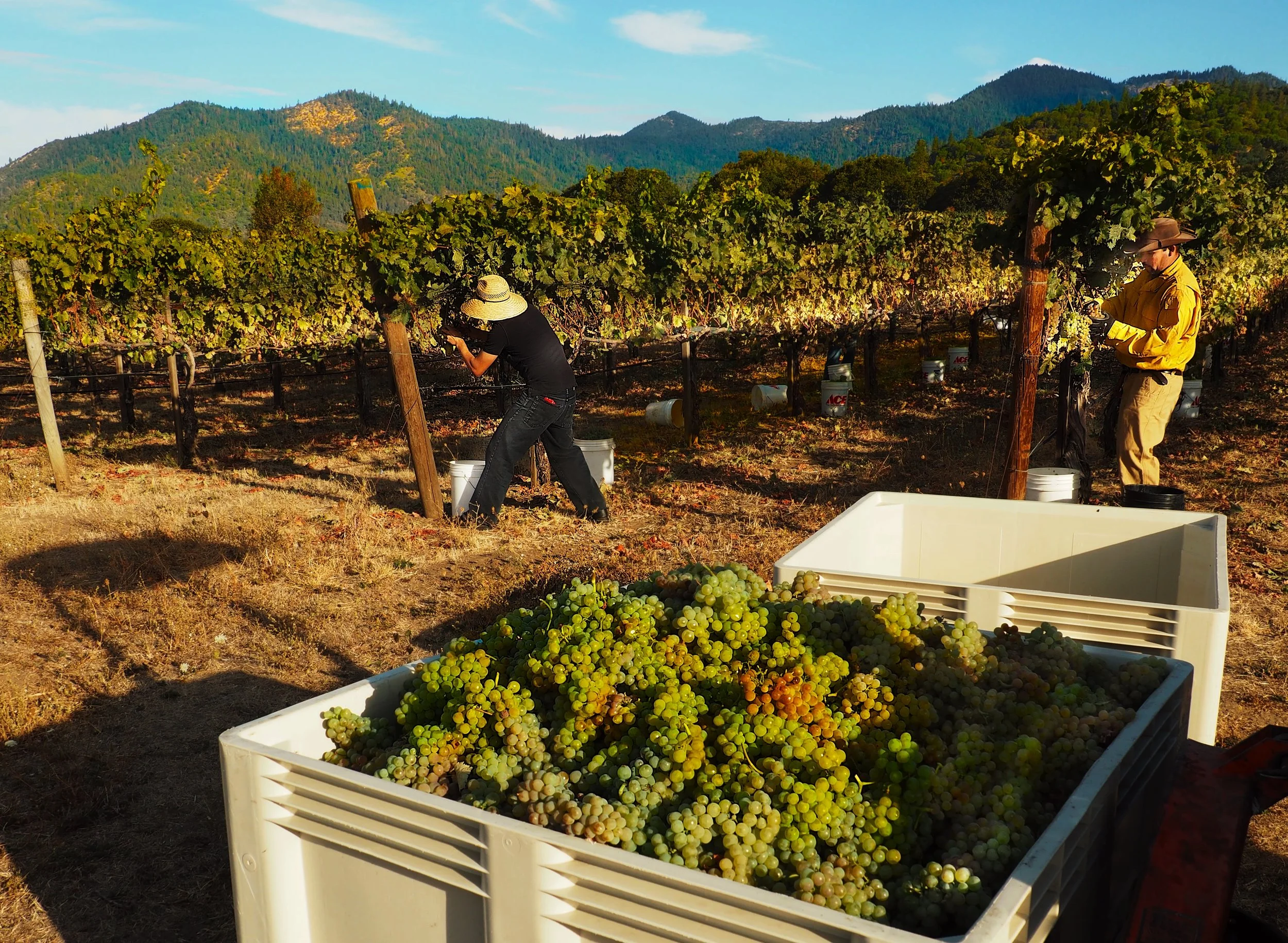
At Troon there are no optical sorters in sight, nor in all of Southern Oregon as far as I know. All of our sorting is done during the pick in the vineyard. Instead of making wine with blueberries, we make wine with the grapes that nature gives us. That means along with those perfect grapes some are a little more ripe and some a little less. In the fermenter, together with the indigenous yeasts of the Applegate Valley, this varied fruit creates wine that is anything but one-dimensional. The grapes that are a little less ripe contribute vivacious natural acidity and those a shade overripe contribute body and richness - no additions required. Oh yes, and often we include stems in the ferment. In the tank it may not be pretty, but together they make wines that are alive.

Wines that live make me feel more alive.

Interview by James Melendez

I was very flattered by the kind words and interview by blogger and vlogger James Melendez!

"Craig has a grand passion for the best that wine and great food can offer. His European experience has show his devotion to the art of creating great wines. I think many producers believe they craft the best wines but the attention to detail is essential. Producing crowd pleasing wines is not a check mark for Craig. I have talked with him and it is clear that he has a clear sense of a 360 view of wine–his involvement in wine is admirable of working on the back and front end of many wine businesses." James Melendez